


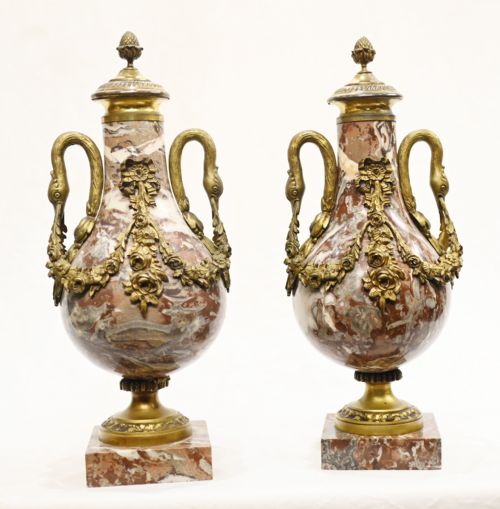
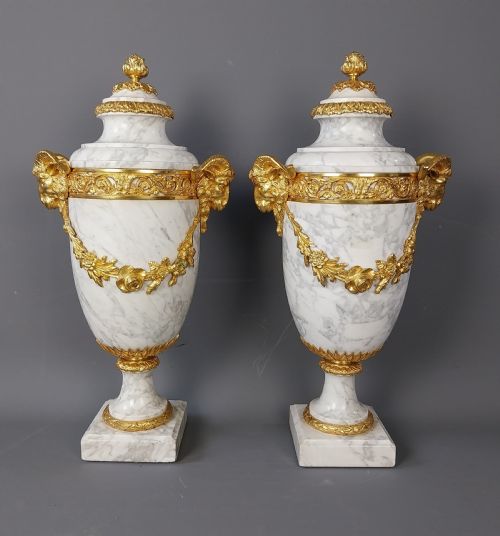


Antique Cassolette Urns
These antique cassolette urns are reversible decorative vessels that transform from standard urns into perfume burners, prized for their clever dual-purpose French design.
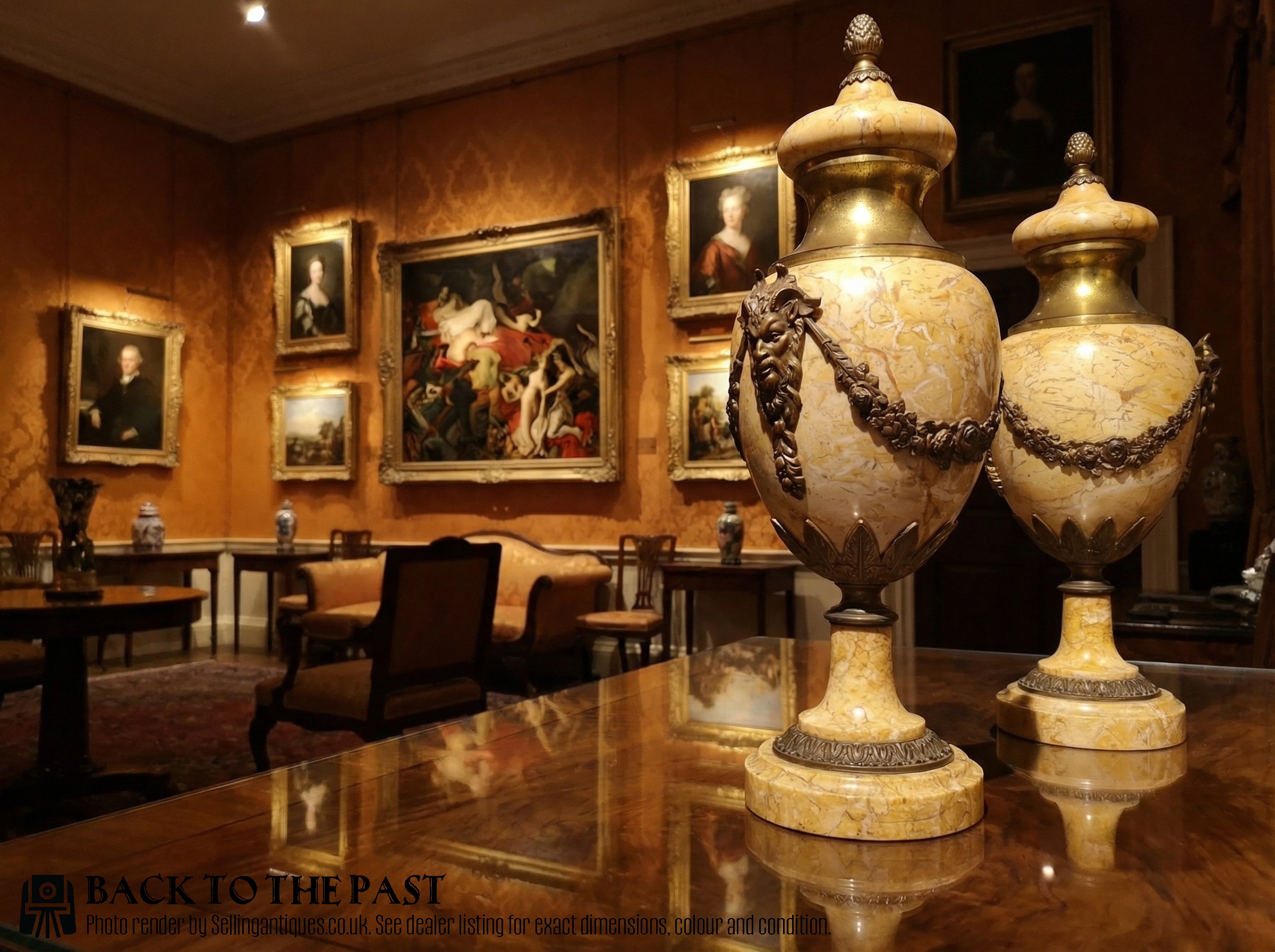
Antique Cassolette Urns
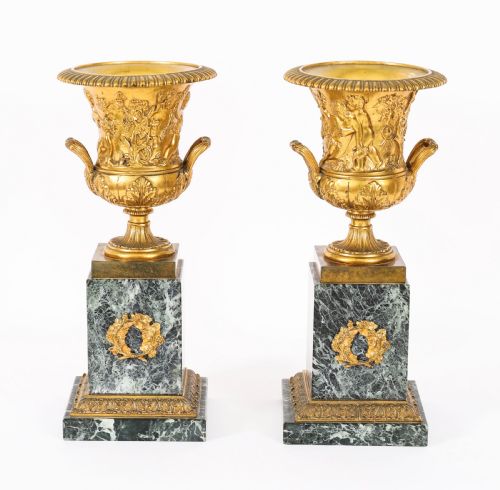
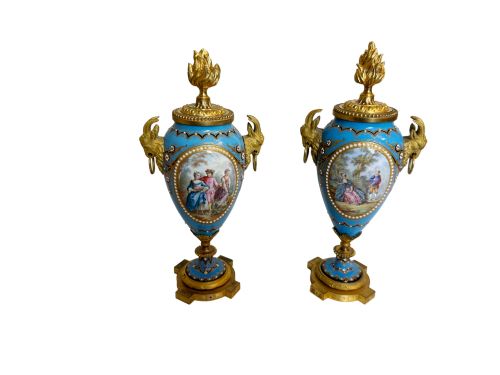
When you search for antique cassolette urns, you encounter sophisticated decorative vessels originating mainly from the nineteenth century, including the Regency and Victorian eras. These dual-purpose objects feature a lid that reverses to reveal a burner or receptacle, shifting the function of the piece.
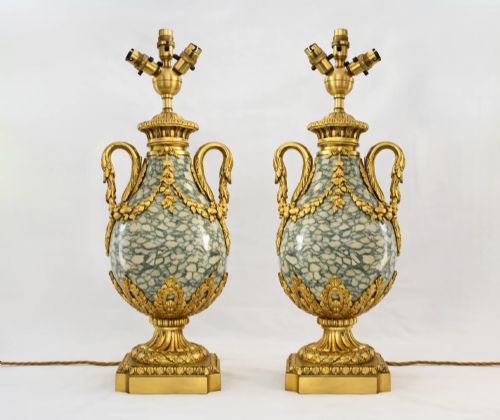
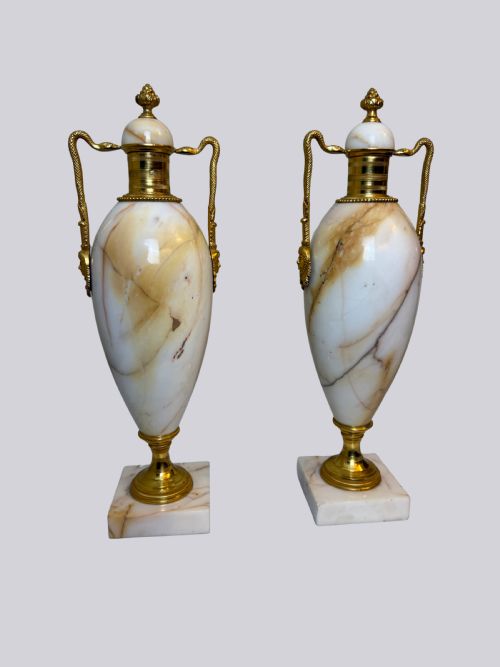
The selection ranges from decorative table lamps and clock garniture components to standalone amphora vases and brûle parfums. White marble and green marble bodies appear regularly alongside champlevé enamel and majolica porcelain.
How they were made
The makers of these objects combined carved stone bodies with cast metal mounts, utilising white and green marble or onyx as the primary structural elements. Artisans shaped these heavy minerals on lathes before applying hand-chiselled mounts.
Gilt bronze and ormolu provide the classical handles, collars, and bases, secured to the stone with pins and screws. Certain examples incorporate champlevé enamel work or patinated bronze details to add colour and textural contrast to the metal surfaces.
Listings feature nineteenth-century French pieces in marble, gilt bronze, and ormolu, spanning Regency, Empire, and Louis XVI styles.
What varies in quality
The standard of the metalwork separates the ordinary from the exceptional, visible in the crispness of the chasing and the depth of the gilding on the ormolu mounts. Finer pieces display sharply rendered foliage and figures that sit flush against the stone without gaps.
The selection and turning of the marble itself dictate the tier of the piece, with flawless mineral grain and symmetrical proportions marking superior examples. A well-balanced weight and a tight, precise fit when the lid reverses indicate superior workshop execution.
Auguste Cain
The Antique Cassolette Urns Glossary
- Cassolette
- A decorative vessel with a reversible lid designed to function either as a closed urn or an open perfume burner. This mechanism defines the primary utility of the form.
- Ormolu
- Finely ground high-carat gold mercury-gilded onto a bronze base, creating a rich golden surface finish. This technique gives nineteenth-century French mounts their characteristic warm lustre.
- Grand Tour
- A cultural journey undertaken by wealthy young Europeans in the nineteenth century, bringing home classical works of art and decorative objects. Pieces from this context often emulate ancient architectural motifs.
- Champlevé
- An enamelling technique where troughs are dug into a metal surface and filled with vitreous enamel before firing. The resulting coloured patterns ornament the bronze mounts of the urn.
- Clock Garniture
- A set comprising a mantel clock flanked by matching decorative objects such as a pair of cassolettes. These matched assemblies dominated nineteenth-century interior display.
Antique Cassolette Urns: Frequently Asked Questions
What is a cassolette?
A cassolette is a decorative urn featuring a reversible lid that converts the vessel from a standard vase into an incense or perfume burner.
This clever mechanical design allowed nineteenth-century households to alter the function and appearance of the mantel ornament at will.
How do I use them?
You can display these urns on mantelpieces, sideboards, or console tables as standalone decorative accents or paired components of a clock garniture.
When fitted as table lamps, they serve as functional lighting while retaining their classical silhouette and gilt bronze mounts.
How do I date them?
Dating relies on identifying stylistic markers such as Louis XVI revival details, Empire proportions, and the specific composition of the marble and ormolu mounts.
Nineteenth-century pieces frequently exhibit the hand-chased bronze work and mineral varieties characteristic of French and English workshops from that era.
Why are they called pairs?
Many cassolettes were manufactured as symmetrical pairs to flank clocks or anchor opposite ends of a fireplace mantel in traditional interior schemes.
Finding matching pairs ensures balanced visual weight when styling a room with neoclassical or Victorian furnishings.