




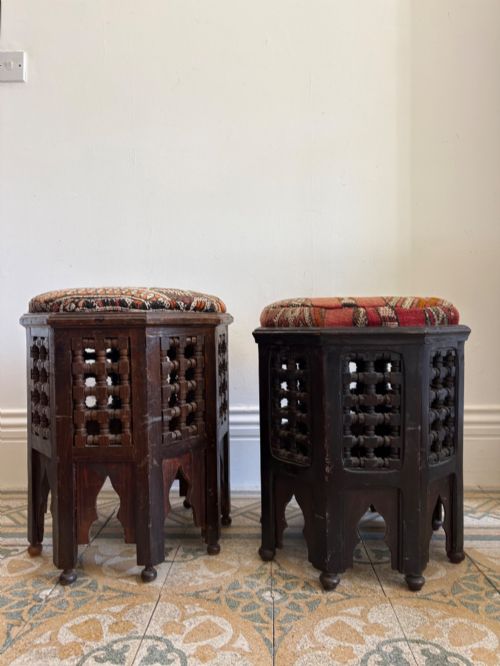
Antique Carved Footstool
An antique carved footstool brings tactile comfort and period detail to a room, ranging from simple country pine to formal Victorian rosewood.
Antique Carved Footstool
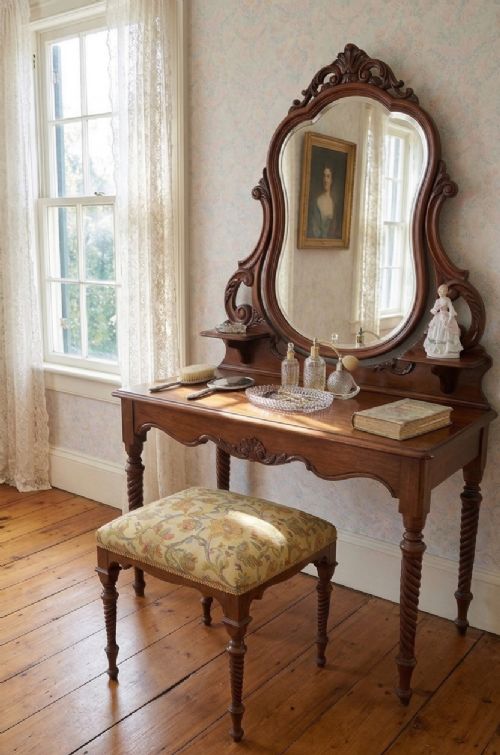
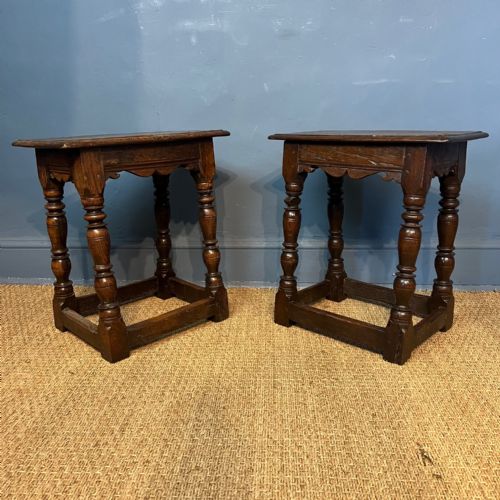
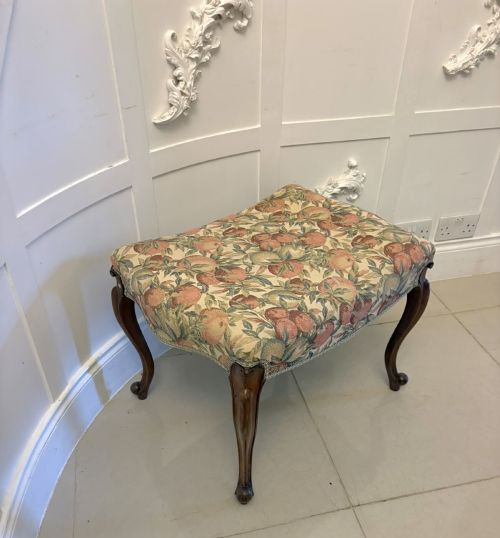
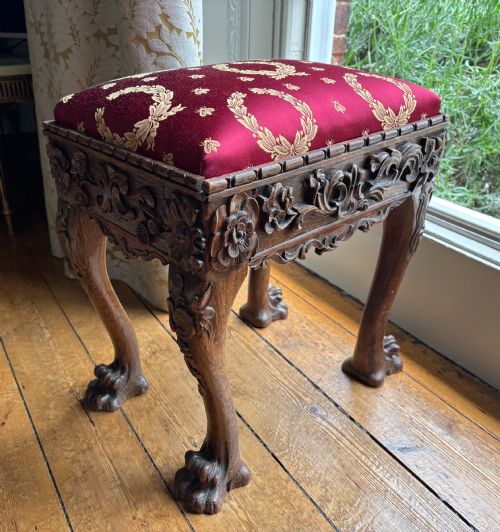
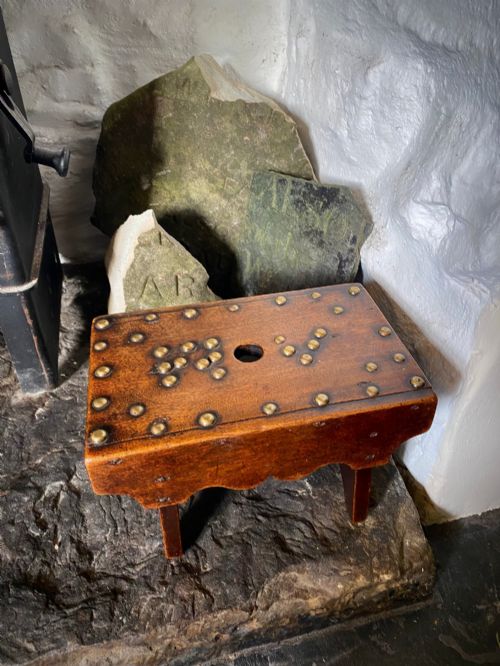
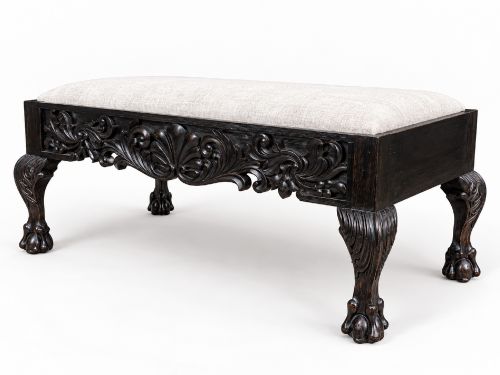
When searching for an antique carved footstool, collectors encounter a diverse group of low seating forms designed for firesides, dressing tables, and formal drawing rooms. The selection includes compact Victorian walnut pieces, larger upholstered mahogany designs, and occasional revival styles referencing earlier centuries.
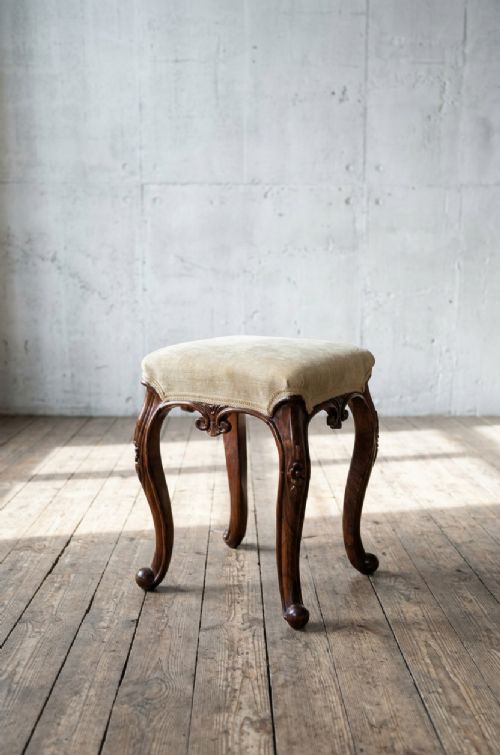
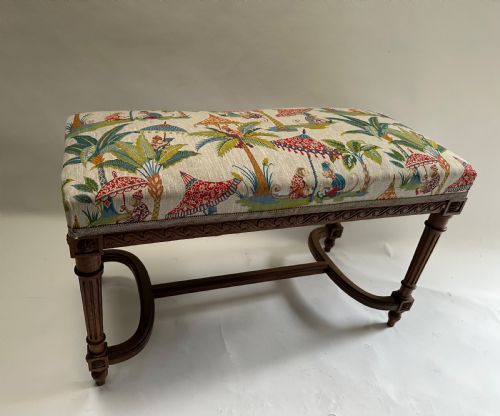
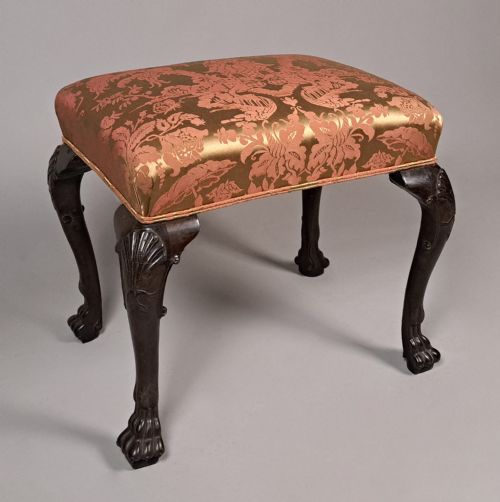
Most examples appearing on this page date from the nineteenth century, encompassing Victorian and Regency periods alongside earlier eighteenth-century survivals. Common formats take the shape of oval seats, cabriole-legged dressings stools, and cross-frame X-form supports.
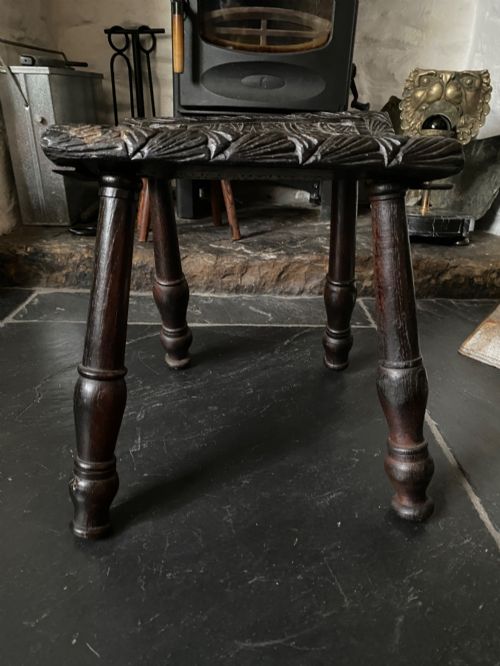
Makers utilised timber frames paired with traditional upholstery, producing everything from simple jointed oak country stools to heavily carved giltwood and rosewood salon pieces. Regional variations stretch across English, Scottish, French, and Italian workshops.
Materials and construction methods
Carpenters and cabinetmakers built these frames using dense hardwoods such as walnut, mahogany, oak, and rosewood, often applying detailed hand-carving to legs and rails. Pine and beech served for painted or subsidiary frames.
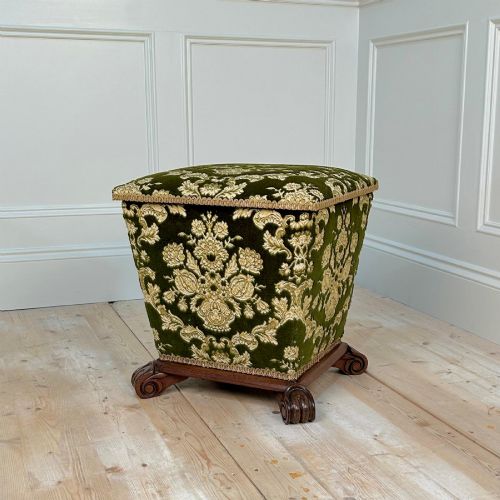
Upholstery techniques relied on textiles including velvet, tapestry, needlepoint, beadwork, and burgundy hide stretched over supportive foundations. Structural integrity depended on traditional joinery like cross stretchers and jointed corners.
Antique Carved Footstool Retail Price Guide 2026
Typical asking prices for carved footstool among the pieces listed under this phrase on Sellingantiques today, from the lower quarter to the upper quarter. They describe what is for sale here now, not the wider market.
Tiny beadwork seats survive alongside grand needlepoint tapestries, proving Victorians loved intricate handcraft underfoot.
Judging quality and craftsmanship
Quality reveals itself in the crispness and depth of the timber carving, where hand-tooled details outshine softer, machine-cut moulding. Heavier timbers and substantial frames indicate better original materials.
The refinement of the legs, such as well-proportioned cabriole forms or precisely turned stretchers, elevates a piece above standard utility items. Original upholstery textiles and intact needlework also distinguish superior survivals.
Miles & Edwards
The Antique Carved Footstool Glossary
- Cabriole leg
- A furniture leg that curves outward at the knee and tapers inward toward the foot, inspired by animal limbs. This form appears frequently on Victorian and Queen Anne style walnut stools.
- Needlepoint
- A type of counted thread embroidery stitched onto a canvas mesh to form decorative pictorial or geometric seat covers. It is often found on Victorian fireside stools.
- X-frame
- A structural support shaped like an intersecting X, providing stability and visual flair. This design occurs in Regency and French Empire examples.
- Cross stretcher
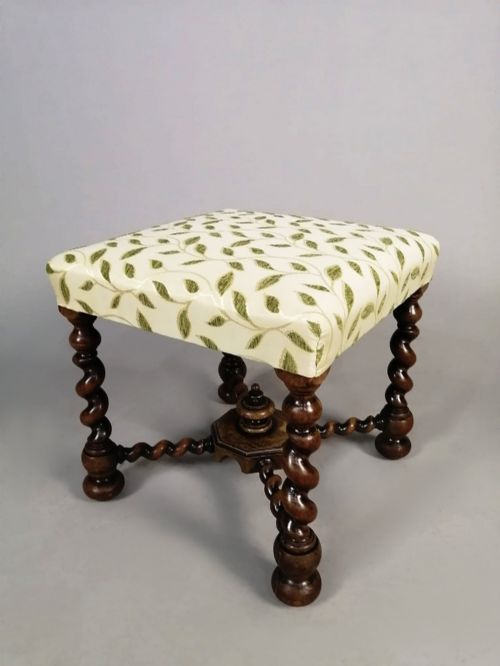
- Wooden bars connecting the lower legs of a stool to provide additional structural rigidity. They frequently feature central finials or turnings.
- Goncalo Alves
- A dense exotic hardwood with distinct dark brown and golden-brown figuring used in high-status cabinetmaking. It appears occasionally on mid-nineteenth-century dressing table stools.
Antique Carved Footstool: Frequently Asked Questions
How were these stools used historically?
Historically, people used these low seats to rest their feet while sitting in armchairs or by the hearth to stay clear of cold draughts.
Dressing stools also provided practical seating in bedrooms during the Victorian and Regency periods while individuals sat to arrange their hair or attire.
How do I date a wooden footstool?
Dating relies on examining the timber species, joinery methods, and stylistic cues such as cabriole legs, X-frames, or specific revival motifs.
Victorian pieces frequently utilise rosewood and walnut with elaborate carving, whereas earlier eighteenth-century examples display simpler, heavier oak or pine construction.
Can I use an antique stool every day?
Most sturdy hardwood stools remain entirely suitable for daily use as extra seating or footrests in a modern living space.
Checking the stability of the frame and the condition of the upholstery ensures the piece safely accommodates regular weight.