





Antique Swedish Stools
Antique swedish stools bring sculptural Nordic form into a room, offering versatile seating shaped by Gustavian and Biedermeier traditions.
Antique Swedish Stools
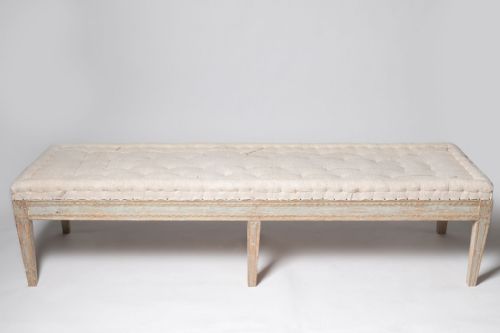
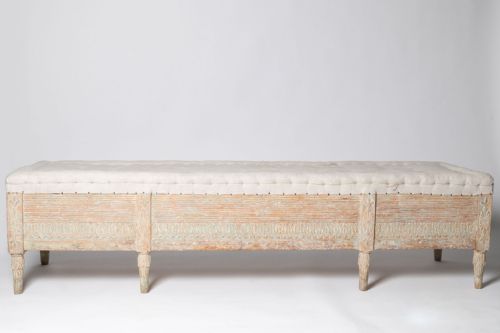
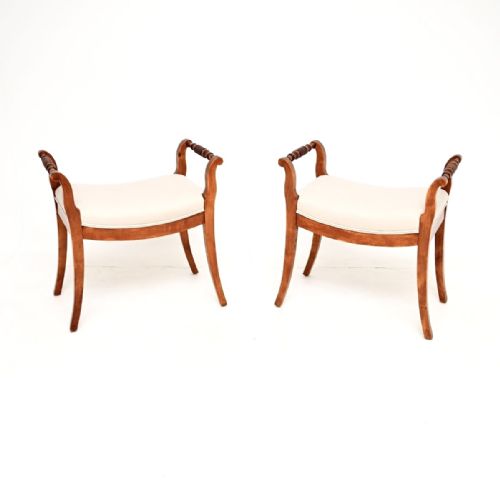
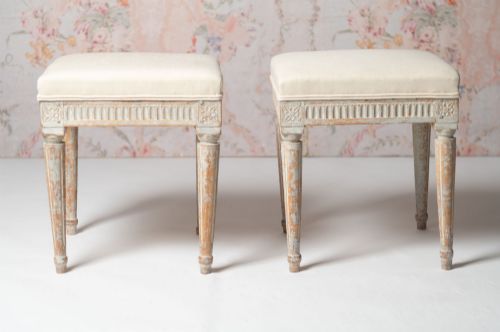
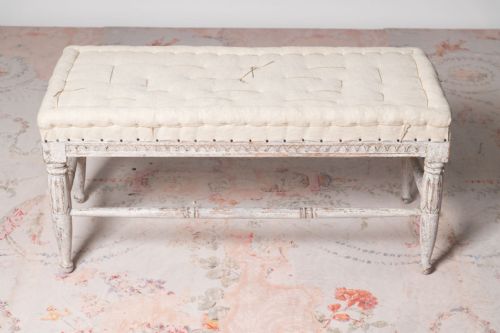
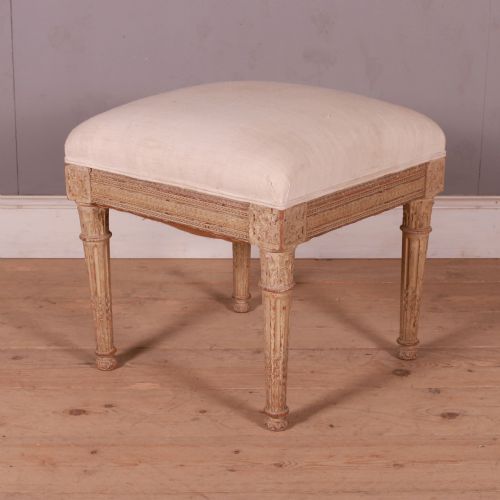
When you search for antique swedish stools, you encounter pieces spanning the eighteenth, nineteenth, and early twentieth centuries. These encompass distinct forms including low footstools, long bedroom stools, matching pairs, and elements within larger furniture suites. The selection ranges from modest painted seating to polished satin birch expressions of classical restraint.
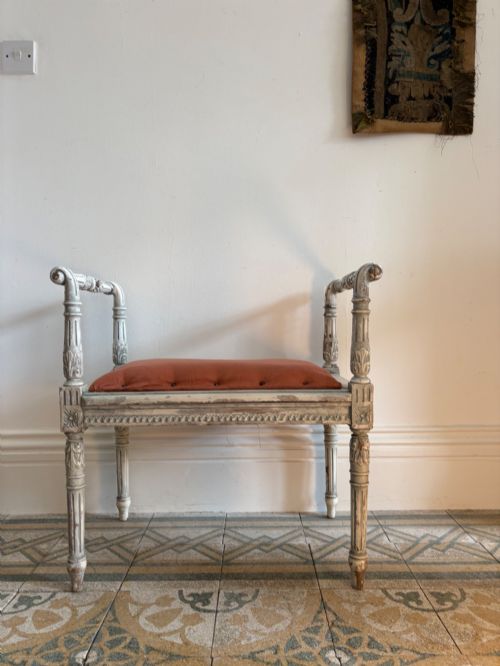
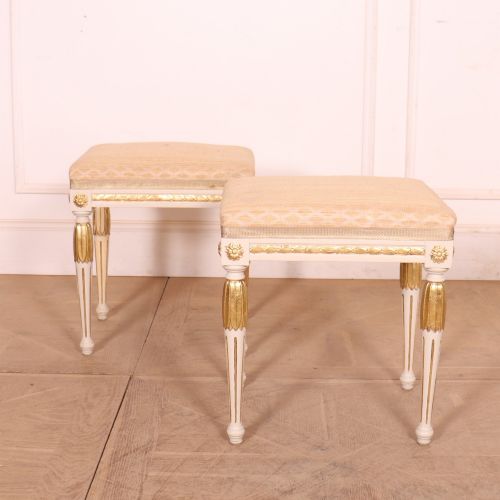
The Gustavian Neoclassical aesthetic dominates the painted examples, often rendered in white paint with subtle carved detailing. Alongside these, Swedish Biedermeier and Empire pieces bring warmer timber tones and figured grains into domestic spaces. You are likely to meet both singular statement seating and matched pairs designed to flank a fireplace or bed end.
Materials and construction methods
Makers utilised native timbers such as birch and satin birch, frequently finishing them with clear varnishes to highlight the natural grain. Where a lighter neoclassical palette was desired, wood received coats of paint or delicate applications of gold leaf. Upholstery materials recorded in the tradition include silk, linen, fabric, and occasionally leather.
Structural embellishment relied on hand carving rather than heavy applied ornamentation, aligning with Scandinavian interpretations of continental styles. Joinery methods ensured stability in everyday domestic use, while surface finishes varied from distressed original paint to polished wood.
Antique Swedish Stools Retail Price Guide 2026
Typical asking prices for swedish stools among the pieces listed under this phrase on Sellingantiques today, from the lower quarter to the upper quarter. They describe what is for sale here now, not the wider market.
Bedrooms evidently required extra length, as evidenced by nineteenth-century makers crafting specialised long birch stools specifically for the end of the bed.
Distinctions in quality
The hierarchy of quality rests upon the fidelity of the period style and the crispness of any carved wooden enrichment. Pieces originating from named suites or specific design movements demonstrate superior joinery and more ambitious proportions than standard utility seating.
Surface preservation dictates much of the appeal, separating pieces retaining their original painted finish from those stripped or altered later. The choice of secondary materials, such as figured satin birch veneer or quality silk and linen upholstery, further distinguishes workshop output.
The Antique Swedish Stools Glossary
- Gustavian
- The Swedish neoclassical style spanning the late eighteenth and early nineteenth centuries, characterised by restrained symmetry and light-painted finishes.
- Biedermeier
- A central European and Scandinavian design movement focusing on domestic comfort, utility, and warm unadorned timber grains.
- Satin Birch
- A prized timber featuring distinctive swirling patterns, heavily utilised in nineteenth-century Scandinavian cabinetmaking.
- Gold Leaf
- Extremely thin gold beaten into sheets, applied to wooden carved details to catch the light in formal interiors.
- Empire
- A classical revival style drawing on ancient Roman motifs, marked by bold proportions and dark or polished wood surfaces.
Antique Swedish Stools: Frequently Asked Questions
How do I date an old stool?
Dating relies on stylistic markers such as Gustavian Neoclassical carved motifs or Biedermeier wood veneers. Comparing construction methods against documented periods helps narrow the decade of manufacture.
Material evidence also guides attribution, noting the shift from eighteenth-century painted softwood to nineteenth-century birch and mahogany.
Where were these pieces used?
These items served functional roles in bedrooms, drawing rooms, and hallways across Swedish homes. Long bedroom stools were positioned at the foot of beds, while low stools provided fireside seating.
Pairs were frequently manufactured to sit symmetrically beneath windows or flanking architectural doorways.
Are painted finishes usually original?
Surviving examples often retain original paint layers, though some pieces accumulated overpainted surfaces through subsequent generations. Close inspection reveals the wear patterns and pigment composition beneath topcoats.
Original paint contributes significantly to the historical integrity and visual charm of Gustavian furniture.
What is Swedish Grace?
Swedish Grace represents an architectural and furniture style bridging neoclassical restraint and early modernism during the twentieth century. It combined classical proportions with simplified geometric forms.
Pieces from this era reflect a refined transition before functionalist mass production reshaped Scandinavian design.