




Distressed Painted Footstools
Distressed painted footstools bring character and history into a room through weathered surfaces and compact, practical forms.
Distressed Painted Footstools
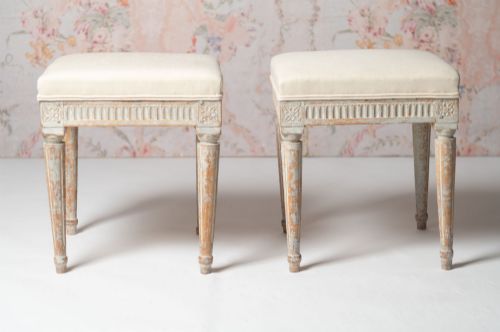
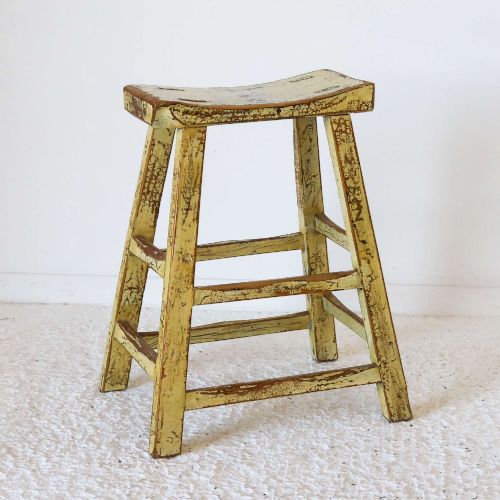
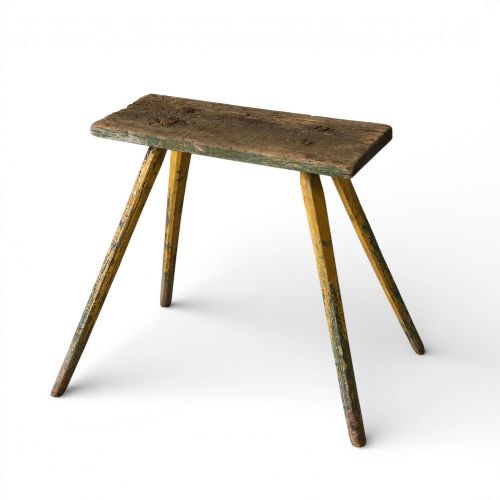
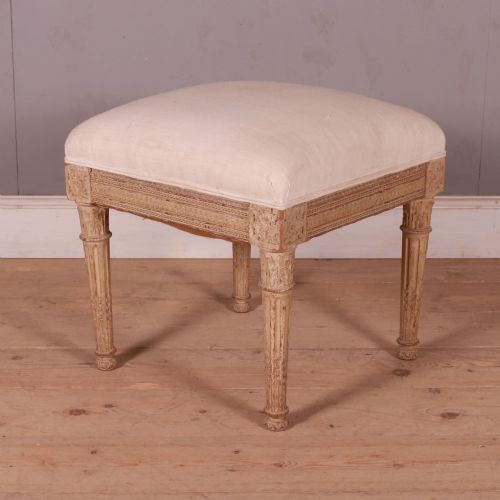
Distressed painted footstools encompass a variety of seating forms from the eighteenth century to the twentieth century, originating from European and Chinese workshops. Buyers seeking distressed painted footstools will encounter pieces ranging from Swedish Gustavian pairs to French rustic milking stools and Chinese lacquered elm examples.
The selection on this page relies heavily on nineteenth-century craftsmanship, alongside specific periods such as the eighteenth century and nineteen hundred. Forms span simple low stools, decorative carved variants, and needlework-topped seats designed for resting feet or low seating.
Origins vary across regional traditions, notably French provincial and Italian neoclassical styles, as well as Chinese provincial pieces. Each style brings distinct proportions and decorative vocabulary to the category.
How they were made
Makers shaped these pieces from timber such as elm and general wood, often employing hand-carving techniques to create structural frames and decorative details. Surfaces received layers of paint or lacquer, which aged over time to produce the distressed appearance valued by collectors.
Upholstered variants incorporate materials like linen and general fabric over padded foundations, combining textile work with wooden joinery. Original paint finishes survive on several examples, recording decades of wear and exposure.
Materials across these listings include elm, timber, paint, linen, and lacquer, representing diverse regional European and Chinese traditions.
What varies in quality
Quality in these stools rests on the integrity of the original timber frame and the authenticity of the surface finish. Pieces retaining untouched early paint layers or traditional carved details stand apart from later interpretations.
The balance of proportions and the refinement of regional turning or carving distinguish provincial utilitarian items from high-style decorative seating. Evidence of period hand-tooling elevates the standing of an individual piece.
The Distressed Painted Footstools Glossary
- Gustavian
- A Swedish neoclassical style characterised by restrained carving, pale painted finishes, and symmetrical forms derived from French court design. It emerged during the late eighteenth century and remains influential in Scandinavian interiors.
- Elm
- A tough, interlocking-grained timber commonly used for vernacular seating and rustic stools due to its resistance to splitting. It takes paint and lacquer well.
- Lacquer
- A durable resin finish applied in multiple coats to wooden surfaces, frequently seen on Chinese provincial furniture to provide protection and a smooth sheen.
- Needlework
- Hand-stitched textile decoration, often executed in wool or silk canvas work, utilised for upholstery on nineteenth-century stools and footrests.
- Provincial
- Describing furniture made in regional areas outside the capital, often adapting metropolitan high-style designs using local materials and simpler techniques.
Distressed Painted Footstools: Frequently Asked Questions
What are distressed painted footstools?
Distressed painted footstools are antique and vintage low seats featuring weathered painted or lacquered surfaces. They originate from various regional traditions across Europe and China.
These pieces function primarily as movable footrests or compact occasional seating. Their aged finishes provide tactile history and visual texture to interiors.
How were antique stools used?
Antique stools served practical domestic purposes, from resting feet near open hearths to assisting with household chores like milking. Lower forms provided stable platforms for daily tasks.
Over time, decorative versions entered formal parlours and salons. They offered versatile, space-saving seating options for guests.
How do I live with antique painted stools?
Integrate these stools into modern rooms as side tables, plant stands, or occasional seats. Their compact dimensions allow them to fit easily beside armchairs or under console tables.
Protect original painted surfaces from excess moisture and direct sunlight. Treat fragile textiles and aged wood with gentle, appropriate care.
How can I tell periods apart?
Distinguish periods by examining structural joinery, wood types, and decorative motifs. Eighteenth-century pieces often display hand-carved neoclassical details, while Victorian examples frequently incorporate padding and needlework.
Evaluate the wear patterns in the paint layers. Genuine age shows natural thinning and patination that modern distressing struggles to replicate.