


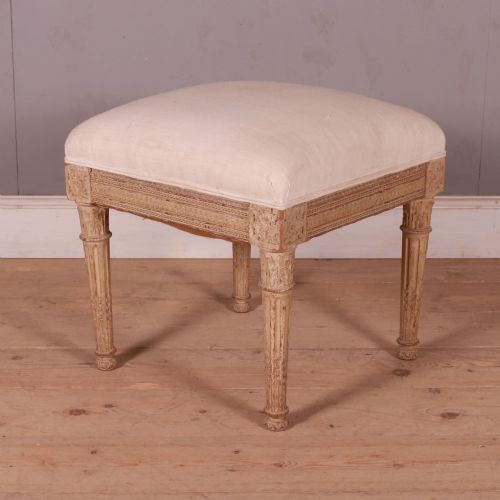


Gustavian Painted Stools
Gustavian painted stools bring calm Nordic elegance into a room with their restrained neoclassical lines and muted surfaces.
Gustavian Painted Stools
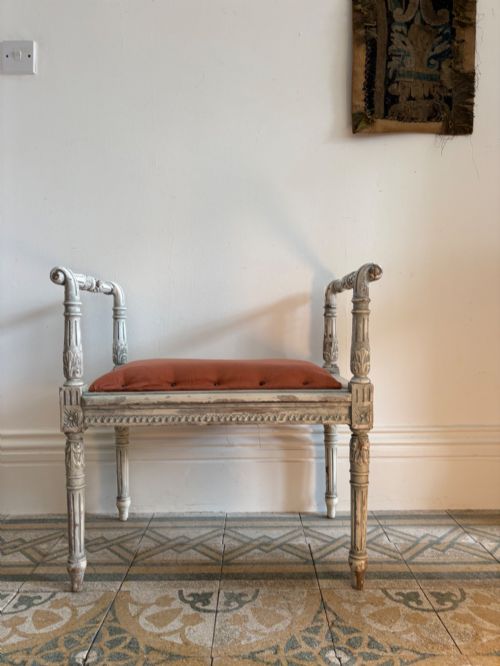
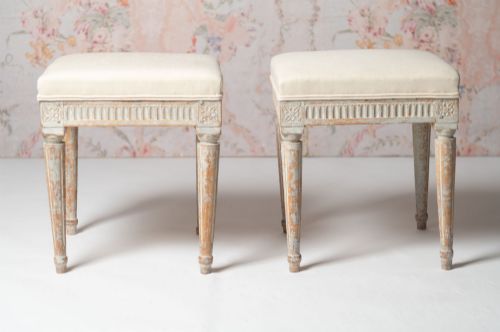
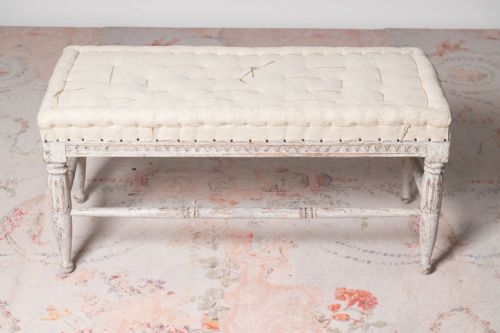
Gustavian painted stools are seating forms originating from Sweden, drawing heavily on French neoclassical design translated through a simpler, northern lens. When you browse gustavian painted stools, you encounter pieces dating from the eighteenth century through to the nineteenth century, including single seats, low profiles and matched pairs.
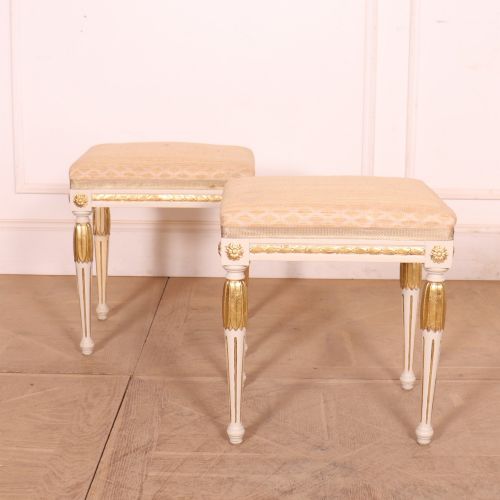
The inventory on this page showcases items rendered in painted wood, often featuring silk, linen, cotton, or fabric upholstery on the seats. Forms range from simple low stools and benches to carved pairs intended for formal interiors.
Materials and construction
Makers constructed these pieces from wood, shaping them with carved details before applying layers of paint and occasionally gold leaf. The resulting surfaces often show the cumulative effect of historic finishing techniques.
Upholstery materials include traditional textiles such as silk, linen and cotton, providing a tactile contrast to the solid wooden frames beneath.
Assessing quality and character
The distinction between average pieces and finer examples rests in the crispness of the carving and the integrity of the painted surface. Authentic period paint layers carry a depth that modern redfinishing struggles to replicate.
Proportion and balance define the superior items, where the neoclassical restraint appears effortless rather than stiff. Paired items demand consistency in both frame structure and surface wear to hold their visual harmony.
The Gustavian Painted Stools Glossary
- Gustavian
- A Swedish neoclassical design style spanning the late eighteenth and nineteenth centuries, named after King Gustav III. It is characterised by lighter proportions, geometric restraint and pale painted finishes.
- Neoclassical
- An artistic movement drawing inspiration from the classical art and architecture of ancient Greece and Rome. In furniture, this translates to straight tapering legs, fluting and symmetrical motifs.
- Painted Wood
- Timber treated with layers of decorative paint, typically in pale greys, whites or creams. This finish was designed to reflect light in long northern winters.
- Gold Leaf
- Extremely thin sheets of beaten gold applied to wooden surfaces for decorative highlights. It brings a subtle warmth to carved neoclassical details.
Gustavian Painted Stools: Frequently Asked Questions
Where did Gustavian stools originate?
These pieces come from Sweden, created during a period when royal courts adapted French neoclassical tastes into a brighter, more restrained local vernacular.
Craftsmen in Swedish workshops produced seating designed to bring light and symmetry into northern homes.
How do I style a painted stool?
A painted stool functions effectively as a flexible seat in a living room, hallway or bedroom. Their neutral tones allow them to sit comfortably alongside both antique and contemporary furnishings.
Pairs work well placed beneath a console table or flanking a fireplace, while low stools serve easily as footrests.
Are these stools comfortable for daily use?
Most period examples feature padded seats upholstered in traditional textiles like linen, cotton or silk. They provide firm, upright support typical of neoclassical seating design.
While built for occasional sitting or resting feet, their solid wood frames ensure structural stability.
How do I identify a genuine period piece?
Look closely at the construction methods, tool marks on the wood and the composition of the painted surface. Eighteenth and nineteenth-century pieces display hand-carved details and layered finishes that evolve naturally over time.
Comparing the proportion and wood density helps separate older examples from later interpretations.