
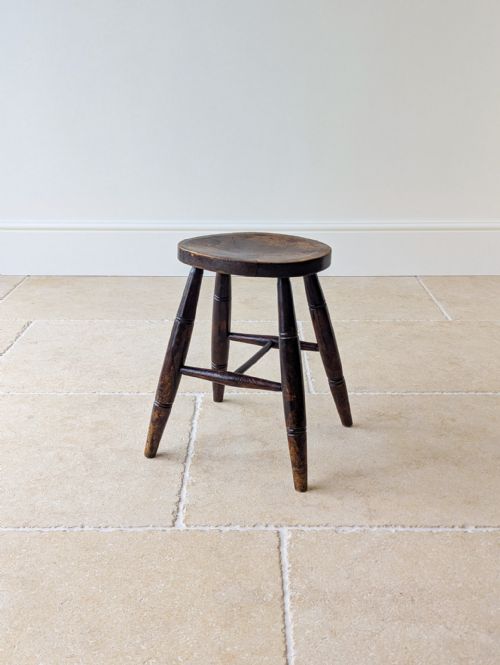
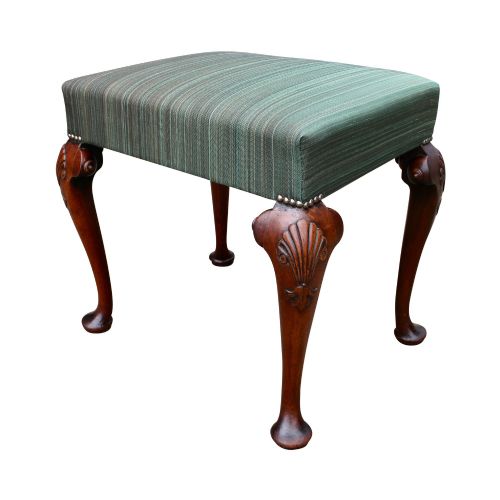
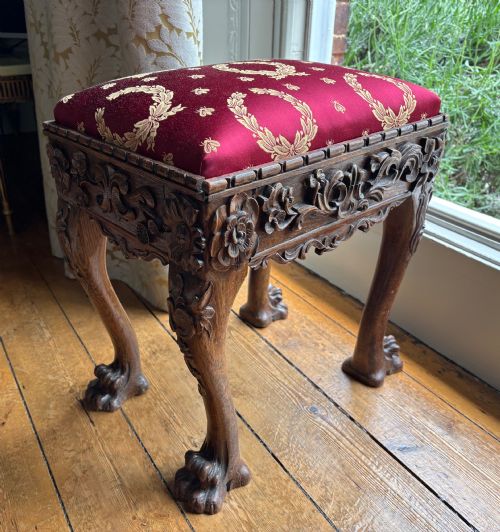

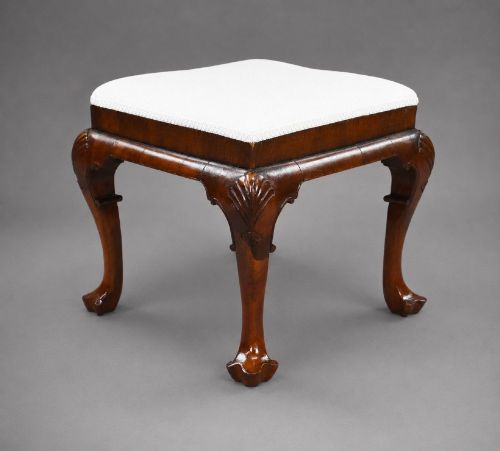
Carved Low Seat
A carved low seat brings intimacy to a room, offering low-slung seating designed for fireside repose, dressing tables and intimate conversation.
Carved Low Seat
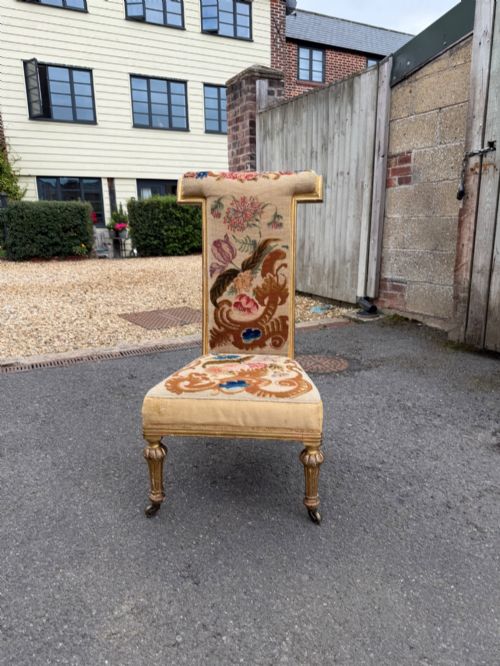
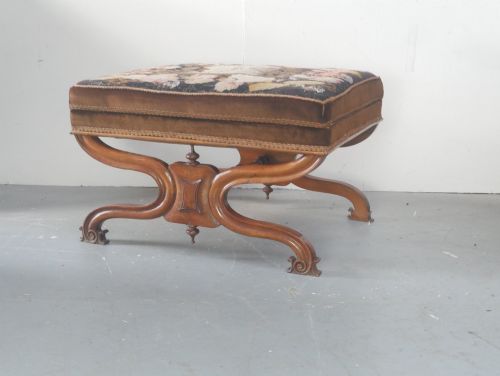
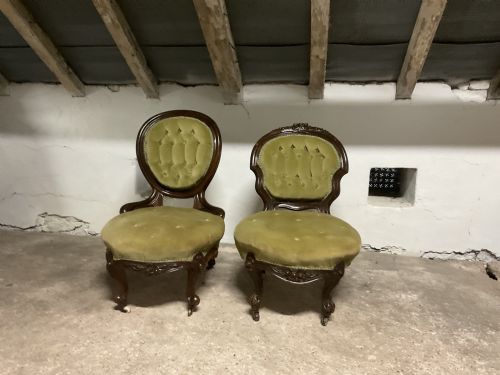
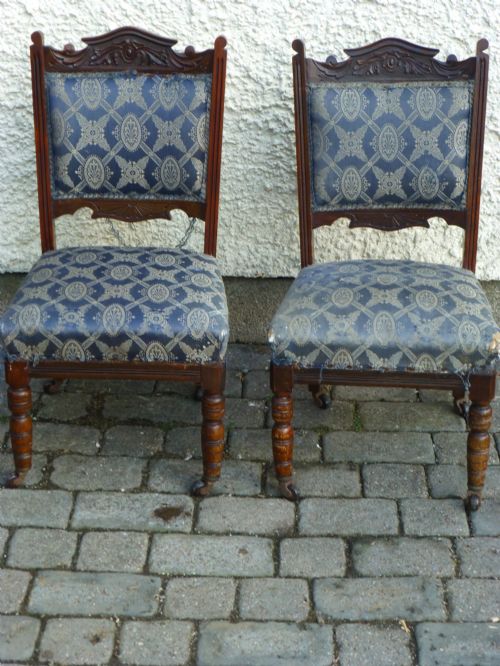
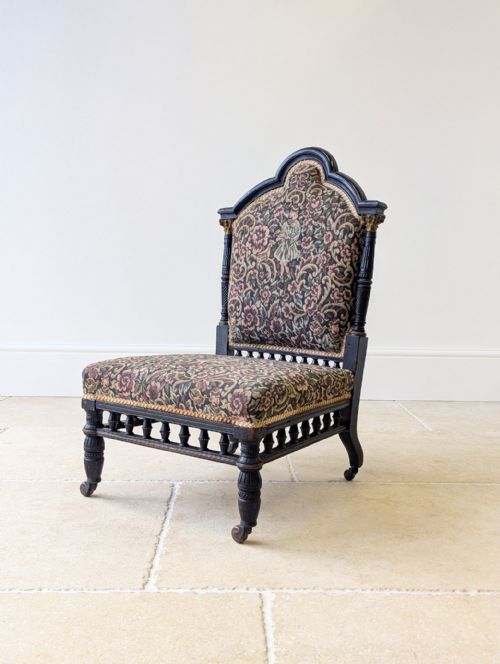
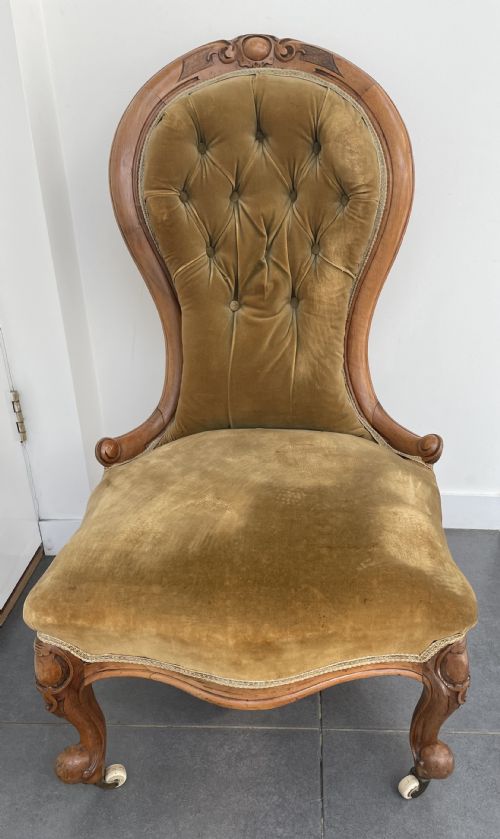
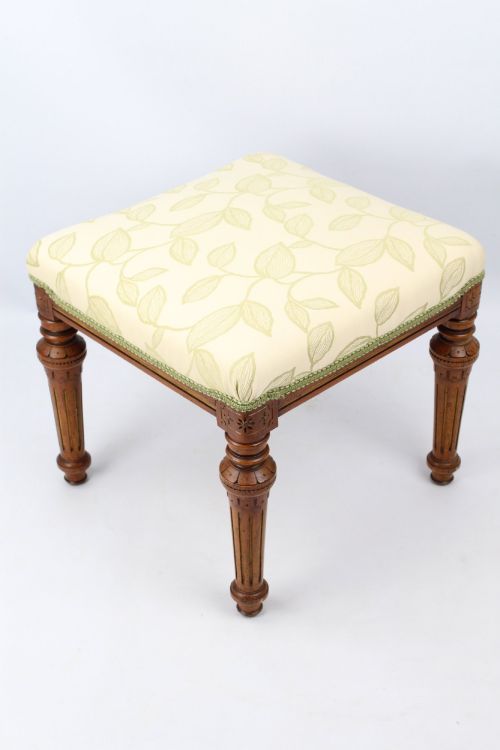
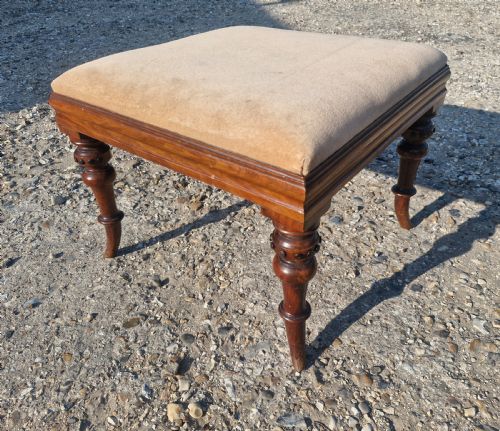
A carved low seat encompasses a variety of compact forms including nursing chairs, dressing table stools, footstools, and low salon chairs. These pieces emerge across the eighteenth, nineteenth, and early twentieth centuries, spanning periods from Regency and Victorian to Edwardian and Art Deco.
Materials and Construction
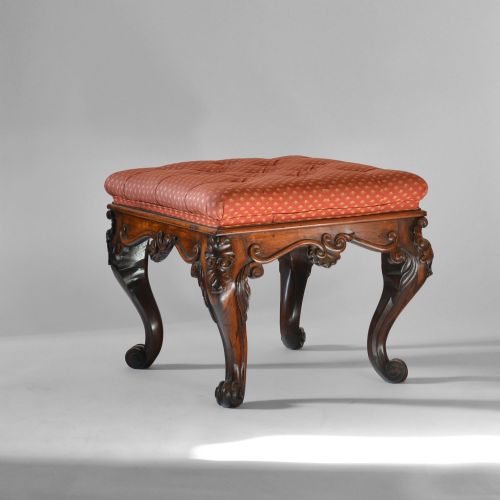
Frames rely principally on dense timbers such as walnut, mahogany, oak, and rosewood, carved with details ranging from cabriole legs to barley-sugar turnings and Gothic revival motifs. Artisans shape these sturdy woods to support heavy carving, applied veneers, and gilded finishes.
Upholstery forms an integral part of the construction, utilising fabrics such as velvet, textile, and needlepoint, sometimes trimmed with fringe or supported by brass details. Many pieces arrive ready for re-upholstery, exposing the underlying webbing, stuffing, and wooden frames.
Materials range from vernacular pine and oak to exotic imported coromandel ebony and rosewood.
Judging Quality
Quality rests upon the crispness of the timber carving and the integrity of the underlying frame construction rather than mere surface ornament. Superior examples display fluent hand-carving on solid hardwoods, harmonious proportions, and robust joinery that withstands decades of domestic use.
The choice of primary timber and secondary framing woods distinguishes workshop standards, while the survival of original decorative elements such as gilt finishes, turned stretchers, and period upholstery elevates a piece. Lesser items show generic machine shaping or tired structural repairs.
Whytock And Reid
The Carved Low Seat Glossary
- Cabriole leg
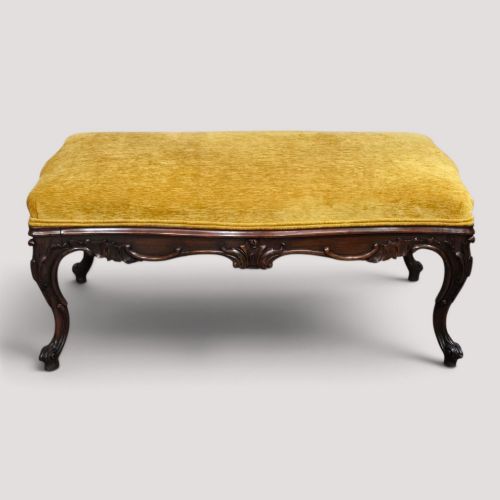
- A furniture leg that curves outward at the knee and tapers inward to an ankle, often terminating in a pad or claw foot. This design appears frequently on Victorian walnut dressing stools.
- Nursing chair
- A low-seated chair historically designed to assist women with infant care or dressing, featuring an upright back and low seat. They often appear in walnut or mahogany with upholstered pads.
- Prie Dieu
- A devotional chair or kneeling desk featuring a low seat and an upper shelf designed for prayer. Nineteenth-century examples often incorporate elaborate needlepoint or fabric upholstery.
- Stretcher
- A horizontal wooden brace connecting the legs of a chair or stool to increase structural stability. Examples range from simple cross stretchers to intricate barley-sugar designs.
- Bergere
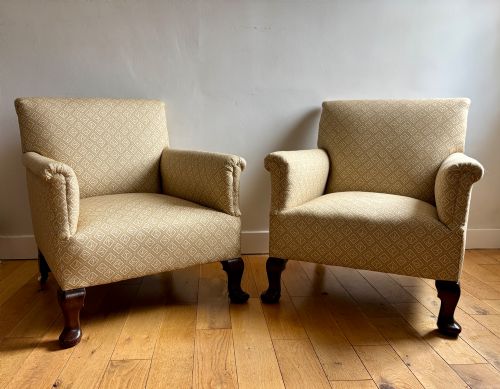
- An enclosed upholstered armchair with wooden framing exposed around the sides and back. Smaller antique variants function as low salon seats.
Carved Low Seat: Frequently Asked Questions
What is a low seat used for?
These compact seats serve varied domestic roles, functioning historically as nursing chairs near the hearth or dressing seats in bedrooms. Their low profile makes them suitable for dressing tables, low windows, or intimate parlour settings.
Today, they add flexible, low-slung seating to living spaces without obstructing sightlines across a room.
How do I date a Victorian stool?
Dating relies on examining the timber species, joinery methods, and stylistic cues present in the carved woodwork. Mid-Victorian pieces often favour walnut with cabriole legs, while later Victorian items incorporate ebonised finishes or Aesthetic Movement motifs.
Comparing the turning style and upholstery foundation helps narrow the decade of manufacture.
Are these chairs comfortable?
Comfort depends entirely on the condition of the internal padding, springing, and upholstery webbing. Many antique examples require professional re-upholstery to restore proper support and seating depth.
Once restored, their ergonomic proportions provide surprisingly supportive seating for relaxation or dressing.
How do I style a low seat?
A low seat works best paired with taller living room furniture to create visual contrast through varied heights. Place a carved walnut or rosewood stool beside a fireplace, or tuck a dressing chair beneath a bedroom vanity.
Allow the carved frame and period textile to stand out by keeping surrounding floor space uncluttered.