




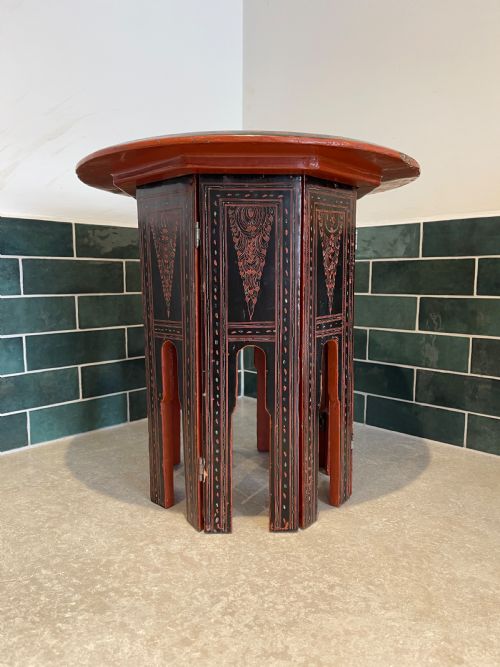


Anglo Indian Stool
An anglo indian stool brings intricate colonial craftsmanship and rich timber into a room, offering both seating and striking low surface utility.
Anglo Indian Stool
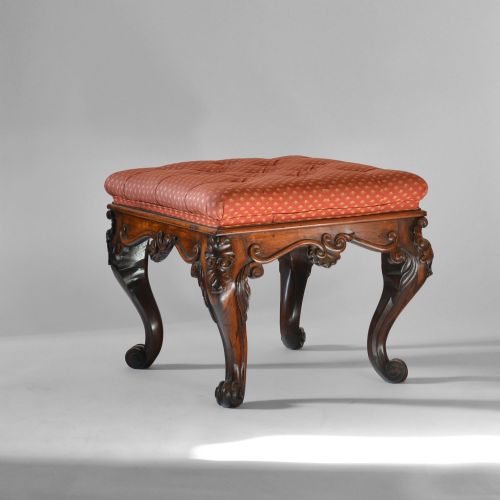
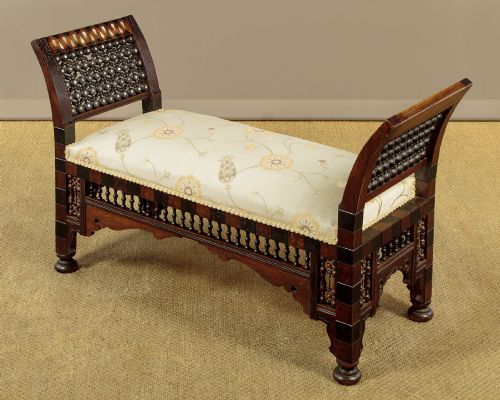
An anglo indian stool encompasses low seating, ottomans, footstools, and occasional tables shaped by British colonial design interacting with local craftsmanship. Pieces range from compact footrests to large country house centre stools and window seats.
Most examples date from the nineteenth century, including Victorian productions and specific regional types from around eighteen eighty to nineteen twenty. Formats extend from circular carved stools to kidney-shaped or scroll-ended forms.
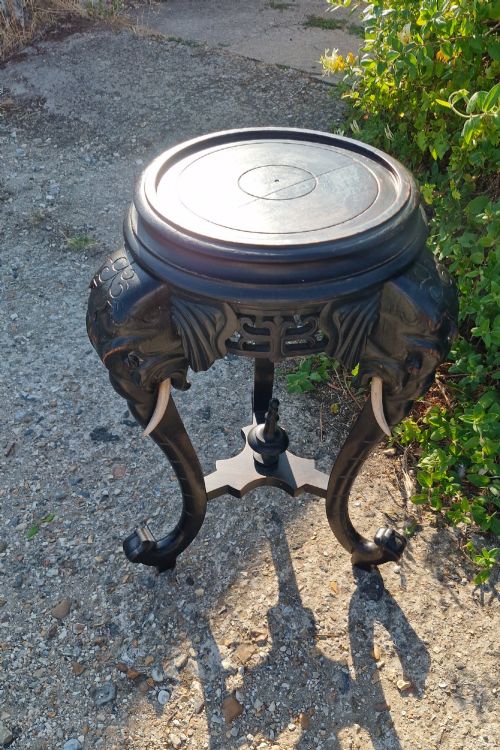
Makers utilised dense timbers and layered ornamentation, often incorporating animal motifs such as elephants or dense floral carving. These works connect British interior demands of the period with overseas workshops.
What varies in quality
The crispness and depth of the carved foliage or figural elements dictate the standard of execution, separating hurried workshop output from patient, highly detailed work. Timber selection also matters, with dense native hardwoods offering superior stability and grain definition over softer painted alternatives.
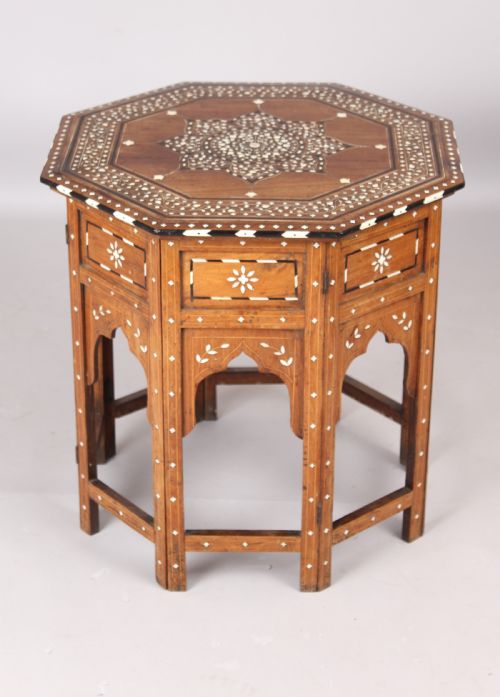
Structural integrity depends on how well joints withstand shrinkage in northern climates over decades. Surviving inlay work requires complete bone or pearl components without heavy modern repairs.
The documented forms span functional footstools, kidney shapes, window seats, and elephant tables.
The Anglo Indian Stool Glossary
- Bone inlay
- A decorative technique where small pieces of animal bone are shaped and set into flush recesses within a wooden surface to form geometric or floral patterns. This method creates high visual contrast against dark tropical hardwoods.
- Padouk
- A heavy, durable reddish-brown tropical timber favoured by makers for its strength and rich natural colour. It accepts fine chisel work without splitting.
- Hoshiarpur
- A town in Punjab noted for intricate woodwork where artisans encrusted furniture with geometric bone and shisham wood patterns. Items from this tradition display dense overall patterning.
- Ottoman
- A low, upholstered seat or footstool lacking arms or a back, frequently utilised as a centre table or heavy resting surface. Nineteenth-century versions often featured substantial timber frames beneath the upholstery.
- Rosewood
- A dense, dark timber featuring pronounced grain patterns that provided a luxurious dark frame for carved panels. It formed the primary material for many nineteenth-century stools.
Anglo Indian Stool: Frequently Asked Questions
Where should I place an anglo indian stool?
These pieces suit living spaces as low coffee tables, window seats, or occasional footstools where their carved details remain visible. Their low profile anchors a room without blocking sightlines.
Position them away from direct heat sources to prevent the timber and bone inlay from drying out and separating.
How do I care for carved hardwood?
Dust the deep recesses regularly with a soft brush and apply a neutral wax sparingly to maintain the timber sheen. Avoid excessive moisture, which damages both the wood and any inlaid bone components.
Inspect joints periodically to ensure the heavy tropical timbers remain stable in changing indoor climates.
How do I date an anglo indian stool?
Examine the timber density, construction joints, and style of carving to establish a nineteenth-century or early twentieth-century origin. Victorian examples often match contemporary British upholstery trends.
Regional variations, such as specific carving styles associated with Bombay or Hoshiarpur, help narrow down the period of production.
Can I reupholster a historic stool?
Many large centre stools and ottomans survive with later or worn upholstery and accept new fabric or leather readily. Retain the underlying webbing and frame structure where original.
Choose materials that respect the heavy timber frame and the historical context of the piece.