
Antique Cabinet Cup
An antique cabinet cup is a highly decorative porcelain vessel made for display rather than daily tea service.
Antique Cabinet Cup
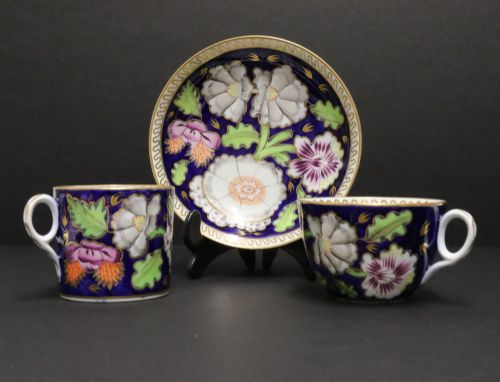
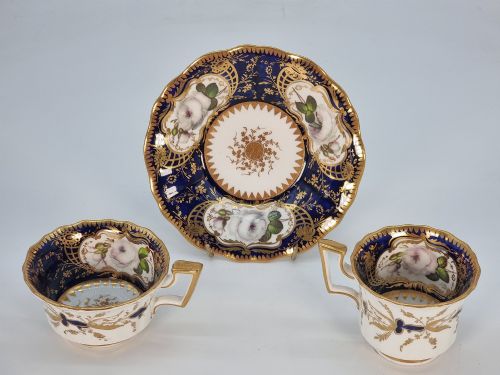
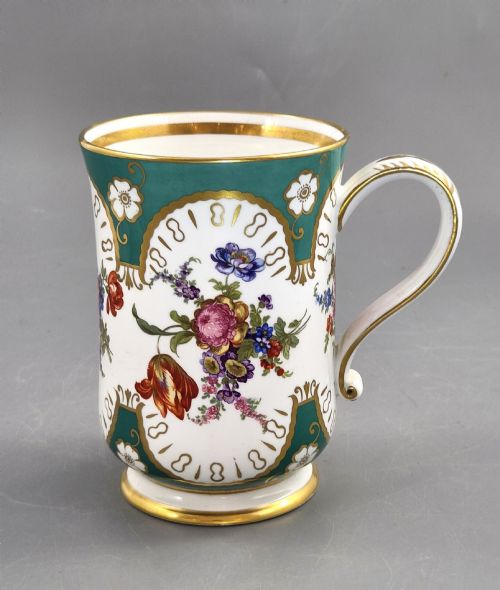
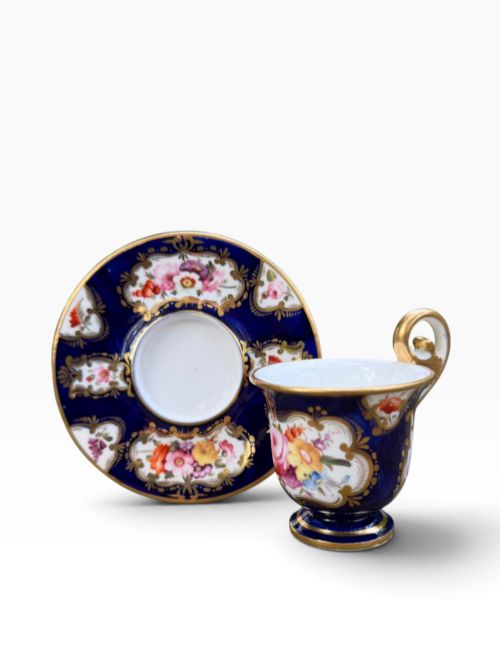
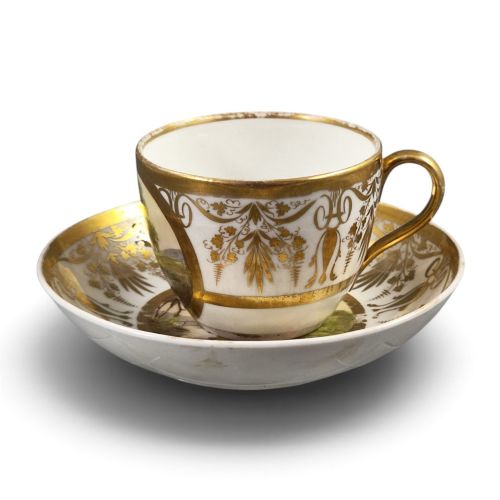
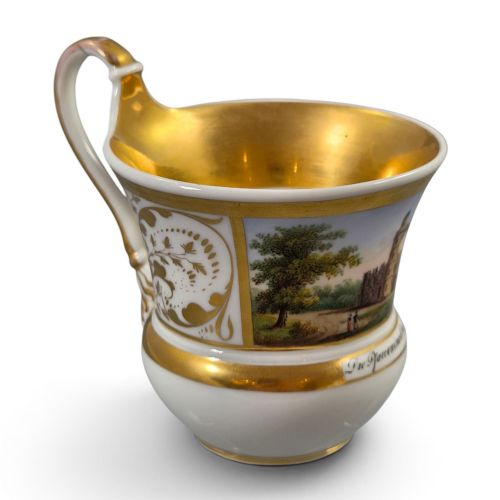
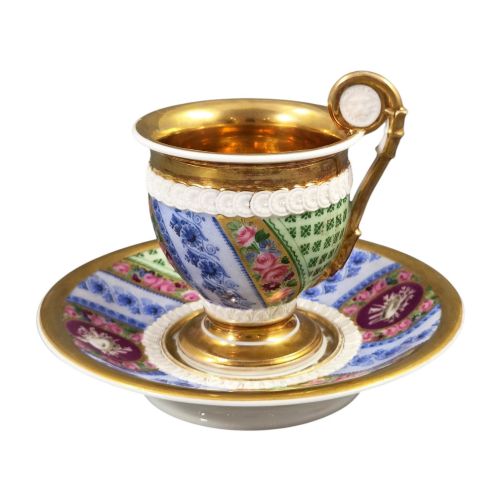
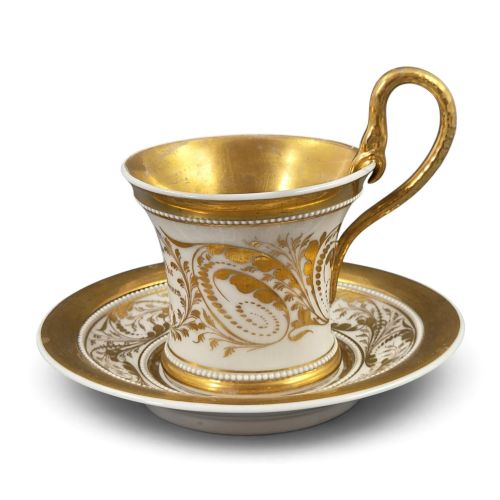
The antique cabinet cup is primarily a porcelain or ceramic piece created to be shown off in a display case or cabinet rather than used at the dining table. These items span various forms including teacups, trios, demitasse cups, and presentation pieces.
Originating largely from European manufactories during the Georgian, Regency, and Victorian periods, these ceramics showcase exceptional painting and gilding. Makers such as Coalport, Spode, and KPM Berlin produced them for wealthy patrons who valued artistic ceramic work.
While the term sometimes brings to mind wooden storage furniture in other contexts, this selection focuses entirely on the porcelain drinking vessels and cabinet cups recorded in the listings.
How they were made
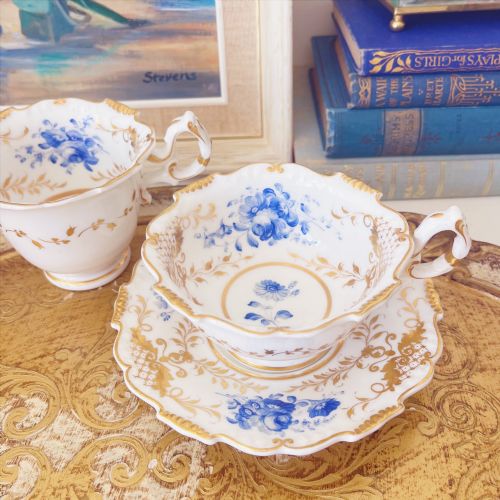
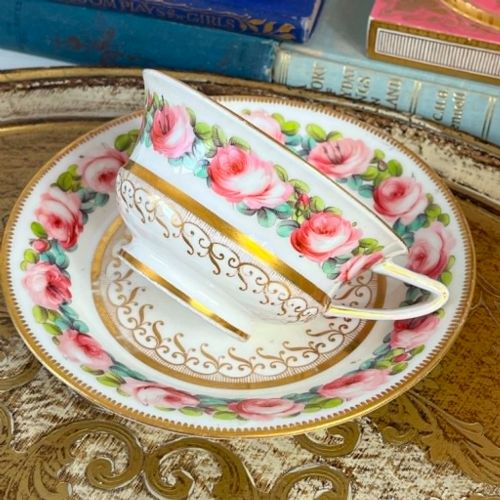
These ceramic pieces rely on hard-paste or soft-paste porcelain and bone china bodies, shaped manually or moulded before firing at high temperatures. Manufacturers then applied complex enamel colours, handpainted topographical or floral motifs, and detailed gilding with gold leaf.
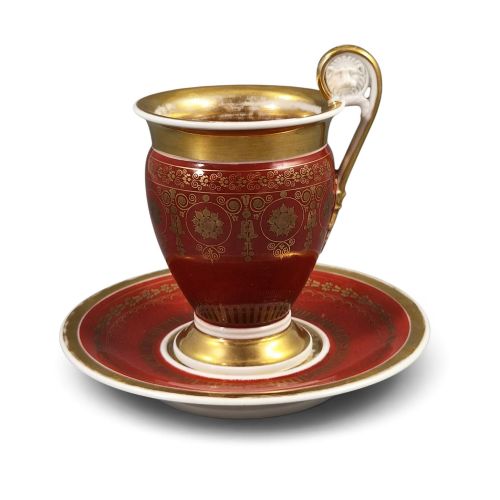
Some nineteenth-century cups feature moulded lion mask handles, glaring steadfastly across the display shelf as miniature guardians of the tea service.
What varies in quality
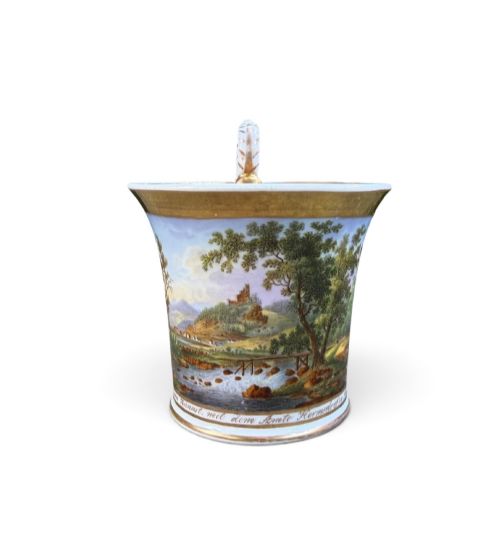
Quality rests significantly on the precision and artistry of the handpainted decoration, ranging from simple factory output to detailed topographical landscapes and allegorical scenes by named artists. Finely executed brushwork and complex multi-coloured enamels elevate the status of a piece.
The application of heavy gold leaf, intricate gilding, and moulded elements like lion mask handles or pedestal bases also distinguish superior examples. Pieces originating from renowned houses such as Sèvres, Meissen, or KPM Berlin generally demonstrate a higher degree of technical mastery.
H R Daniel Shrewsbury·Davenport·Newhall·Coalport John Rose·KPM Berlin·Manufacture de la Reine·Wedgwood·Royal Worcester·Spode·Meissen
The Antique Cabinet Cup Glossary
- Cabinet cup
- A decorative porcelain vessel designed for display in a cabinet rather than everyday use. These pieces often feature elaborate handpainted scenes and extensive gilding.
- Demitasse
- A small cup used for serving strong black coffee or espresso. They frequently appear alongside matching saucers in nineteenth-century porcelain collections.
- Trembleuse
- A cup and saucer combination featuring a raised ring or well in the saucer to hold the cup securely. This design prevented trembling hands from spilling the contents.
- Hard-paste porcelain
- A durable ceramic material composed of kaolin and petuntse fired at high temperatures. It formed the dense body for many fine European cabinet cups.
- Gilding
- The application of gold leaf or powdered gold to the surface of porcelain. It highlights rims, handles, and painted panels.
Antique Cabinet Cup: Frequently Asked Questions
What is an antique cabinet cup?
An antique cabinet cup is a highly decorative porcelain or bone china vessel produced primarily for display within a cabinet or on a mantelpiece. Unlike standard tableware, these items were created to showcase artistic painting, gilding, and porcelain manufacturing skill.
They often include matching saucers or stands and originate from major European ceramic centres during the eighteenth and nineteenth centuries.
Were cabinet cups used for drinking tea?
While formed in the shape of cups, most cabinet cups served a decorative purpose and rarely saw practical use at the tea table. Their delicate porcelain bodies, intricate raised gilding, and painted miniature landscapes made them objects of visual contemplation.
Some specialised forms, such as trembleuse cups, were engineered to hold liquids securely for individuals with shaky hands, though surviving examples are prized for their artistry.
How do I date a porcelain cabinet cup?
Dating relies on examining the factory marks stamped or painted on the base, the style of the porcelain body, and the characteristics of the enamel decoration. Stylistic clues such as Regency Neoclassical motifs or Victorian floral painting help narrow the timeframe.
Reference guides detailing period backstamps and known decorator signatures provide the most reliable method for establishing the exact decade of manufacture.
What styles are common in antique cabinet cups?
Common styles include Regency, Victorian, Rococo Revival, Biedermeier, and Empire designs. These pieces often feature handpainted topographical landscapes, floral sprays featuring roses, or allegorical woodland scenes framed in gold leaf.
French Old Paris wares and German manufactories like KPM Berlin frequently employed bold colour grounds, such as green or cobalt blue, paired with classical ornamentation.