
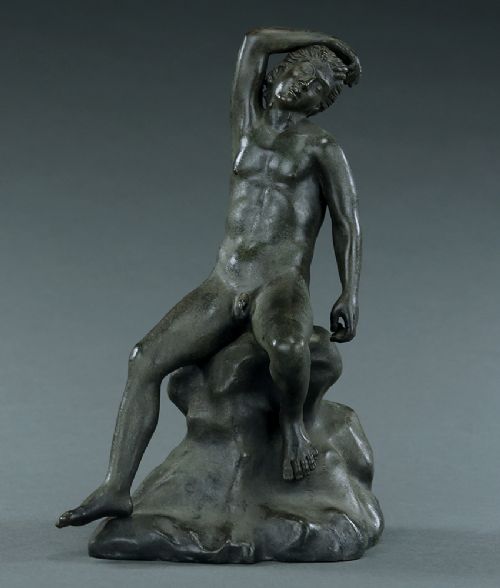
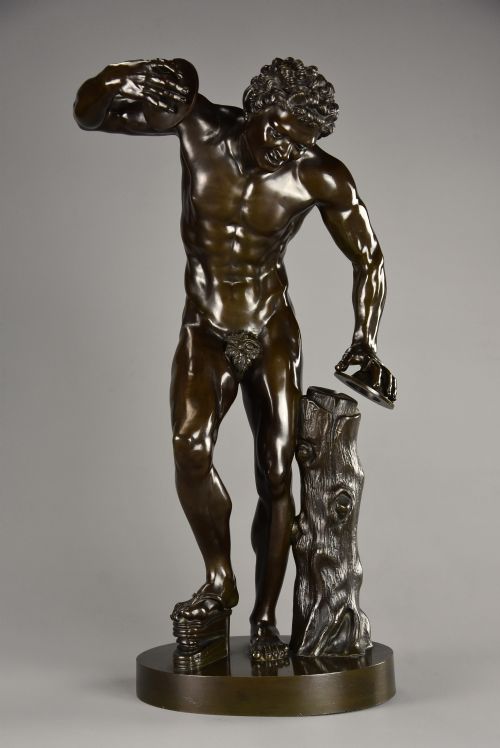


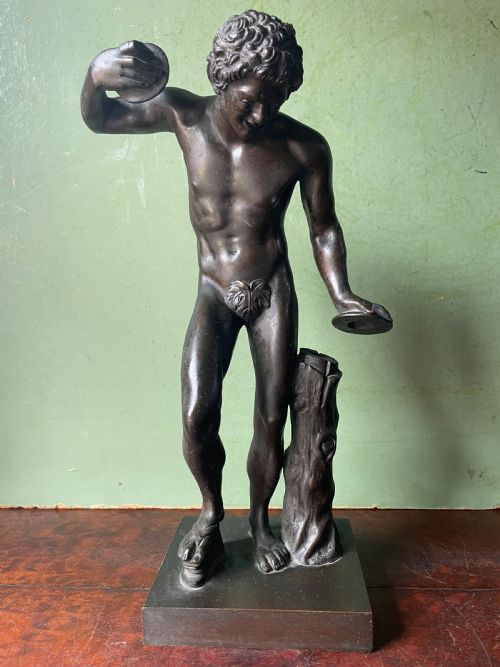
Antique Bronze Faun
An antique bronze faun brings classical mythology into a room, capturing the lively spirit of ancient sculpture through finely cast metal.
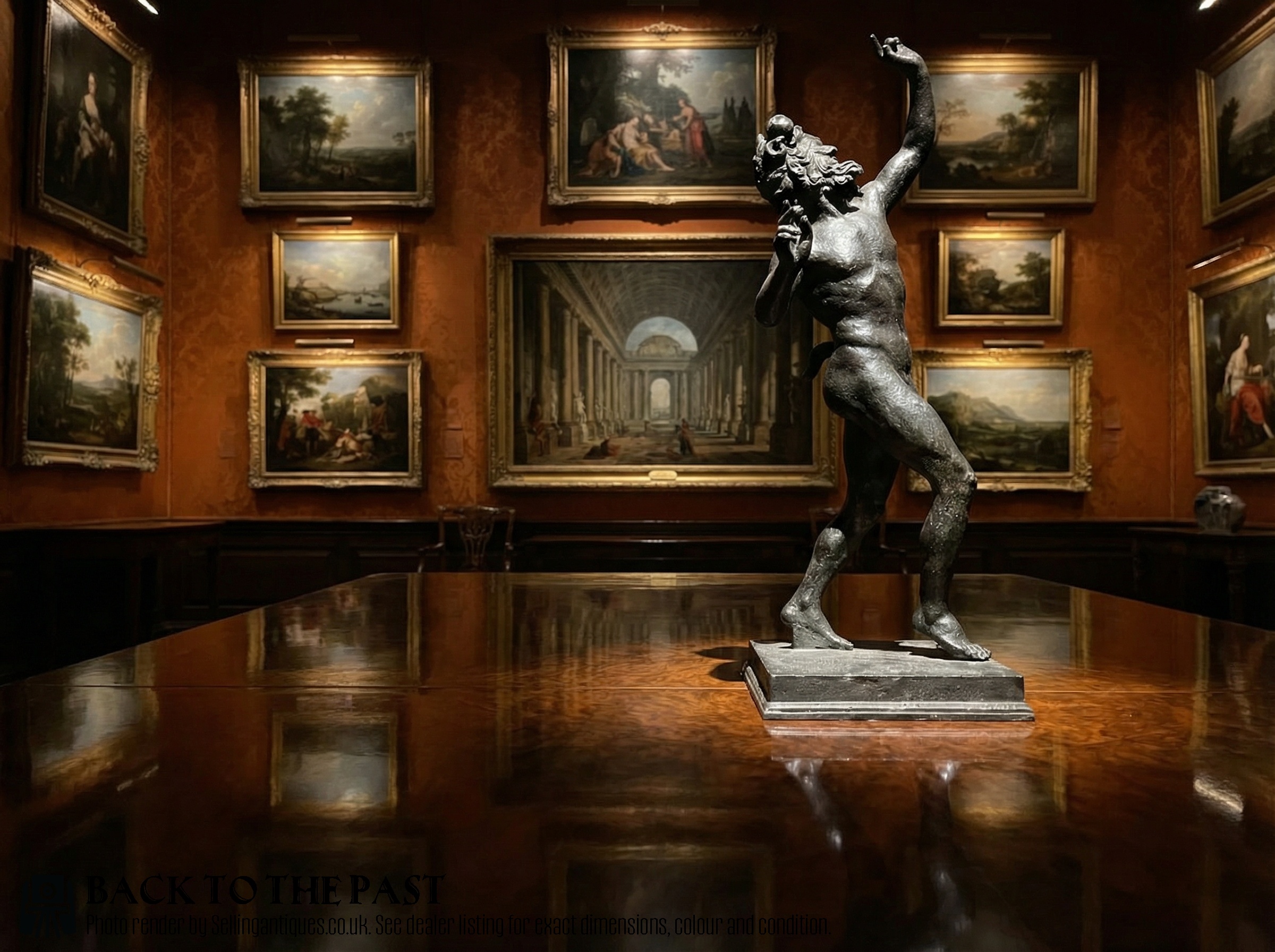
Antique Bronze Faun
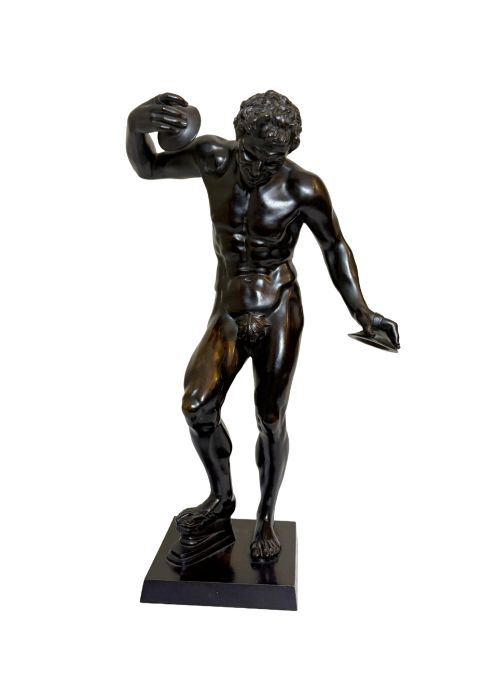
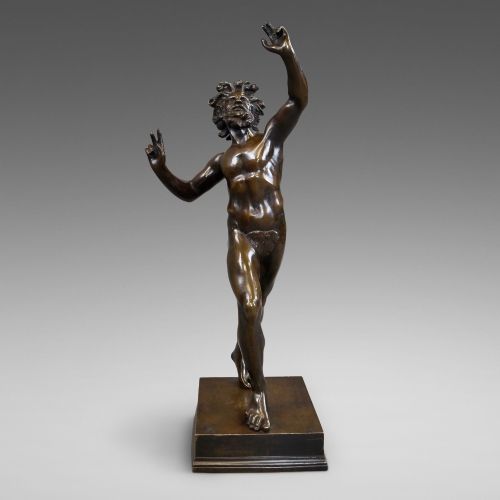
When you search for an antique bronze faun, you encounter classical and mythological figures cast in metal, predominantly originating from the nineteenth century. These sculptures draw inspiration from ancient prototypes discovered in places like Pompeii and Rome, often created as souvenirs for travellers on the Grand Tour.
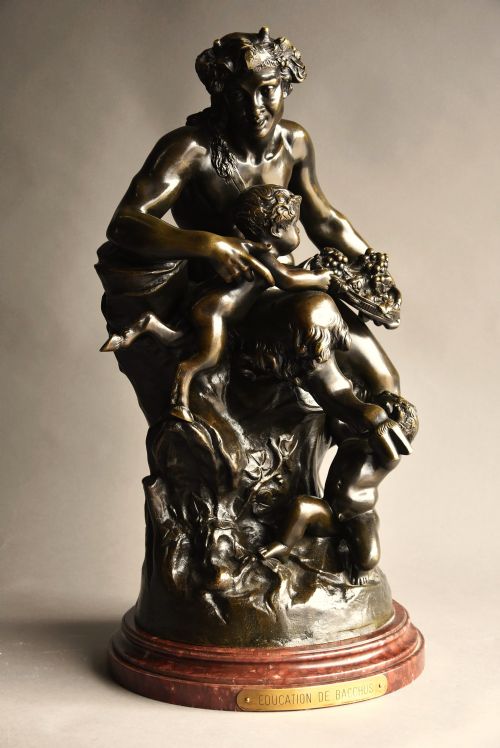
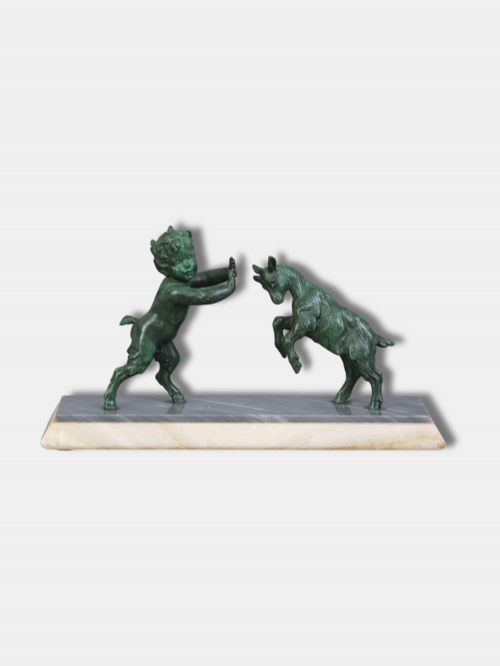
The versions most commonly met on this page include standing or dancing figures with cymbals, pipes, or goats, rendered in various sizes from cabinet reductions to larger group compositions. Italian and French foundries produced these pieces extensively, frequently adapting famous museum sculptures into portable decorative works.
Alongside solid bronze, variants in patinated metal, plaster, and marble appear, mounted on stone bases. Subjects range from solitary dancing fauns to scenes involving Bacchus, pan, and infant companions.
How they were made
The creation of these sculptures relied upon traditional foundry methods, using bronze alloys poured into moulds to capture intricate anatomical details and drapery. Skilled artisans then applied chemical patination, ranging from deep brown tones to green verdigris, to simulate the appearance of antiquity.
Many works incorporate marble bases, providing stable plinths that contrast with the dark metal surfaces of the figures. Details such as musical instruments, cymbals, and facial expressions were finished by hand with chisels and files.
Listings feature nineteenth-century materials including bronze, patinated bronze, plaster, and marble.
What varies in quality
The quality of the patina further differentiates the pieces, with finer examples displaying nuanced tonal variations rather than flat, uniform paint. Foundry marks and stamps from established makers also indicate a higher standard of production and material selection.
Emile Carlier·Augusto Rivalta·Ferdinand Barbedienne foundry·Duchemin
The Antique Bronze Faun Glossary
- Grand Tour
- A traditional trip through Europe undertaken by upper-class Europeans during the eighteenth and nineteenth centuries to study classical art and architecture.
- Reduction
- A small-scale copy of a larger sculpture, achieved through mechanical pantographic methods popular in nineteenth-century foundries.
- Patina
- The surface coloration and sheen developed naturally over time or applied artificially through chemical treatments on bronze and metalwork.
- Verdigris
- A green copper patina resulting from weathering or applied deliberately to mimic the appearance of buried antiquities.
- Lost-wax casting
- A metalworking process where a molten metal is poured into a mould that has been created by means of a wax model.
Antique Bronze Faun: Frequently Asked Questions
What is a Grand Tour bronze?
A Grand Tour bronze is a nineteenth-century souvenir sculpture cast in Italy or France, reproducing famous classical statues for travellers.
These pieces allowed collectors to bring ancient sculptural forms into domestic interiors.
How do I identify a casting after the antique?
Sculptures described as after the antique replicate specific renowned statues discovered in archaeological excavations, such as those in Pompeii.
Comparison with museum records of the original ancient marble or bronze reveals the source of the pose.
Where should I display a bronze faun?
These sculptures suit tabletops, mantelpieces, and dedicated display cabinets where their patinated surfaces catch ambient light.
Placing them on stable stone or wooden furniture ensures the integrated marble bases remain secure.
What is the difference between a faun and a satyr?
In classical art, fauns are generally depicted with human torsos and the legs or horns of a goat, associated with rural woodlands.
Satyrs share similar mythological traits but often appear in more carousing scenes alongside Bacchus.