
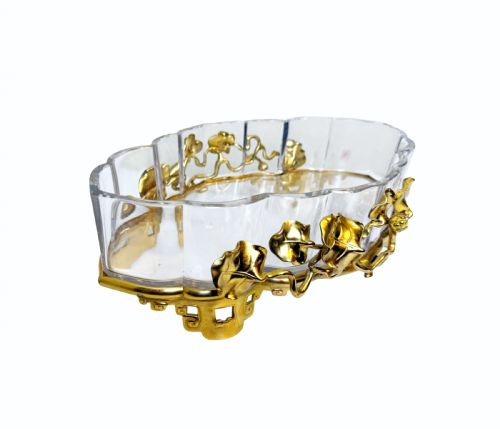


Antique Bronze Centrepiece Bowl
An antique bronze centrepiece bowl commands attention on a dining table or sideboard, uniting metalwork and glass to anchor a room.
Antique Bronze Centrepiece Bowl
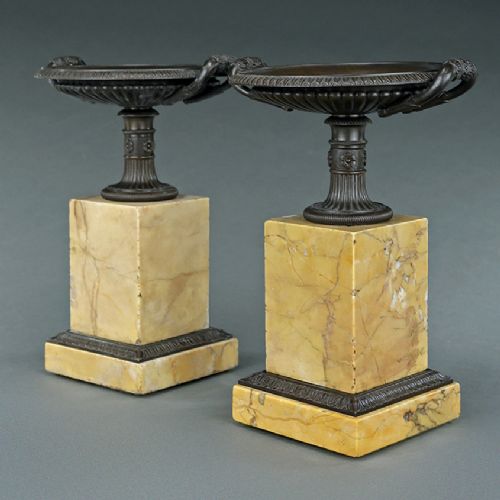
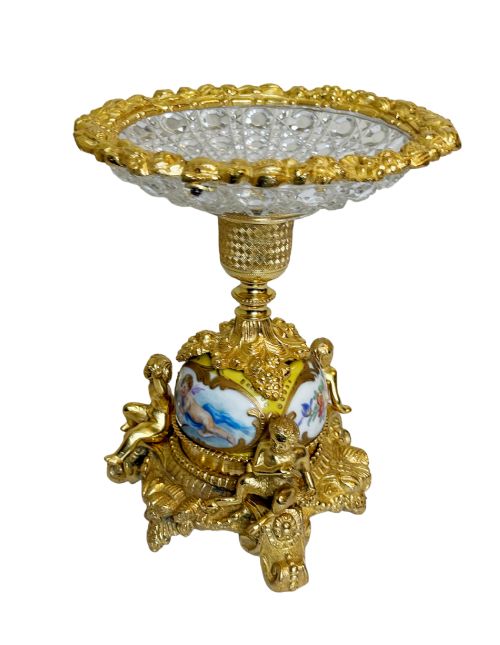
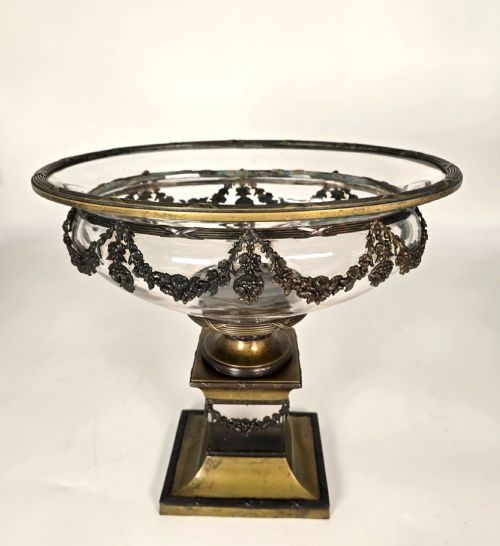
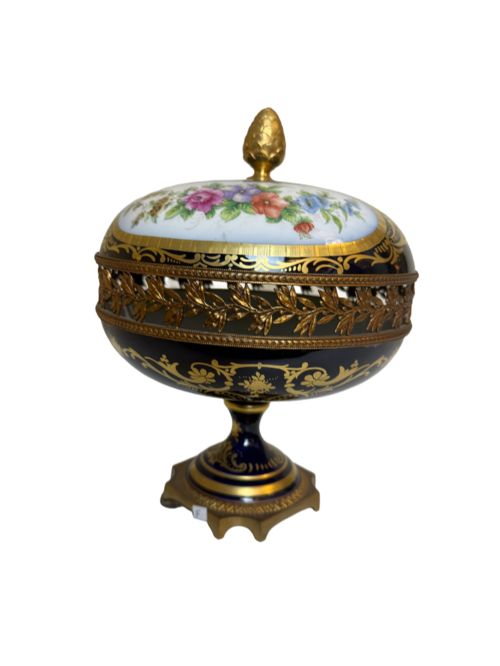
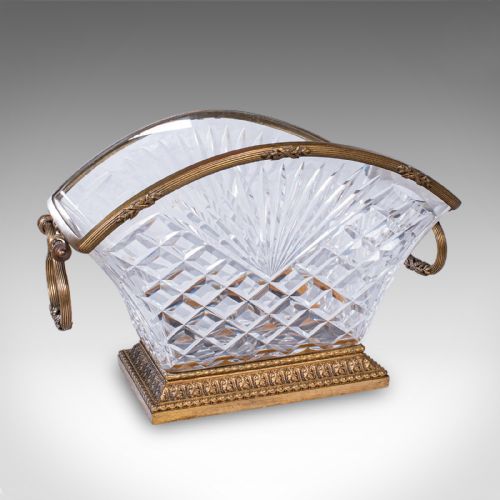
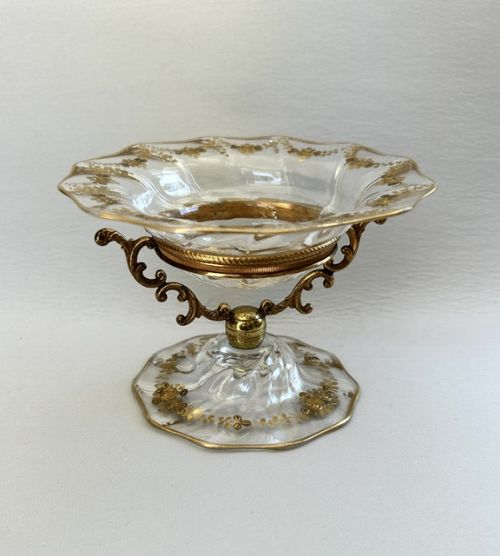
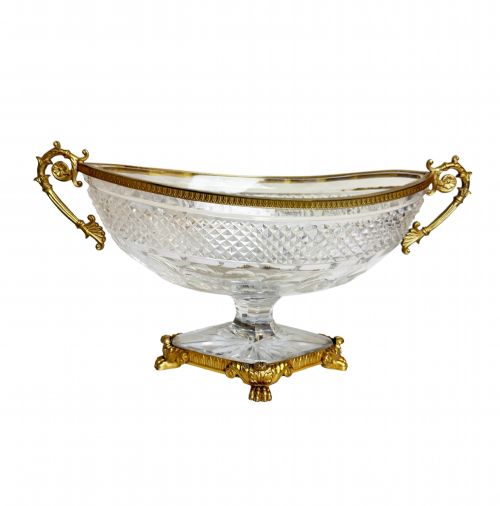
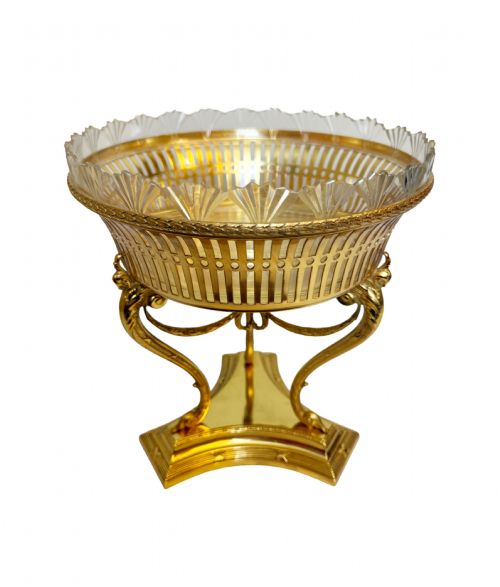
An antique bronze centrepiece bowl encompasses decorative vessels designed to sit centrally on tables, taking forms such as tazzas, comports, and pedestal dishes. These items date predominantly from the nineteenth century, including Victorian and turn-of-the-century examples spanning the French Empire, Neoclassical, and Art Nouveau styles.
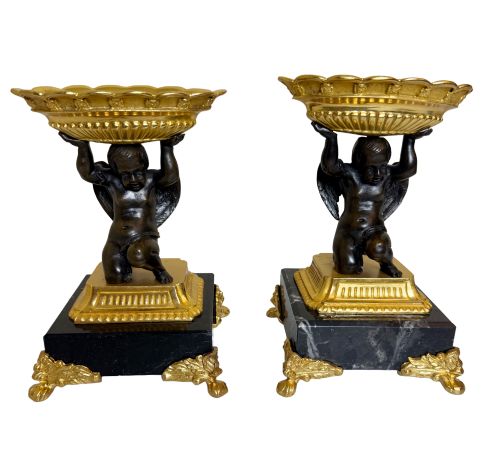
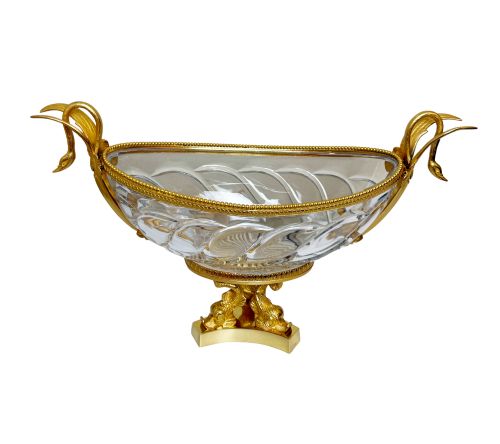
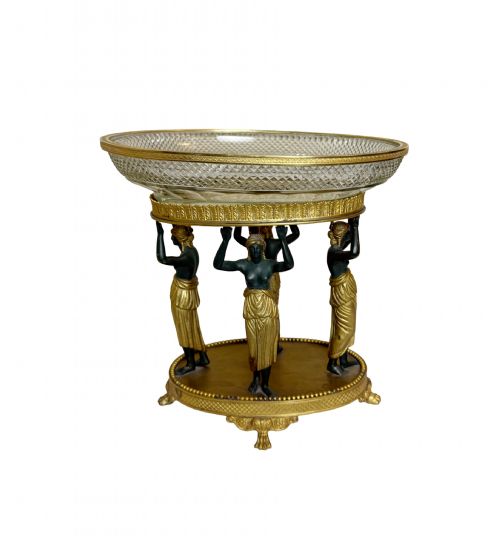
The objects frequently combine cast metal frames with inserts of cut crystal, glass, porcelain, or carved stone like marble and onyx. Buyers encountering this selection will find heavily ornamented French and Chinese pieces featuring cherubs, mermen, and classical motifs.
How they were made
Maker-craftsmen cast the structural frames in bronze, brass, or gilt bronze, often finishing surfaces with ormolu gilding or silvering. Molten or cast elements required meticulous chasing and fitting to secure delicate glass inserts or stone bases.
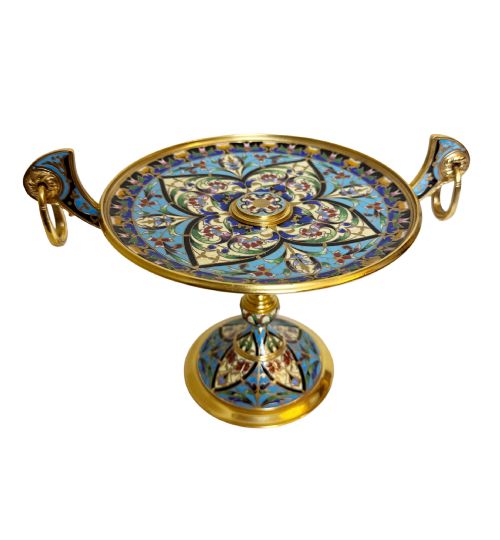
Decorative embellishments relied on specialised techniques such as champlevé enamel work, inset agate cabochons, and hand-cut crystal or porcelain bowls. These varied materials were joined mechanically with threaded pins and screws hidden within the pedestal structure.
Mermen and winged cherubs frequently guard the crystal bowls, holding up heavy gilt bronze frames with surprising athletic dedication.
What varies in quality
The definition and depth of the bronze casting dictate visual success, distinguishing sharp, hand-chased details on figures and foliage from soft, rounded commercial casts. Superior examples integrate diverse elements like champlevé enamel or carved hardstones with precise alignment and secure construction.
Quality also rests on the integrity and weight of the central vessel, whether heavy cut crystal, hand-painted porcelain, or fine Italian marble. Harmony between the metal mount and the insert separates standard decorative items from exceptional sculptural works.
Ferdinand Preiss
The Antique Bronze Centrepiece Bowl Glossary
- Ormolu
- Gilded bronze produced by applying a mercury and gold amalgam to a bronze base and heating it until the mercury vaporised. This historic technique created a rich, durable golden surface on decorative mounts.
- Tazza
- A shallow bowl or cup raised on a high foot and stem, frequently utilised for serving fruit or displaying items. These classical forms appeared widely in nineteenth-century metalwork and ceramic.
- Champlevé
- An enamelling technique where troughs or cells are hollowed out of the metal surface and filled with vitreous enamel paste before firing. The metal partitions remain visible between the coloured glass areas.
- Comport
- A decorative pedestal dish or bowl used on dining tables for serving fruit or sweets. They often mirrored the materials of larger centrepieces, pairing porcelain or glass with metal stands.
- Grand Tour
- Souvenirs and classical antiquities purchased by wealthy travellers touring European cultural sites during the eighteenth and nineteenth centuries. These items drew inspiration from ancient Greek and Roman art.
Antique Bronze Centrepiece Bowl: Frequently Asked Questions
How were these bowls used historically?
Historically, these vessels occupied the middle of large dining tables during formal meals, often holding displays of fresh fruit or sweetmeats. They served as conversation pieces that demonstrated the host's taste and wealth.
Outside of dining hours, they remained on sideboards or console tables as decorative objects. Wealthy travellers also collected smaller classical examples during European tours as mantelpiece ornaments.
Where should I place a centrepiece bowl?
A centrepiece bowl suits large flat surfaces where its height and ornamentation can be viewed from multiple angles. Dining tables, entrance hall consoles, and heavy sideboards provide stable platforms for these substantial metal and glass objects.
Positioning the piece away from direct foot traffic protects delicate glass or porcelain inserts. Natural light helps reveal the fine chasing in the bronze and the cut patterns in the crystal.
How do I identify nineteenth-century styles?
Identifying nineteenth-century styles involves examining the motifs and material combinations used in the metalwork and inserts. French Empire pieces display strict classical symmetry and military symbols, while Rococo Revival examples feature asymmetrical scrolling foliage.
Later Victorian and Art Nouveau items introduce organic plant forms and colourful champlevé enamel work. Comparing the casting crispness and the mounting style helps place the piece within its historical period.