


Chinese Brass Jardiniere
A chinese brass jardiniere brings heavy metal plant vessels straight from the nineteenth century into modern rooms.
Chinese Brass Jardiniere
A chinese brass jardiniere is a sturdy vessel designed to hold potted plants or display decorative stems within interior spaces. These items appear across the nineteenth century, stretching from early Victorian examples through to late Qing Dynasty pieces.
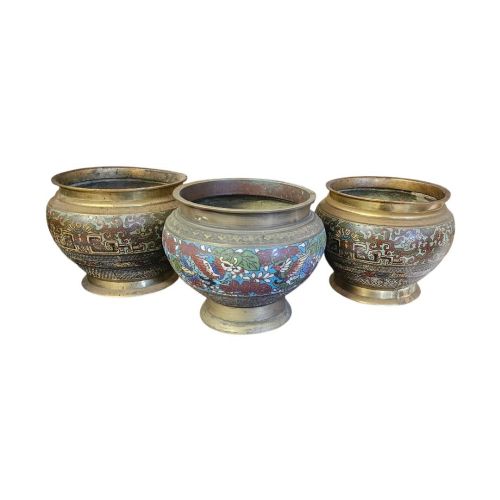
Buyers will encounter polished brass planters alongside heavier bronze bowls and champlevé enamel pieces. Forms range from large troughs and desk pots to pairs of matching vessels resting on stands.
Styles lean heavily towards Victorian Orientalism, Asian Revival, and Chinese Export aesthetics. The most frequent finds on this page combine brass construction with patinated bronze finishes and decorative enamel work.
Materials and construction methods
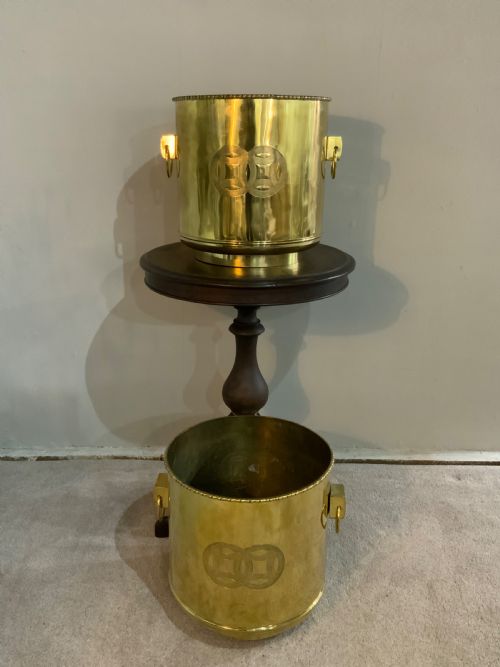
These vessels rely primarily on cast brass, bronze, and copper, often paired with contrasting hard wood stands or internal zinc linings. Metalworkers shaped these durable alloys into substantial bowls and troughs capable of holding damp soil and heavy plants.
Many examples incorporate detailed champlevé and cloisonné enamel work across the outer surface to create colourful patterns. The combination of polished metal and worked enamel defines the construction of these decorative vessels.
Object forms range from simple desk pots and decorative dishes to large troughs and pairs of matching planters.
Assessing quality in metal planters
Quality rests upon the thickness of the cast metal and the crispness of any chased or enamelled decoration. Heavy bronze bowls and crisp champlevé work demonstrate superior workshop output compared to plain thin brass.
The presence of original fitted zinc liners and matching hardwood stands elevates a piece. Well-preserved patination across the brass and bronze surfaces indicates careful handling over the decades.
The Chinese Brass Jardiniere Glossary
- Jardiniere
- An ornamental pot or stand for holding plants or flowers. These vessels form the main focus of this category.
- Champlevé
- An enamelling technique where troughs are carved into the metal surface and filled with vitreous enamel before firing. This method creates bold coloured patterns on bronze bodies.
- Cloisonné
- A technique where thin metal wires form raised compartments on the vessel surface to hold enamel pastes. It produces intricate designs seen on nineteenth-century bowls.
- Qing Dynasty
- The final imperial dynasty of China, spanning from sixteen-forty-four to nineteen-sheer-twelve. Many pieces on this page originate from its later decades.
- Victorian Orientalism
- A nineteenth-century design style reflecting European fascination with Eastern decorative arts. It heavily influences the aesthetic of exported planters from this era.
Chinese Brass Jardiniere: Frequently Asked Questions
What is a chinese brass jardiniere used for?
These vessels serve primarily to house potted plants, ferns, or floral arrangements inside the home. They also function as decorative bowls or desk pots when left empty.
Their substantial weight and water-resistant linings make them practical containers for living greenery. Collectors often display them on tables, sideboards, or dedicated wooden stands.
Are these planters waterproof?
Many examples feature original internal zinc linings designed to hold damp soil and water safely. These metal liners protect the outer brass or bronze structure from moisture damage.
Unlined vessels require a separate inner pot or saucer to contain water. Checking the interior condition reveals whether a protective lining remains intact.
How do I care for antique brass and bronze?
Maintenance involves dusting with a soft cloth to keep the metal surface clean. Avoid harsh chemical polishes that can strip away desirable age patina.
Leaving the natural surface finish untouched preserves the historical character of the piece. Regular gentle cleaning is all that is required for daily upkeep.