


Embossed Brass Cachepot
An embossed brass cachepot brings heavy texture and warm metallic tone to a room, holding plants with quiet industrial dignity.
Embossed Brass Cachepot
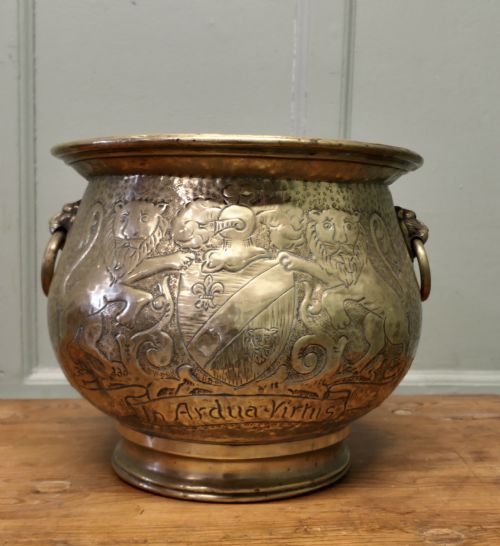
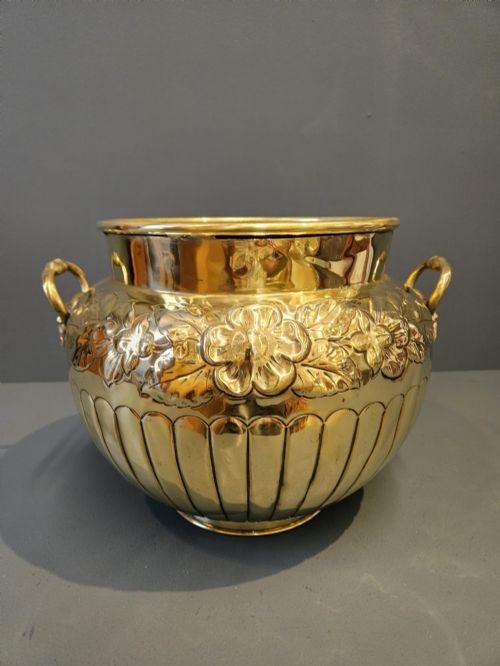
When you search for an embossed brass cachepot, you are looking at plant holders, jardinieres, and coal buckets formed from sheet metal and decorated with raised patterns. These pieces appear across the nineteenth century and the Victorian era, alongside examples from the eighteenth century up to nineteen-ten.
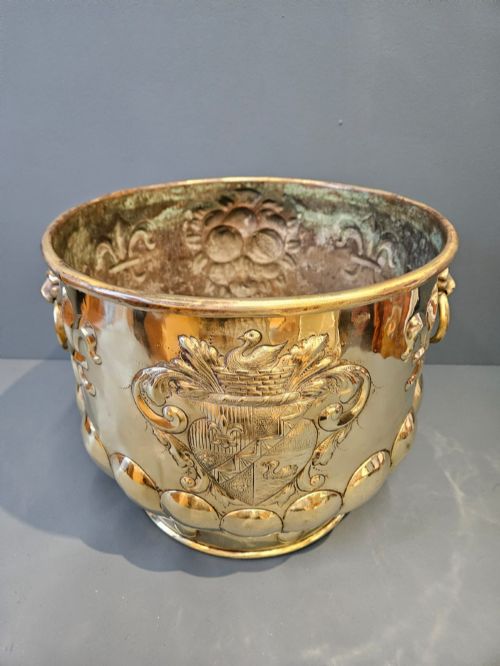
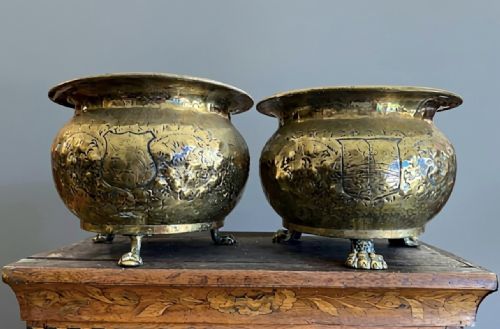
The forms range from simple circular vessels to large planters mounted on original stands and matched pairs bearing crests or shields. You will also encounter stylistic influences including Gothic Revival, Art Nouveau, French Empire, and Dutch traditional designs.
Origin and regional manufacture shape the appearance of these vessels, with Dutch, French, and Chinese export variants appearing among the metalwork. Their primary role remains housing potted plants or serving as decorative hearth accessories.
Materials and construction
Makers shaped these vessels primarily from brass, supplemented by copper and iron elements for contrast and structure. Workers hammered, pressed, or chased the metal sheets from behind to raise decorative motifs in relief.
Dinanderie techniques often appear in the surface work, reflecting traditional methods of beaten brass and copper ornamentation. Joints were folded, brazed, or riveted to hold water and withstand the weight of earth and plants.
The selection includes forms intended for plants as well as specialised fireplace accessories.
Distinctions in quality
Quality rests upon the crispness of the hand-embossing and the weight of the metal gauge used to form the body. Heavier brass retains its structural integrity better over time and supports deeper, more detailed relief work without buckling.
The presence of original stands, matched pairs, and distinct heraldic crests or shields elevates a piece beyond standard utilitarian wares. Integration of contrasting metals or refined patination also separates ordinary vessels from finer examples.
J Sankey and Sons
The Embossed Brass Cachepot Glossary
- Cachepot
- An ornamental outer pot used to conceal a plain flower pot. These vessels hold plants without drainage holes at the base.
- Jardiniere
- A large decorative pot or stand for plants and flowers. They frequently sit on the floor or a dedicated base.
- Dinanderie
- Medieval and later European brass or copper wares produced in towns such as Dinant. The term describes beaten and worked decorative metal objects.
- Relief
- Raised sculptural detail hammered or pressed into the surface of sheet metal. This technique creates the characteristic texture of embossed designs.
Embossed Brass Cachepot: Frequently Asked Questions
What is a cachepot?
A cachepot is a decorative outer pot designed to hide a plain growing container. They are typically used indoors to protect surfaces from water.
Unlike standard plant pots, traditional cachepots lack drainage holes at the bottom. Gardeners place potted plants inside them and remove them for watering.
How were they used?
These vessels held large potted palms, ferns, and flowering plants within nineteenth-century parlours and drawing rooms. Their reflective surfaces brightened darker corners of period interiors.
Some larger examples functioned as coal buckets beside the fireplace. Their heavy metal construction and decorative fronts suited both practical storage and ornamental display.
How do I clean brass?
Dust the surface regularly with a soft, dry cloth to prevent the accumulation of dirt in the embossed recesses. Avoid aggressive chemical polishes that strip away historical patination.
Gentle cleaning with warm water and mild soap preserves the antique finish. Excessive scrubbing can damage the raised relief work on older pieces.
How do I date these pieces?
Dating relies on stylistic clues, manufacturing marks, and construction methods. Pieces showing Gothic Revival or French Empire traits often date to the nineteenth century.
Art Nouveau examples introduce flowing organic motifs associated with the turn of the twentieth century. Specific makers' stamps, when present, provide a firmer manufacturing period.