

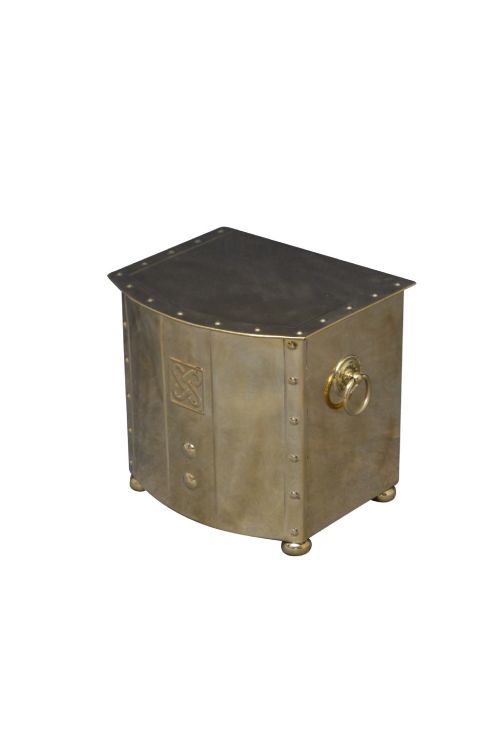
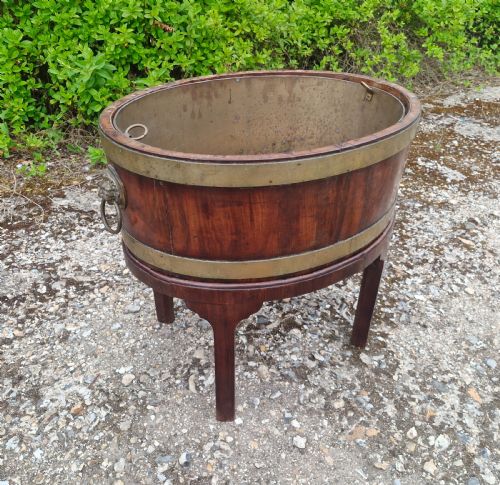

Brass Planter with Handles
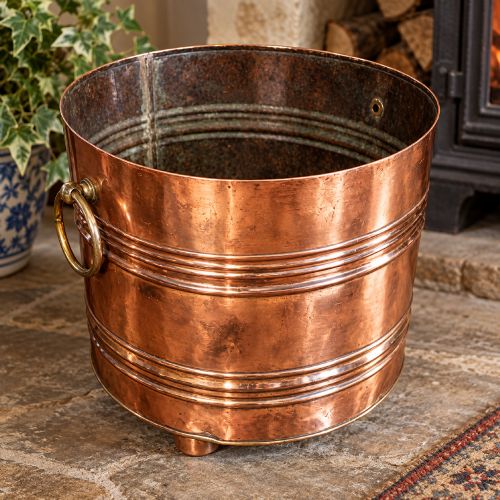
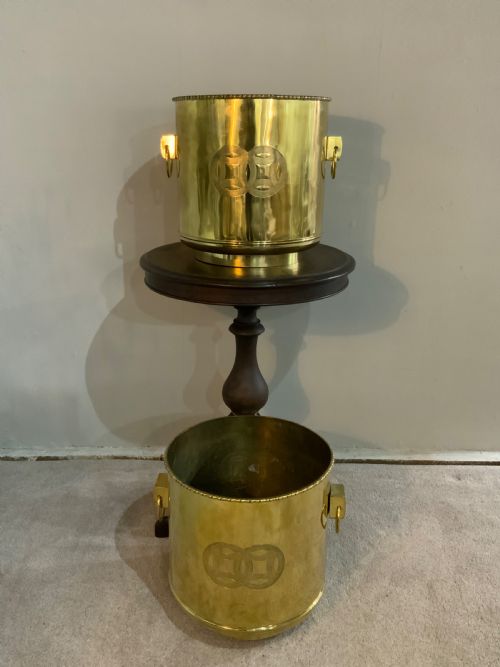
These brass planter with handles examples bring solid metalwork and classic plant housing into the room, offering heavy vessels designed for practical greenery or fireside storage.
Brass Planter with Handles
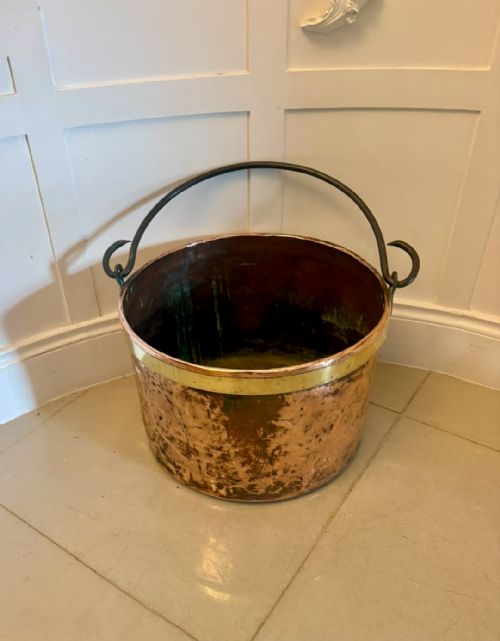
A brass planter with handles takes many forms across the inventory, ranging from dedicated jardinières to repurposed coal bins, log buckets, and wine coolers. Buyers encountering this group most frequently meet nineteenth-century examples alongside earlier Georgian or later twentieth-century interpretations.
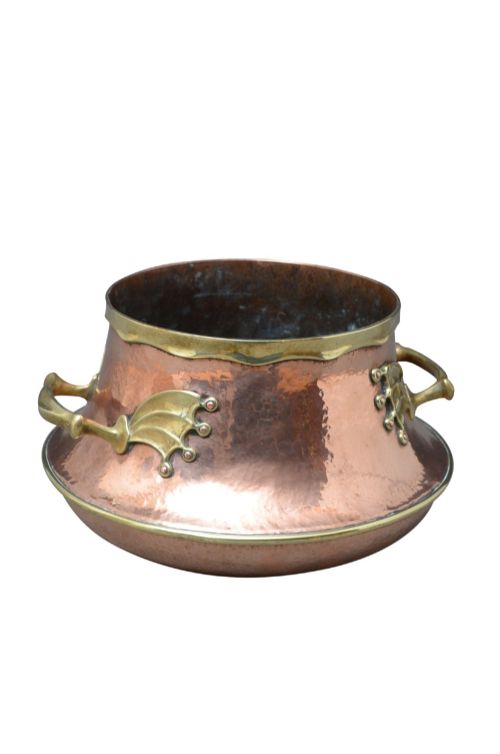
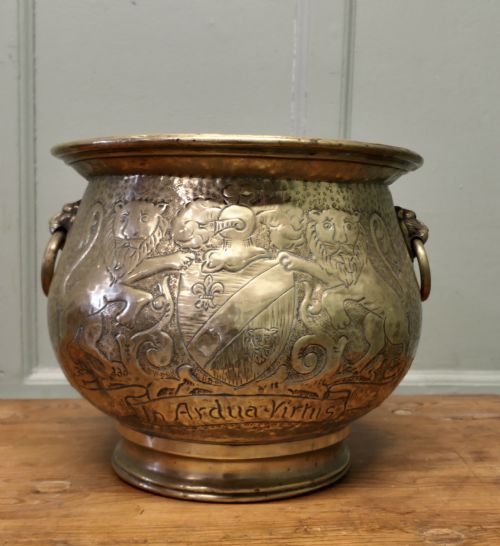
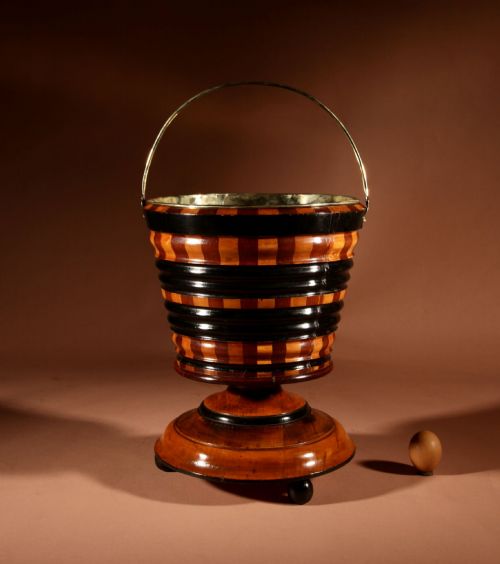
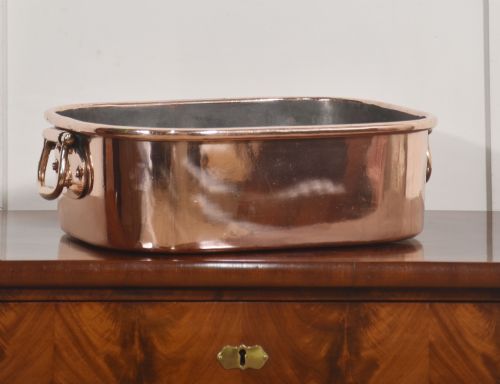
Makers shaped these utilitarian objects from brass, copper, and bronze, often incorporating metal liners to protect the primary body from damp earth and moisture. Styles shift from plain Victorian utility and Gothic Revival armorial shields to Asian revival motifs and Dutch marquetry inlay.
The objects serve multiple interior roles, functioning as decorative bowls, hearthware, or large floor-standing jardinieres. Their defining characteristics remain the durable metal construction and the functional side handles intended for lifting heavy loads.
Materials and construction
Craftsmen utilised heavy sheet brass, copper, and bronze to form the primary bodies, frequently combining these metals with secondary timbers such as mahogany, satinwood, and rosewood in Dutch colonial and neoclassical pieces. Metal liners were constructed to sit securely inside the main vessel, managing soil and water drainage.
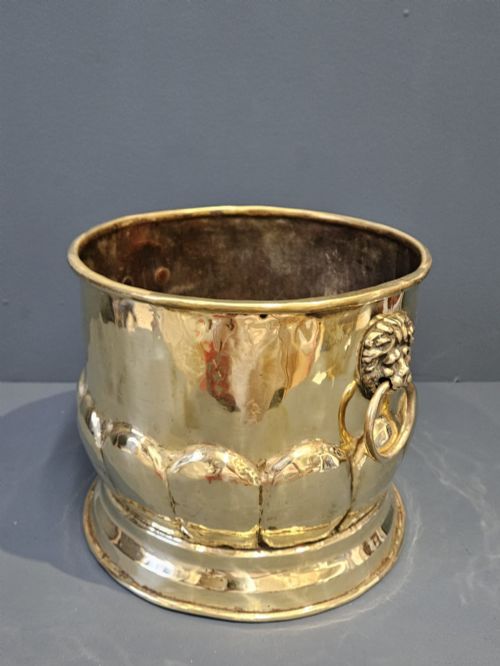
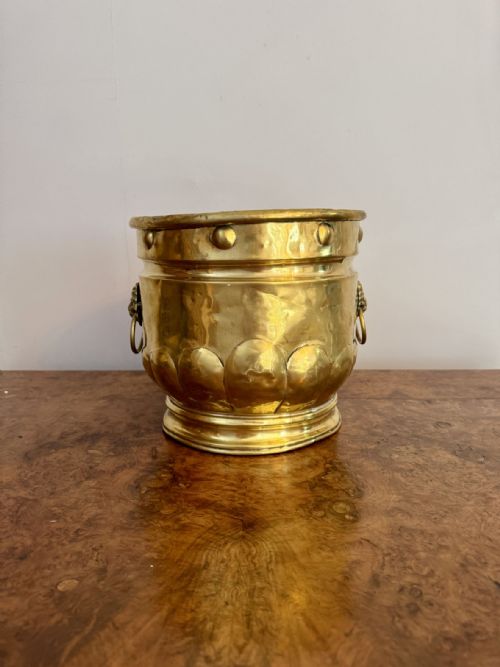
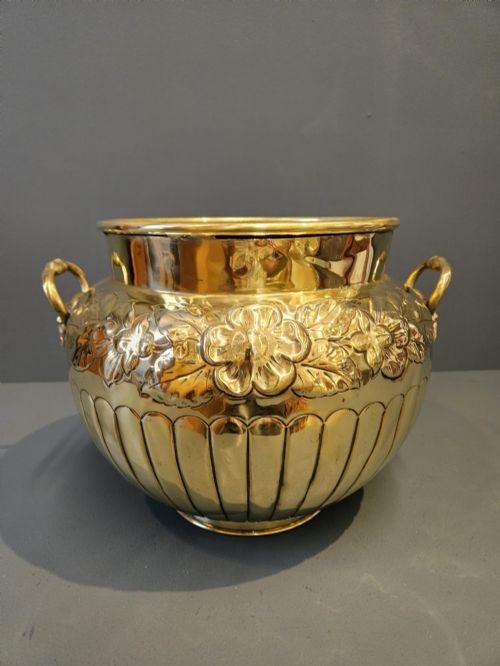
Surface decoration relied on repoussé work, cast lion masks, armorial plaques, and intricate marquetry inlays rather than applied paint. Handles were typically cast separately and secured with rivets or bolts to bear the weight of soil, logs, or coal.
Several heavy brass vessels spent their youth hauling coal before retiring to a quiet life holding ferns.
Distinguishing the work
Quality separates objects through the thickness of the metal plate and the crispness of cast details such as lion masks and armorial shields. Thicker gauge brass and substantial bronze retain structural integrity better under the weight of wet earth and fuel.
The integration of secondary materials, such as finely figured satinwood marquetry or robust inner metal liners, marks superior execution. Finer pieces demonstrate careful hand-finishing to handle attachments and seams, whereas simpler vernacular items show straightforward utilitarian fabrication.
The Brass Planter with Handles Glossary
- Jardiniere
- An ornamental pot or stand for holding plants or flowers. These vessels often feature decorative metalwork and side handles for transport.
- Repoussé
- A metalworking technique in which a malleable metal is ornamented or shaped by hammering from the reverse side. This method creates raised patterns on the exterior of brass and copper vessels.
- Marquetry
- The art and craft of applying pieces of veneer to a structure to form decorative designs and pictures. Examples in this category combine exotic woods with brass bodies.
- Lion mask handle
- A sculptural furniture or vessel mount shaped like a lion's face, frequently holding a ring in its mouth. They serve as sturdy lifting points on heavy planters.
Brass Planter with Handles: Frequently Asked Questions
What is the difference between a jardiniere and a log bin?
A jardiniere is primarily designed to hold plants and flowers, often incorporating a watertight metal liner to protect the outer body from soil and moisture.
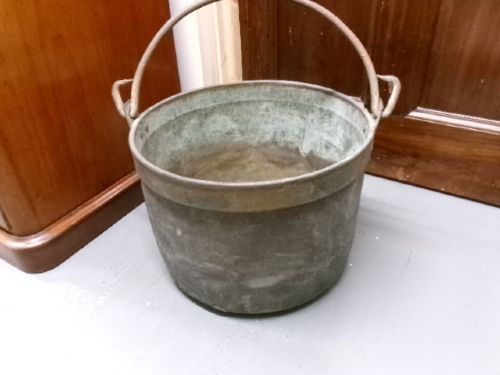
By contrast, a log bin or coal bucket serves a utilitarian fireside function, built with heavier walls to withstand the impact of wood and solid fuel.
Are these planters watertight?
Many examples include original or replacement metal liners designed to contain soil and moisture during active use.
However, older riveted seams can develop minor seepage over time, so placing a protective saucer underneath is recommended for indoor placement.
How can I tell the period of a brass planter?
Dating relies on observing manufacturing techniques, such as hand-beaten surfaces, cast construction methods, and the style of applied handles like lion masks or drop rings.
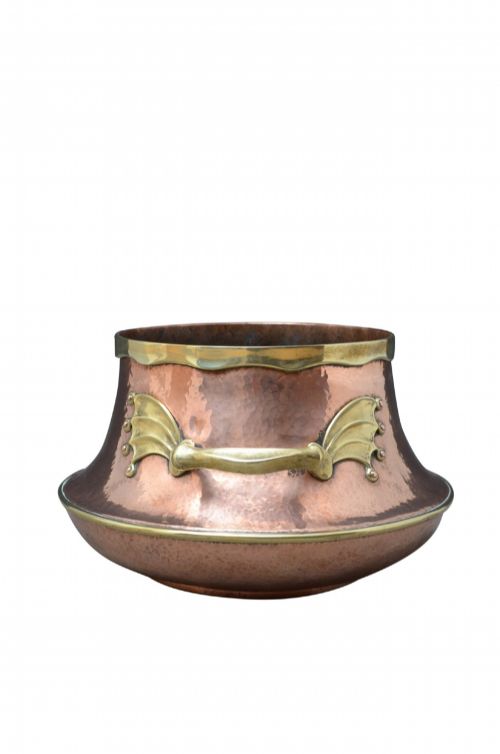
Stylistic indicators such as Gothic Revival motifs, Arts and Crafts simplicity, or French Empire detailing also point toward specific nineteenth and early twentieth-century eras.