


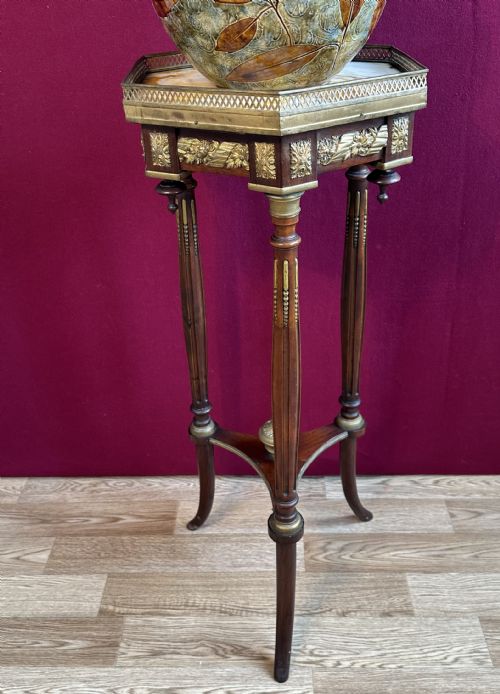


Vintage Brass Plant Pot
A vintage brass plant pot brings warm metallic weight and distinct period character to any room, housing greenery in vessels built to last.
Vintage Brass Plant Pot
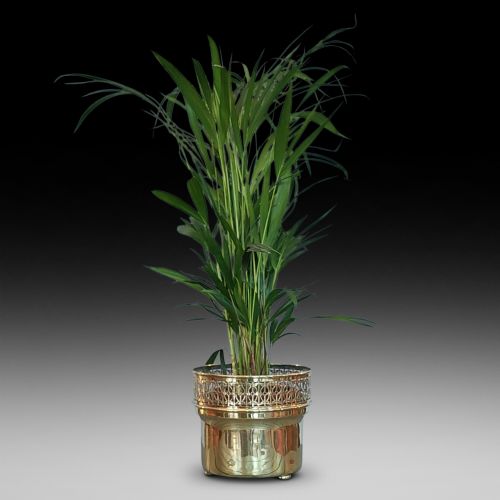
When searching for a vintage brass plant pot, buyers encounter sturdy vessels primarily designated as jardinières, planters, and plant stands. These items originate predominantly from the Victorian and Edwardian eras, alongside pieces from the early twentieth century.
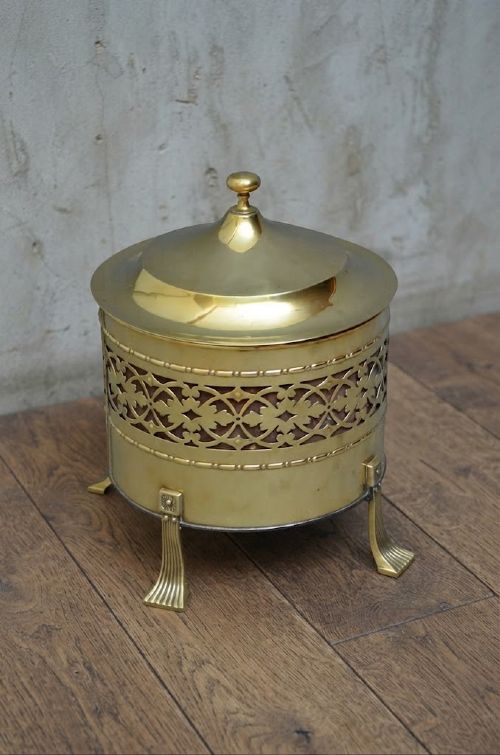
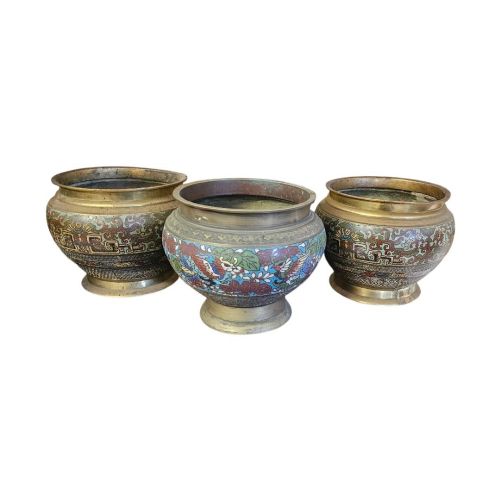
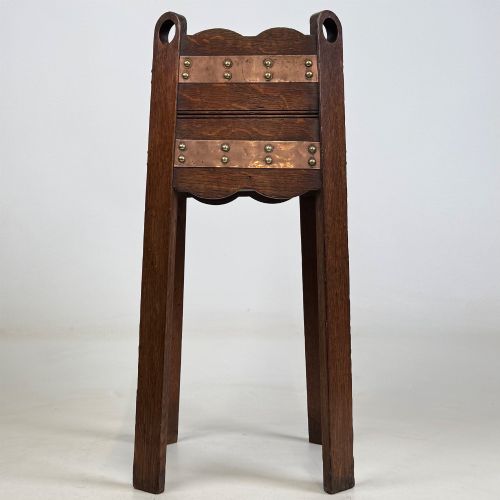
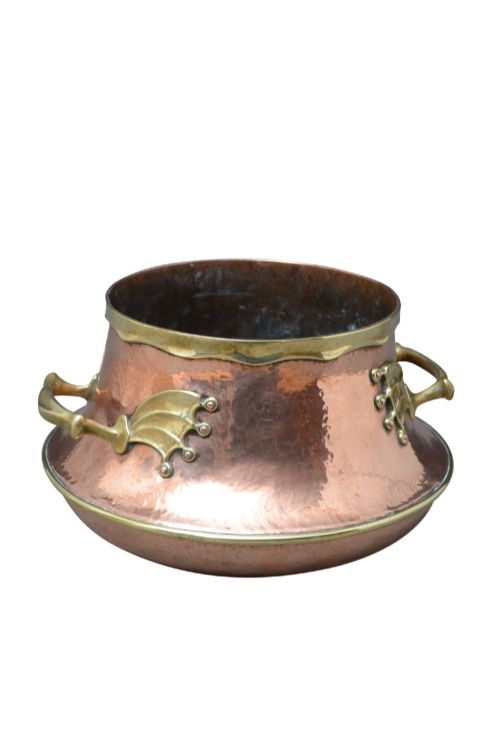
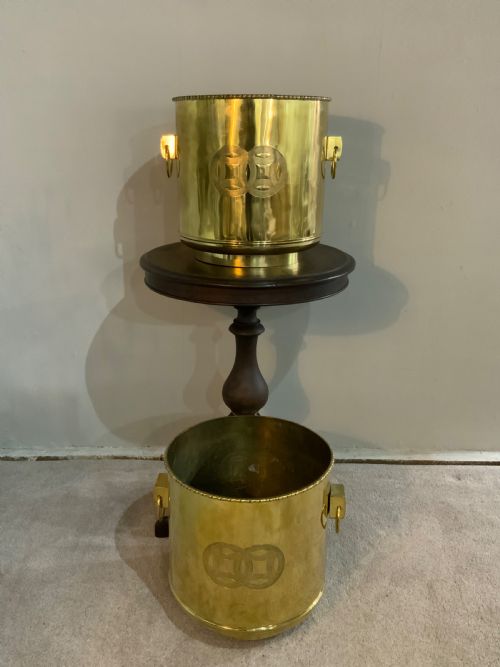
The selection on this page ranges from plain cylindrical planters to decorative coal buckets, cauldrons, and heavy copper-and-brass vessels. Many examples incorporate styles such as Arts and Crafts, Art Nouveau, and Dutch Revival.
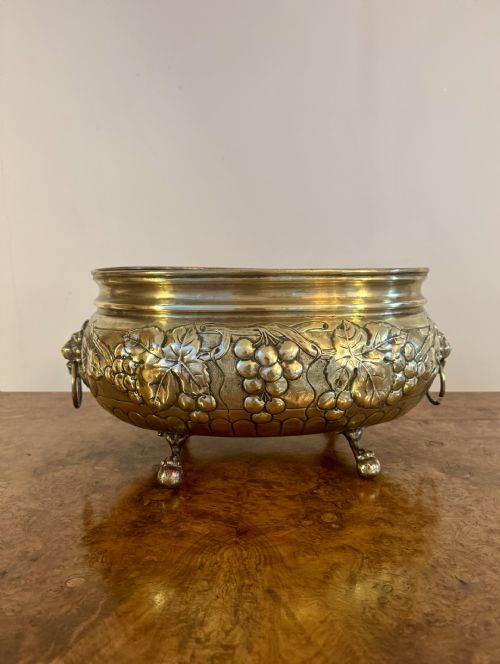
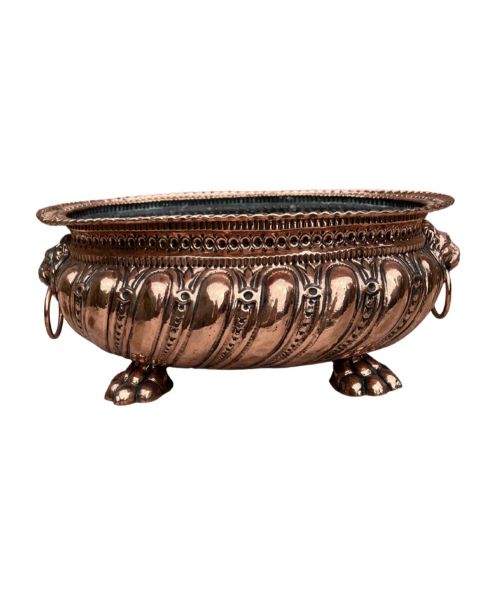
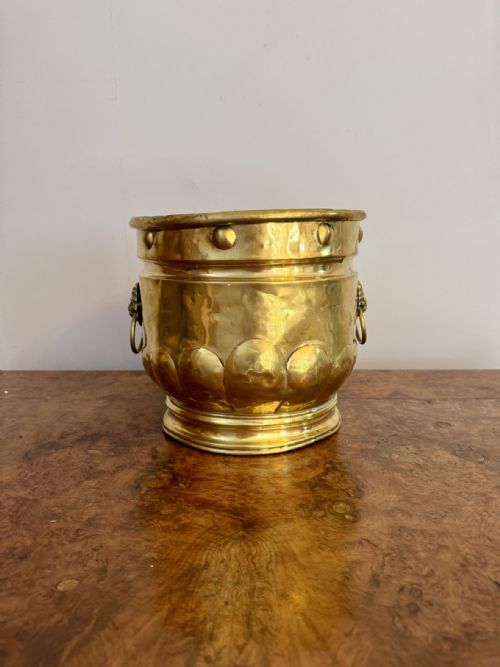
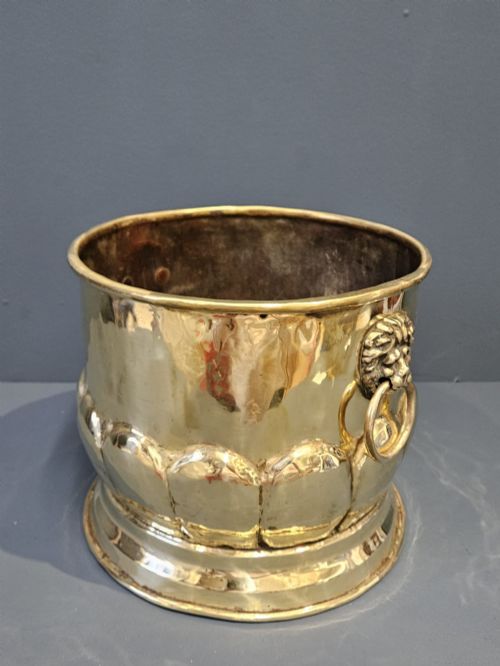
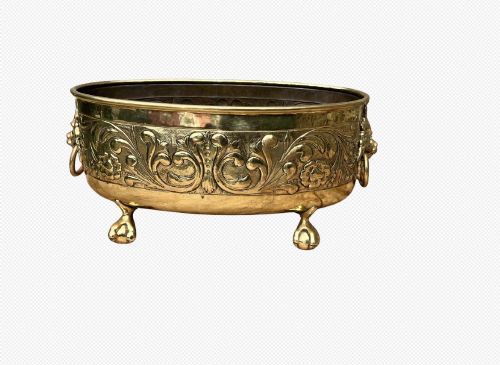
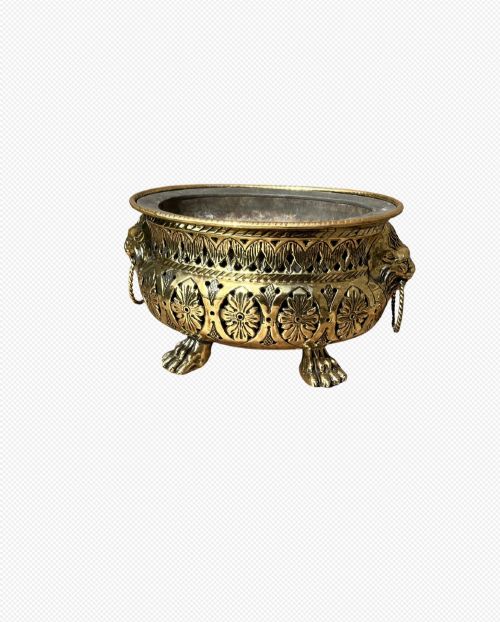
Form and function merge in these objects, which often include swing handles, lion mask attachments, or raised stands. Buyers find both standalone vessels and matched pairs suitable for holding large foliage or floral displays.
How they were made
Maker methods rely heavily on sheet brass and copper, frequently combined with iron, oak, marble, and enamel. Metals are hammered, pierced, embossed, and repoussé-worked to create surface texture and decorative patterns.
Coopered construction appears in wooden examples bound with brass bands, utilising turned teak or English oak staves. Details like champlevé enamel, cast bronze handles, and fretwork designs are integrated directly into the metal bodies.
Vintage Brass Plant Pot Retail Price Guide 2026
Typical asking prices for vintage brass plant pot among the pieces listed under this phrase on Sellingantiques today, from the lower quarter to the upper quarter. They describe what is for sale here now, not the wider market.
Materials on this page include solid brass, copper, oak, marble, enamel, and cast bronze.
What varies in quality
The standard of a vintage brass plant pot depends on the depth and crispness of the hand-worked decoration, such as repoussé motifs and pierced fretwork. Heavy gauge metal and solid construction separate standard production items from more substantial vessels.
Originality of components defines the upper tier of pieces, particularly when stands, liners, and handles remain intact without replacement. The integration of mixed materials like marble tops or carved oak staves also elevates the execution.
J Sankey and Sons
The Vintage Brass Plant Pot Glossary
- Jardiniere
- An ornamental pot or stand for holding plants or flowers. These vessels form the majority of metal plant containers from the nineteenth and early twentieth centuries.
- Repousse
- A metalworking technique where the metal is hammered from the reverse side to form a raised design in relief. This method creates the textured surfaces seen on many period planters.
- Dinanderie
- Objects made of beaten brass or copper, typically originating from northern Europe. The term covers decorative domestic vessels and planters produced with traditional smithing skills.
- Champleve
- An enamelling technique where troughs or cells are carved into the metal surface and filled with vitreous enamel before firing. Pieces featuring this method display vibrant coloured patterns.
- Coopered
- Made with wooden staves fitted together side by side and bound by metal hoops, much like a barrel. This technique applies to heavy plant tubs constructed from oak or teak.
Vintage Brass Plant Pot: Frequently Asked Questions
What is a jardiniere?
A jardiniere is a decorative pot designed to hold plants or flowers, often made from metal or ceramics. These vessels stand alone on tables or floors rather than sitting inside standard saucers.
Period examples frequently double as decorative cachepots or waste bins, serving multiple display purposes in domestic interiors.
How do I clean brass?
Cleaning historic metal requires gentle methods to preserve the natural patina accumulated over decades. Mild soapy water and a soft cloth remove surface dirt without stripping the historic finish.
Avoid harsh chemical polishes that strip away the dark oxidation valued by collectors of antique metalwork.
Are these pots waterproof?
Many metal vessels were originally made to hold damp soil or potted plants directly. However, soldered seams and aged joints can develop leaks over time.
Inserting a modern plastic liner protects the historic base from moisture damage while keeping plants well-watered.
How do I date a brass planter?
Dating relies on stylistic clues like Art Nouveau curves or Victorian crests, alongside manufacturing marks and construction techniques. Heavy cast handles and hand-hammered surfaces often point to nineteenth-century production.
Comparing the decorative motifs with documented periods helps narrow down the decade of manufacture.