
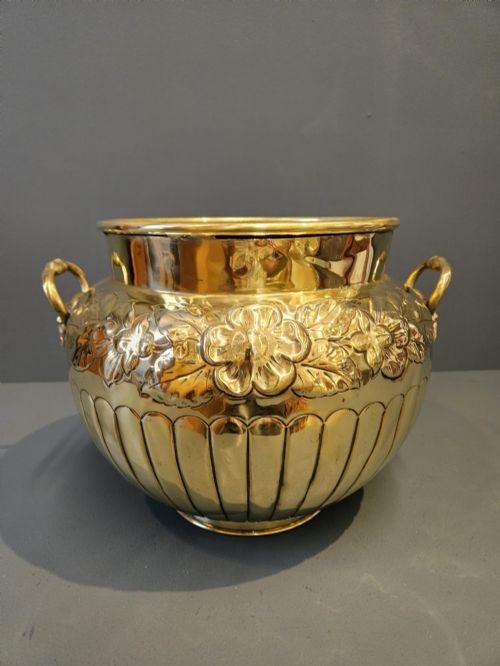
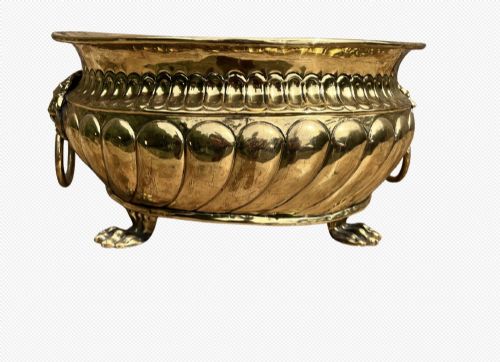


Decorative Brass Cachepot
These decorative brass cachepot pieces bring warmth and texture to interior spaces, offering a traditional housing for house plants.
Decorative Brass Cachepot
A decorative brass cachepot functions as an ornamental container designed to hold a potted plant and catch water drainage. The pieces collected under this search phrase include jardinieres, planters, bowls, and buckets dating from the Victorian and Georgian eras up to the early twentieth century.
Buyers will encounter various forms ranging from cylindrical pierced brass planters to embossed dinanderie vessels and Chinese bronze bowls. Materials stretch beyond pure brass to include copper, tin, bronze, and occasional mahogany combinations styled in Victorian, Art Nouveau, and Chinese Export traditions.
Most examples hail from the nineteenth century, including specific dates from the 1860s through to 1910. The selection balances British Victorian utilitarian forms with continental Dutch influences and far Eastern craftsmanship.
How they were made
Metalworking techniques dictate the construction of these vessels, relying heavily on sheet brass and copper formed into cylindrical and bowl-like shapes. Embossing and piercing appear frequently, creating textured surfaces and patterned light transmission through the metal walls.
Certain pieces utilise coopered timber construction, combining mahogany and walnut with metal fixtures to form traditional bucket-style planters. Bronze casting and cloisonne enamel work also feature among the heavier desk pots and decorative bowls.
Makers shaped the metal by hand, hammering and joining seams to create watertight vessels suitable for interior plant display. The integration of bronze and copper components demonstrates a versatility in handling mixed metals during the Victorian and Edwardian periods.
The listings combine British Victorian brassware with Chinese Export bronzes, Edwardian copper pieces, and Dutch-influenced mahogany planters.
What varies in quality
The distinction between ordinary and superior pieces rests on the crispness of the hand-embossed motifs and the weight of the metal used. Heavier specimens, such as substantial bronze bowls or thick copper vessels, demonstrate a more robust construction that holds its shape over decades of use.
Artisanal detail creates a clear hierarchy, particularly seen in the intricacy of pierced brasswork or the refinement of dinanderie surfaces. Simpler stamped designs sit at one end of the scale, while finely articulated Chinese export bronzes and detailed Victorian jardiniere bodies occupy the other.
The Decorative Brass Cachepot Glossary
- Cachepot
- An ornamental pot used to hold a flowerpot and conceal it. The word derives from the French for hiding a pot.
- Jardiniere
- A large ornamental pot or stand for plants or flowers. These items often feature heavy embossing or decorative handles.
- Dinanderie
- Medieval and later European brass or copper wares, particularly vessels and decorative objects. The term originates from the Belgian town of Dinant, renowned for brass founding.
- Cloisonne
- Enamelling technique where decorative areas are separated by thin metal strips soldered to the metal base. This method produces intricate coloured patterns across bronze bowls and planters.
Decorative Brass Cachepot: Frequently Asked Questions
What is a brass cachepot used for?
These vessels serve primarily as decorative containers to hold potted plants and catch excess water drainage. They bring a metallic sheen and historical character to interior spaces.
Historically placed on tables, desks, or hearths, they allowed house plants to be displayed without damaging furniture surfaces.
How do I clean a brass cachepot?
Cleaning requires gentle methods that preserve the historic surface and any accumulated patina. Harsh chemical dips can strip away the aged character valued in antique metalwork.
Dusting with a soft cloth is usually sufficient for regular maintenance, avoiding abrasive pads that scratch the brass or copper surface.
Are these planters waterproof?
Many antique metal vessels hold water, but soldered seams and aged joints can develop leaks over long periods. Using an inner plastic liner protects the historic bottom from continuous moisture.
Checking the interior condition helps determine whether a container can hold damp soil directly or requires a secondary pot.
How can I tell the age of a planter?
Dating relies on stylistic clues, manufacturing techniques, and the type of metal finishing present. Victorian and Georgian pieces often display hand-beaten textures and construction methods distinct from later factory items.
Examining the underside, fixings, and wear patterns provides further indication of whether a piece dates to the nineteenth century or the early twentieth century.