

Antique Brass Rack
When you search for an antique brass rack, you are looking at functional metalware designed to organise umbrellas, hats, and correspondence in the hallway or study.
Antique Brass Rack
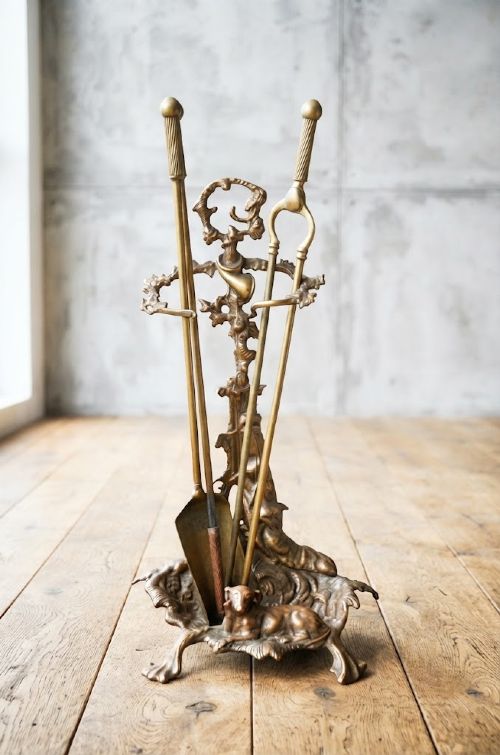
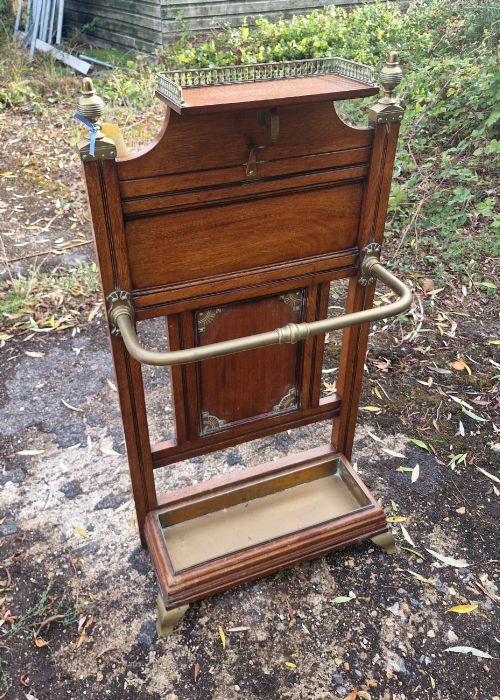
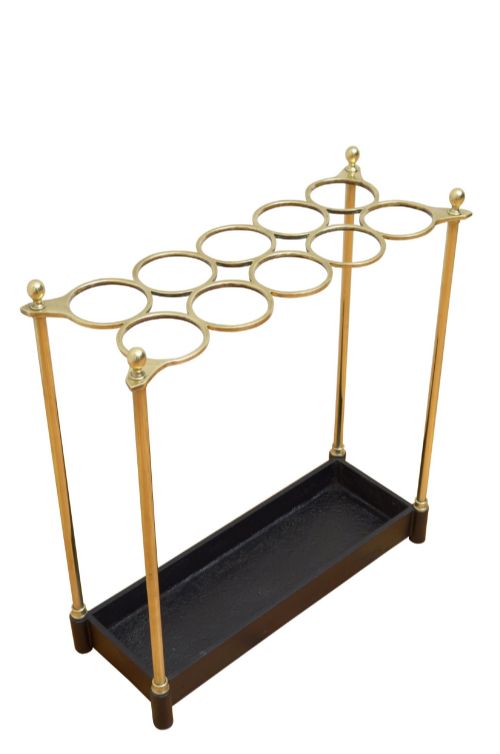
An antique brass rack encompasses several distinct household forms primarily utilised for storage in domestic halls and reception rooms. The most common manifestations on this page are umbrella and stick stands, wall-mounted coat rails, and desk accessories such as letter and stationery racks.
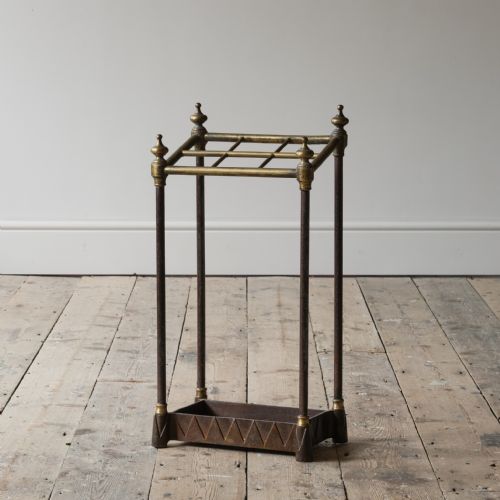
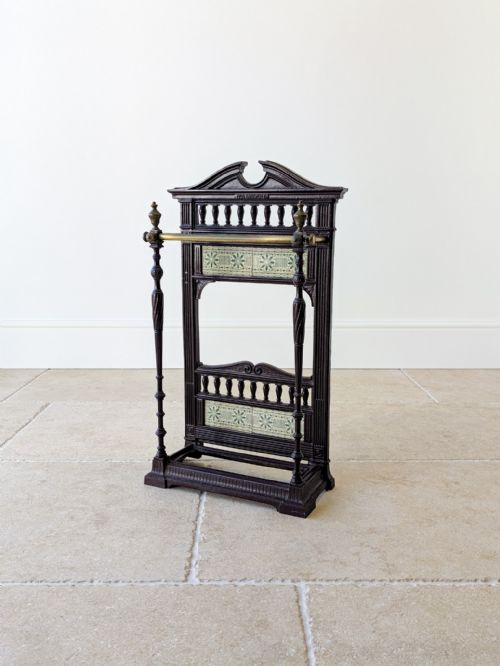
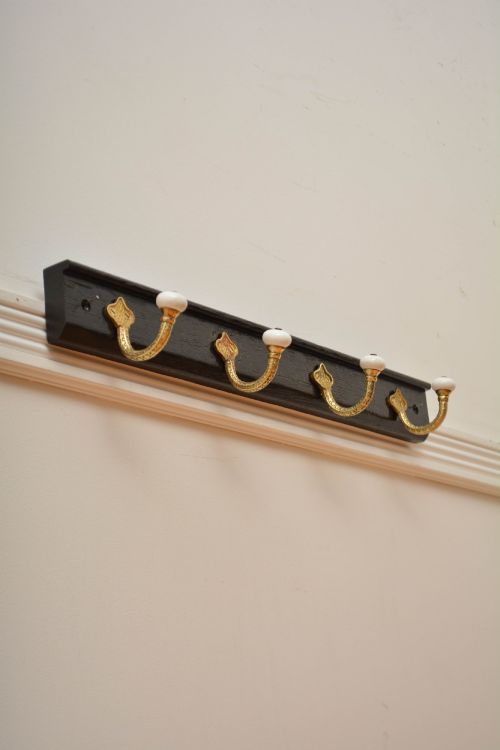
The objects span multiple periods from the nineteenth century into the early twentieth century, reflecting the evolving domestic requirements of Victorian and Edwardian interiors. Surviving pieces range from heavy cast brass umbrella holders with segmented dividers to polished mahogany backboards fitted with brass and ceramic hooks.
Makers and designers applied these materials across diverse stylistic movements, incorporating Aesthetic Movement motifs, Gothic revival details, and Arts and Crafts simplicity. Whether mounted on a wall or freestanding in a hallway, each piece served an active role in daily Victorian and Edwardian household management.
How they were made
The physical construction typically combines heavy cast or sheet brass with supportive structural elements of timber, cast iron, or ceramic. Umbrella stands frequently pair a pierced brass body with a cast iron or ceramic drip tray at the base to catch moisture from walking sticks and canes.
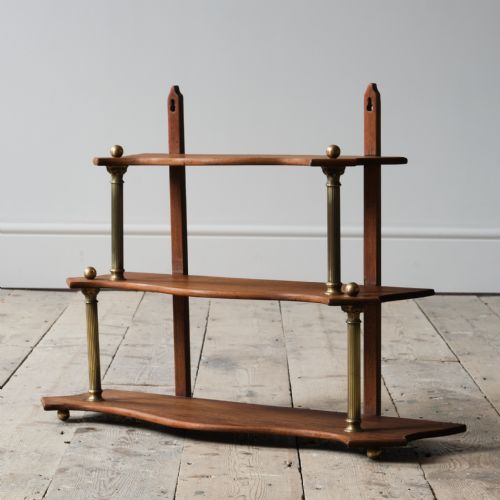
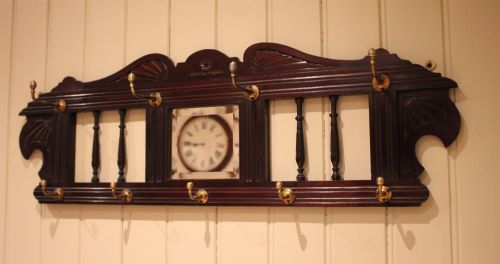
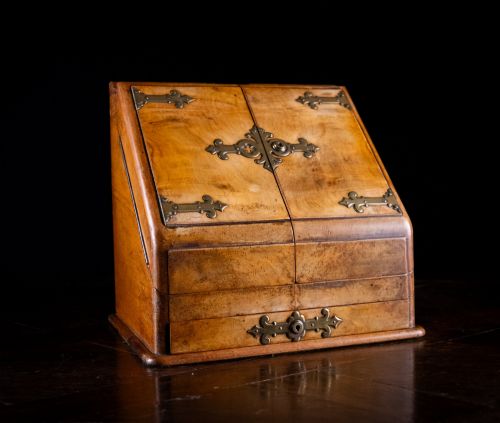
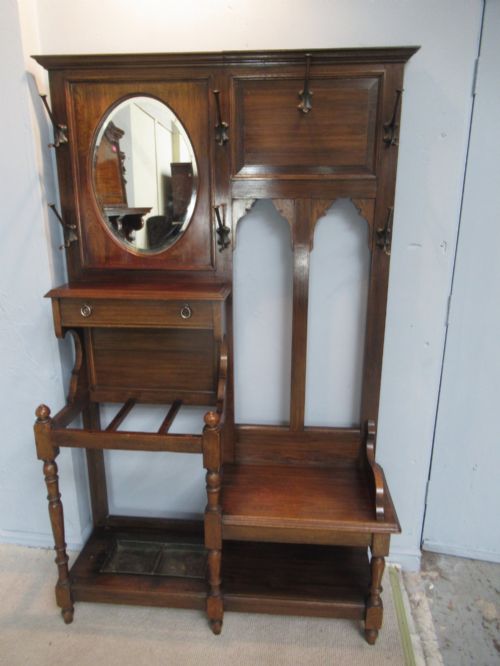
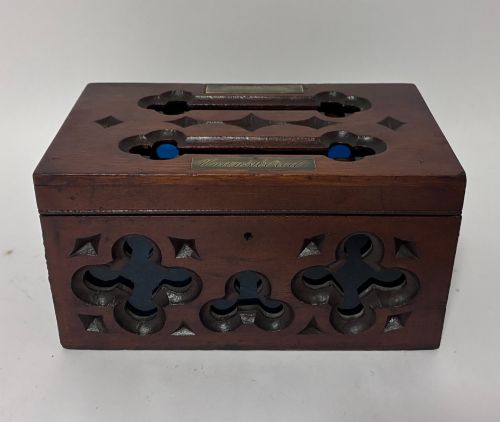
Wall-mounted and freestanding coat racks utilise dense hardwoods such as oak, mahogany, and walnut as backboards, upon which solid brass hooks are screwed or riveted. Letter racks and stationery holders employ intricate pierced scrollwork, engraved panels, or mesh brass assembled with soldered joints and small brass fittings.
Listings feature oak, mahogany, walnut, and ceramic alongside brass and cast iron across Victorian and Edwardian periods.
What varies in quality
Quality in these pieces is dictated by the weight and thickness of the brass used in the frame, casting, or decorative mounts. Superior examples exhibit crisp detail in pierced scrollwork, classical masks, or engraved panels without the softening typical of secondary casts.
The integrity of the secondary materials forms another distinction, where solid oak, mahogany, or walnut backboards and original ceramic inserts outlast veneered or later replacement elements. Original fixtures, such as matching drip trays in stick stands and uncompromised screw fixings, elevate the execution of the piece.
Coalbrookdale·Dubois of Lyon·Jas. Shoolbred
The Antique Brass Rack Glossary
- Demi-lune
- Half-moon shape common in the design of umbrella and stick stands intended to sit flush against a hallway wall. This configuration maximises floor space in narrow Victorian corridors.
- Cast iron
- Heavy metallic alloy utilised for the weighted bases and internal frames of umbrella stands to prevent tipping. It provides the necessary mass to anchor freestanding brass tubular frames.
- Canterbury
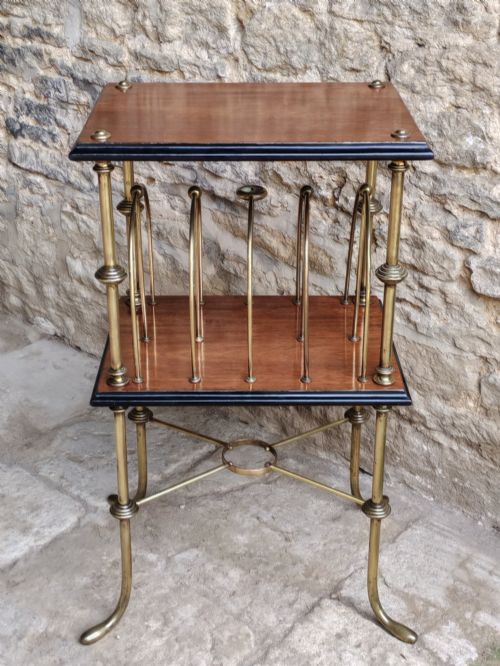
- A partitioned stand originally designed for sheet music, magazines, or newspapers, often incorporating brass carrying handles and dividers. Regency and Victorian variants frequently feature turned wooden legs and slatted sides.
- Finial
- A decorative terminal ornament placed on the top corners or posts of umbrella stands and coat racks. These are often cast in the form of decorative balls or floral motifs.
- Portmanteau
- A term historically applied to railway or hallway luggage and coat racks equipped to hold hats, coats, and bags. These pieces often incorporate folding or fixed brass rails for travellers.
Antique Brass Rack: Frequently Asked Questions
Where were these racks used in the home?
These pieces were principally stationed in entrance halls, boot rooms, and studies of Victorian and Edwardian houses. Umbrella stands and coat rails managed outerwear for family members and visitors upon arrival.
Smaller desk accessories like letter racks were kept on library tables and writing desks to sort daily correspondence. Every form was built to satisfy the domestic demand for organised household management.
How do I clean and polish antique brass?
Maintaining brass requires gentle dusting and occasional cleaning with a specialist metal polish applied sparingly with a soft cloth. Care must be taken to avoid abrasive pads that can scratch the surface or remove patination accumulated over decades.
Surrounding materials like oak, mahogany, or ceramic inserts should be treated with appropriate furniture wax or mild soap. Preserving the underlying metal finish ensures the piece retains its historical character.
Can wall-mounted coat racks support heavy winter coats?
Most antique coat racks featuring solid hardwood backboards and robust brass hooks are structurally capable of holding heavy garments. The strength of the installation ultimately depends on securing the backboard directly into wall studs or using appropriate masonry fixings.
Distributed weight across multiple brass hooks prevents undue stress on individual mounting points. Original screws and stable backboards ensure reliable daily use in a modern hallway.
How do I distinguish Victorian from Edwardian styles?
Victorian brass work generally displays heavier, more ornate decoration including gothic motifs, classical masks, and dense pierced scrollwork. Woods paired with the brass during this era tend to be dark, heavily carved walnut or polished mahogany.
Edwardian designs often shift towards lighter oak frames and simpler geometric lines influenced by the Arts and Crafts movement. Aesthetic Movement examples from the transition period incorporate stylised natural forms and ebonised details.