


Brass Paper Holder
These brass paper holder selections encompass desk accessories, letter racks, and canterburys designed to keep correspondence and periodicals in order with period character.
Brass Paper Holder
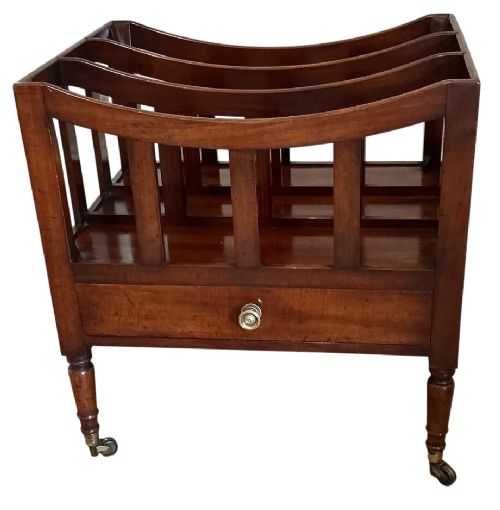
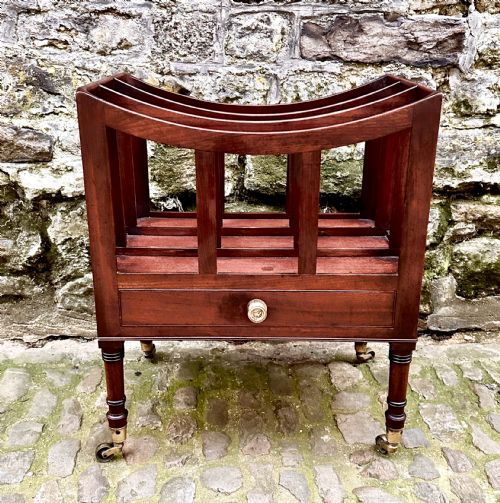
A brass paper holder covers desk top clips, wall hanging letter racks, and floor standing magazine stands spanning from the Georgian and Regency periods through the Victorian, Edwardian, and Arts and Crafts eras. The most frequent examples met on this page are magazine racks and canterburys combining brass with woods like mahogany and oak, alongside desktop desk accessories and letter racks.
Forms range from boat shaped canterburys and revolving stands to ornate newspaper racks and fish design note holders. Materials extend beyond pure brass to incorporate copper, cast brass, steel, rosewood, walnut, and various woods, reflecting utilitarian desk functions and domestic storage needs across the nineteenth and early twentieth centuries.
Materials and construction
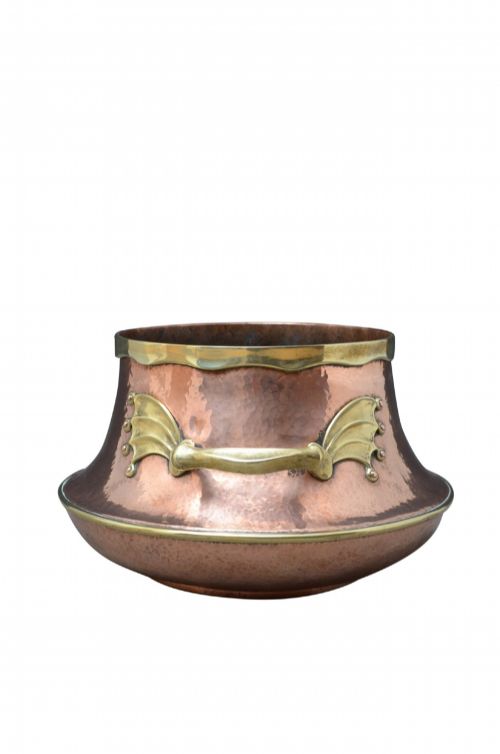
Construction relies on combining metals with timber, utilising brass for structural frames, clips, rails, and decorative mounts alongside mahogany, oak, rosewood, and walnut for bases and dividers. Planters and certain magazine stands employ hammered copper paired with brass, while desk top and wall hanging letter clips utilise cast brass and steel springs.
Joining techniques vary from standard cabinet making for wood and mahogany canterburys to tubular brass framing and hand hammered metalwork seen in Arts and Crafts pieces. Makers balanced the weight of heavy paper and books against the malleability of brass and copper through cast, tubular, and sheet metal fabrication.
Materials recorded across the archive include mahogany, oak, rosewood, walnut, brass, cast brass, copper, and steel.
Judging quality and execution
Quality separates through the crispness of casting detail in brass clips and frames, the selection of figured timbers like mahogany and rosewood, and the integration of mixed metals such as copper and brass. Pieces demonstrating refined proportions, substantial gauge metal, and careful joinery outrank simpler utilitarian items.
Attribution and decorative ambition further distinguish the range, from standard domestic newspaper stands to distinctive forms like revolving stands, fish design note holders, or pieces attributed to notable makers and Parisian ateliers.
Gillows of Lancaster·Maison Jansen·Whitehouse & Son
The Brass Paper Holder Glossary
- Canterbury
- A low stand with divisions, originally designed for sheet music and papers, frequently produced in mahogany and brass during the Regency and Victorian periods.
- Letter rack
- A desk accessory featuring upright divisions or spring clips designed to hold incoming correspondence and papers upright.
- Tubular brass
- Hollow cylindrical brass stock utilised in nineteenth century framework to provide structural rigidity while reducing overall weight.
- Revolving stand
- A piece featuring a rotating mechanism that allows access to books, magazines, or papers from multiple angles.
Brass Paper Holder: Frequently Asked Questions
What is a canterbury?
A canterbury is a compartmentalised stand historically used for holding sheet music, folios, and papers near seating areas. These pieces combine wooden frames with brass rails and dividers.
Originating in the Georgian period, they evolved through the Regency and Victorian eras into popular household storage items for periodicals and letters.
How were letter clips used?
Letter clips served as functional desk accessories designed to hold loose correspondence, bills, and notes securely in place. They were weighted for desktop use or fitted with wall brackets.
Many examples feature cast brass frames and strong steel springs, often ornamented with figural designs or agricultural motifs.
Where should I place a magazine stand?
Floor standing magazine racks and revolving stands suit placement beside armchairs, desks, or in studies where periodicals require accessible storage. Their mixed brass and timber construction complements both period and modern interiors.
Care should be taken to avoid damp environments that might affect the wooden components and tarnish exposed brass or copper surfaces.
How do I date a piece?
Dating relies on identifying stylistic markers, timber choices, and construction methods characteristic of periods such as Regency, Victorian, or Edwardian. Georgian and Regency pieces typically show classical lines in mahogany, while Edwardian items often feature lighter oak and simpler brass frames.
Arts and Crafts pieces from around 1900 are distinguished by hand hammered copper and visible construction rather than mass produced factory ornamentation.