


Antique Brass Lock Box
An antique brass lock box secures valuables inside timber, leather, or iron, built to travel or sit firmly upon a desk.
Antique Brass Lock Box
When you search for an antique brass lock box, you encounter containers built to secure personal treasures, documents, and domestic provisions. The forms span tea caddies, writing slopes, jewellery cases, apothecary boxes, and heavy iron safes.
The selection here draws from periods running from the seventeenth century through to the Edwardian era and the nineteen-twenties. Materials include mahogany, walnut, oak, coromandel, leather, canvas, and iron.
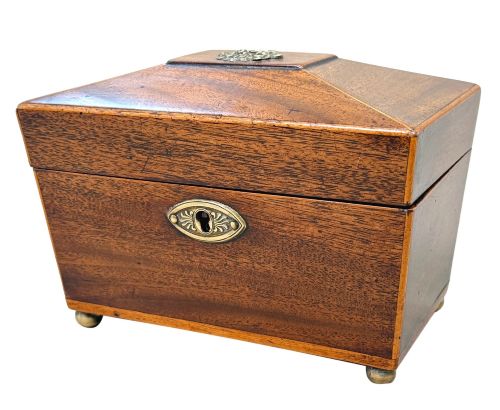
The version most commonly met on this page is the Victorian writing slope or tea caddy, frequently reinforced with brass banding and fitted with a working lock. These pieces combine utilitarian security with fine cabinetmaking.
How they were made
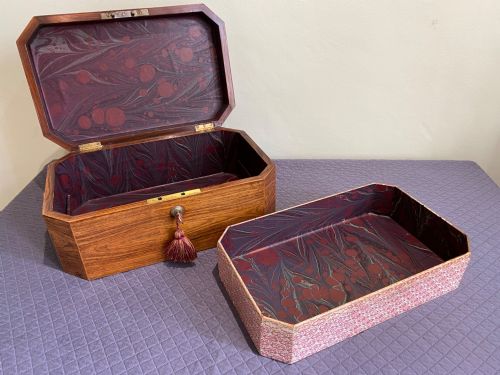
Cabinetmakers constructed the wooden frames from mahogany, walnut, oak, and rosewood, often applying veneers of burr walnut or coromandel to visible surfaces. Brass featured structurally as corner brackets, strapwork, inlaid stringing, and heavy carrying handles.
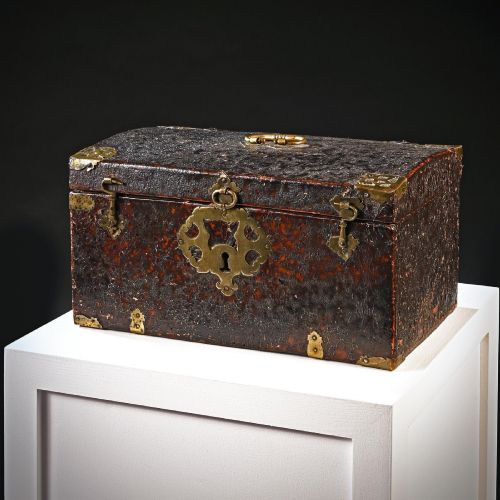
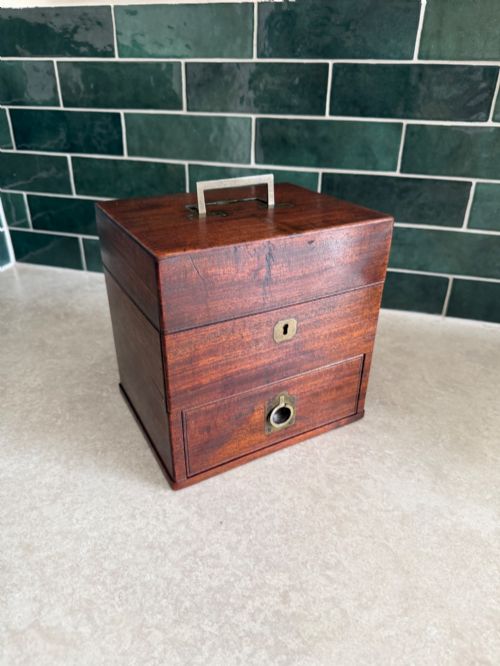
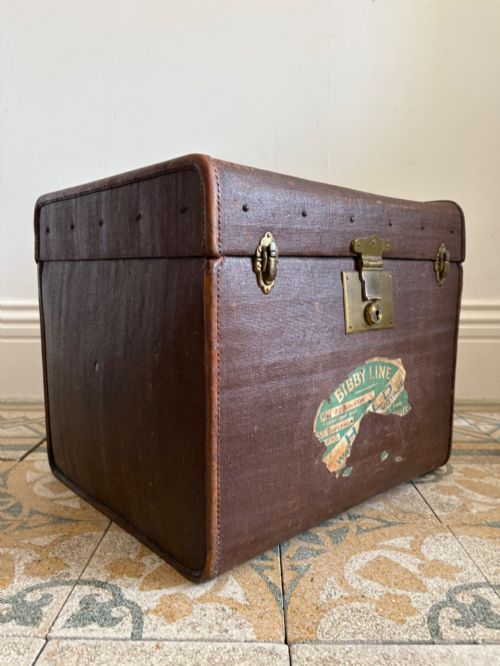
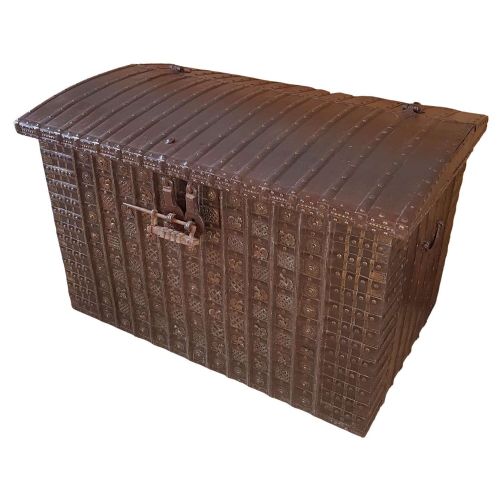
Leather, canvas, and iron appeared on travel trunks, attaché cases, and strong boxes, stitched or banded for durability on journeys. Interiors deployed velvet linings, secret drawers, and complex patented locks designed by makers such as Bramah and Milners.
Listings feature woods including mahogany, walnut, oak, rosewood, and coromandel, combined with brass, iron, leather, and canvas.
What varies in quality
Quality rests upon the selection of timber and the precision of the brass hardware integration. Solid figured woods and dense coromandel distinguish finer boxes from standard utility containers.
The sophistication of the locking mechanism marks the tier of the piece. Boxes incorporating patented brass locks with functioning keys and concealed secret drawers demonstrate superior craftsmanship.
Milners of Liverpool·GEORGE PRICE·Hawkes & Co·J. Robinson
The Antique Brass Lock Box Glossary
- Bramah lock
- A high-security cylindrical lock patented in the eighteenth century, known for intricate internal mechanisms that resisted picking.
- Writing slope
- A portable desk hinged to open at an angle, fitted with compartments for stationery, inkwells, and pens.
- Tea caddy
- A container designed to store dry tea leaves securely, often featuring internal lidded compartments and a central lock.
- Tantalus
- A locked frame holding decanters of spirits visible to guests yet prevented from removal without a key.
- Apothecary box
- A compact fitted case containing glass bottles and scales for measuring medicines and remedies.
Antique Brass Lock Box: Frequently Asked Questions
What were antique brass lock boxes used for?
These boxes served to protect valuable personal items, confidential papers, tea, and currency from theft or damage during transit and at home.
Travellers used leather and iron variations for luggage, whilst domestic examples sat on desks or sideboards to hold jewellery and correspondence.
How do I secure an antique lock?
Most historic boxes rely on original brass lever locks or patented mechanisms which require matching antique keys to turn properly.
If a key is absent, a specialist restorer can cut or fit a compatible replacement without altering the internal mechanism.
How should I clean the wood and brass?
Dust timber surfaces gently with a dry, soft cloth and apply traditional beeswax sparingly to nourish the grain of mahogany or walnut.
Brass mounts respond well to a gentle polish with a non-abrasive cloth, taking care to avoid smearing cleaning compounds onto surrounding leather or wood.
How can I date a wooden box?
Dating relies on observing construction methods, timber choices, and style markers such as the transition from Georgian mahogany to Victorian burr walnut.
Internal fittings, screw types, and maker stamps or patent labels on the lock also help narrow the decade of manufacture.