


Antique Travel Dressing Box
An antique travel dressing box is a fitted portable compartment for personal grooming, offering an organised way to carry bottles, brushes and valuables on the move.
Antique Travel Dressing Box
When you search for an antique travel dressing box, you encounter a specialised form of portable luxury designed to hold personal grooming and cosmetic items during transit. The pieces on this page span the Georgian, Regency, Victorian, Edwardian and Art Deco periods, encompassing forms such as fitted ladies travelling cases, gentleman's valet suitcases and folding travel mirrors.
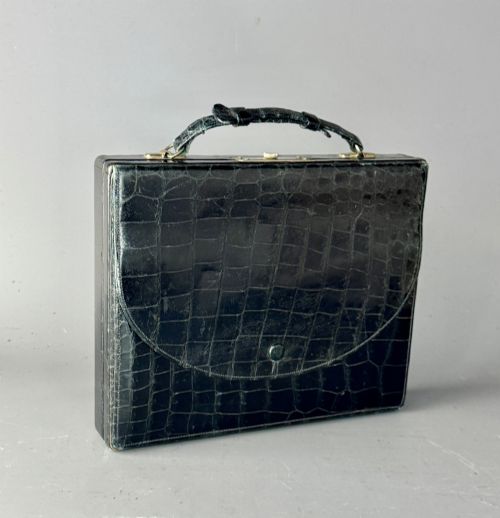
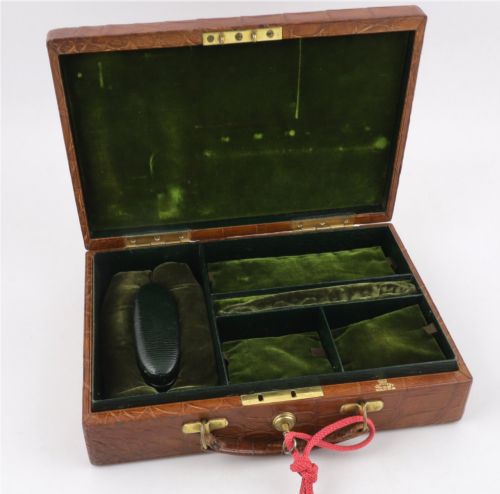
Beyond standard wooden vanity boxes, the selection includes specialised containers such as silver cigar travel boxes, crocodile leather vanity cases and Italian Sorrento ware olive wood folding mirrors. Each variation reflects the shifting demands of personal care and luggage design from the early nineteenth century through to the interwar period.
Evaluating Quality and Completeness
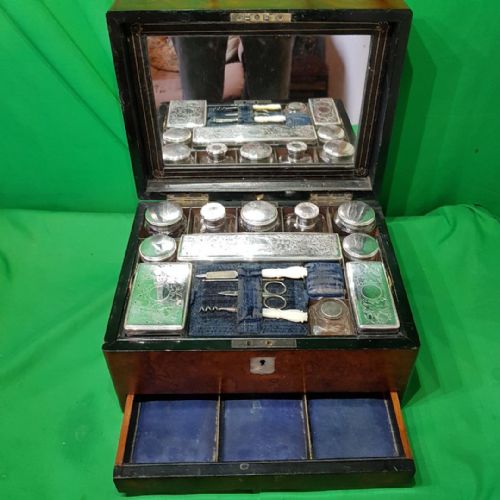
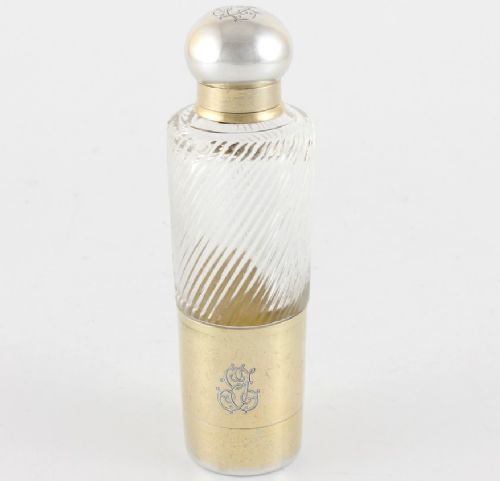
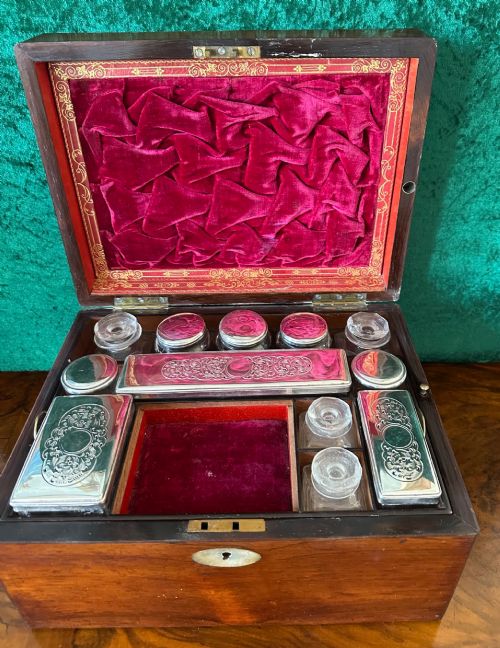
The distinction between standard pieces and the finest examples rests largely on the completeness and originality of the internal fittings. Boxes that retain their matching set of cut glass bottles, silver-gilt lids, jars and original leather or velvet linings command significantly higher regard than those with replaced or missing components.
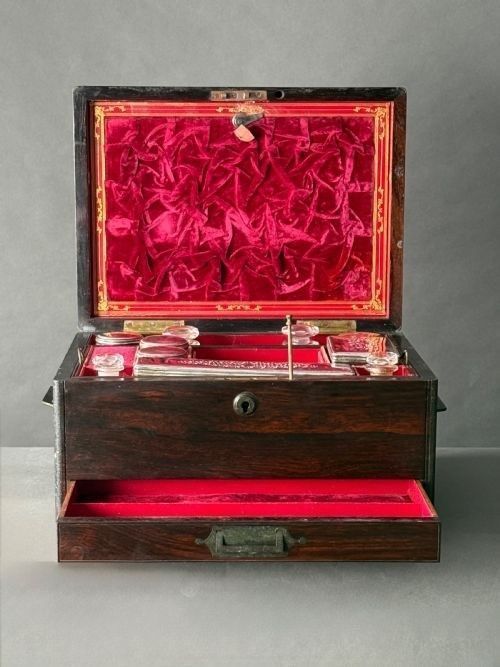
Artisanal execution in the cabinetwork also separates the ordinary from the exceptional, particularly in the precision of brass stringing, secret drawer mechanisms and locking systems. Master workshops integrated concealed spring-loaded releases and robust brass security hardware that operated smoothly alongside luxurious exterior veneers.
Some gentleman's boxes cleverly secreted cigar compartments alongside the usual hairbrushes and shaving mugs for the discerning smoker.
Dunhill London·J C Vickery·F. West·Tonnel Paris·Jane Brownett Alexander Jones·Asprey
The Antique Travel Dressing Box Glossary
- Coromandel wood
- A dense, heavily figured cabinet timber imported from Asia, prized for its dark brown colour and striking black stripes. It was frequently used for high-end Victorian luxury boxes.
- Campaign case
- Portable furniture or luggage designed for military campaigns or travel, typically reinforced with brass corners, flush handles and robust locking mechanisms for durability.
- Dressing box
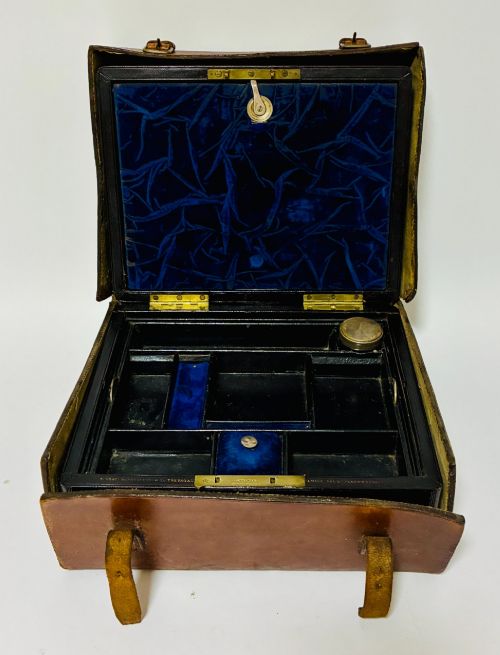
- A portable container fitted with compartments, mirrors and bottles for personal grooming and cosmetics. These boxes often doubled as writing slopes or jewellery storage.
- Sterling silver gilt
- Silver that has been coated with a thin layer of gold on its surface. This technique provided the rich appearance of solid gold while maintaining structural strength.
- Sorrento ware
- Inlaid woodwork produced in the Italian town of Sorrento, characteristically featuring geometric mosaic patterns or pictorial marquetry. It appears on portable travel mirrors and small decorative boxes.
Antique Travel Dressing Box: Frequently Asked Questions
What is an antique travel dressing box?
An antique travel dressing box is a portable fitted container designed to hold grooming items, cosmetics and jewellery while journeying. These boxes contained compartments for glass bottles, brushes and valuables.
They allowed wealthy travellers to maintain their daily toilette routines away from home. The interior layouts often included secret drawers and velvet-lined trays.
How were these boxes used?
Travellers used them to transport personal care items securely during long journeys by carriage, train or ship. The fitted interiors kept fragile glass bottles and silver containers from shifting.
Upon arrival at a destination, the box opened to function as a temporary dressing table. Many included folding mirrors and removable trays for convenience.
What is the difference between a vanity box and a dressing case?
A dressing case typically refers to a larger, heavily fitted box containing comprehensive grooming sets including brushes, razors and multiple glass bottles. A vanity box often focuses more on cosmetics and jewellery storage.
In practice, historical makers and contemporary collectors frequently used both terms interchangeably. The primary distinction lies in the specific mix of internal glass and silver components.