







Victorian Vanity Box Mirror
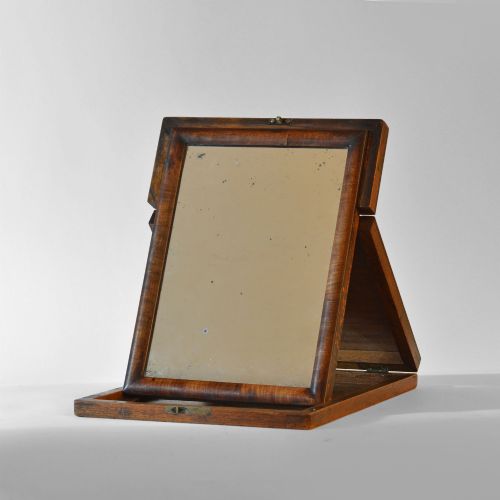
These victorian vanity box mirror pieces combine fitted compartments and swivelling glass, offering both a compact writing desk or jewellery store and a practical dressing aid.
Victorian Vanity Box Mirror
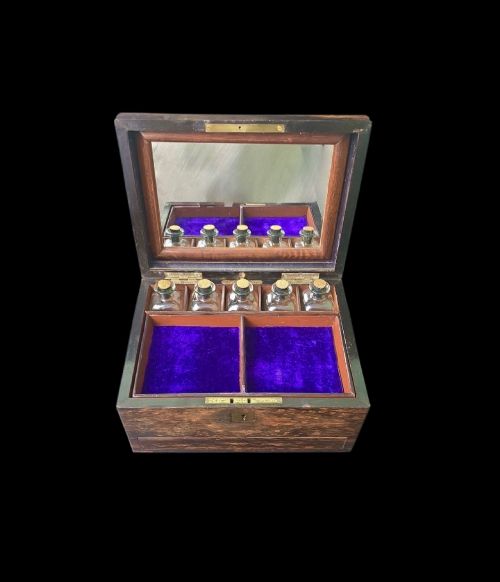
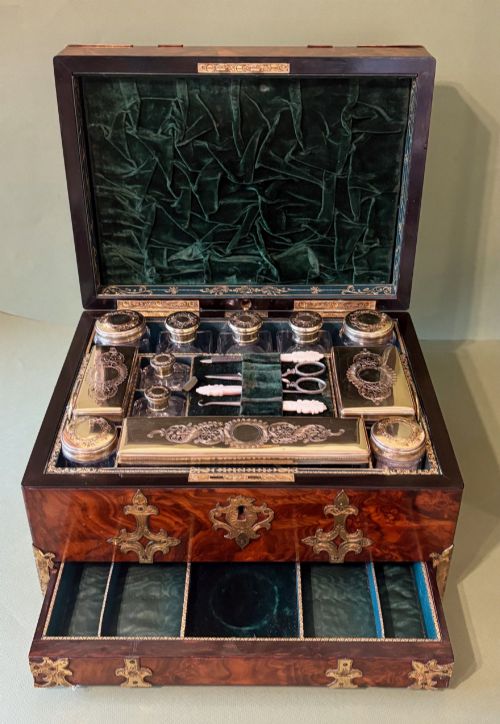
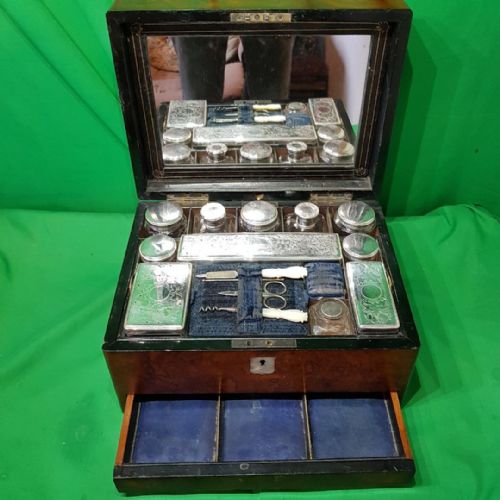
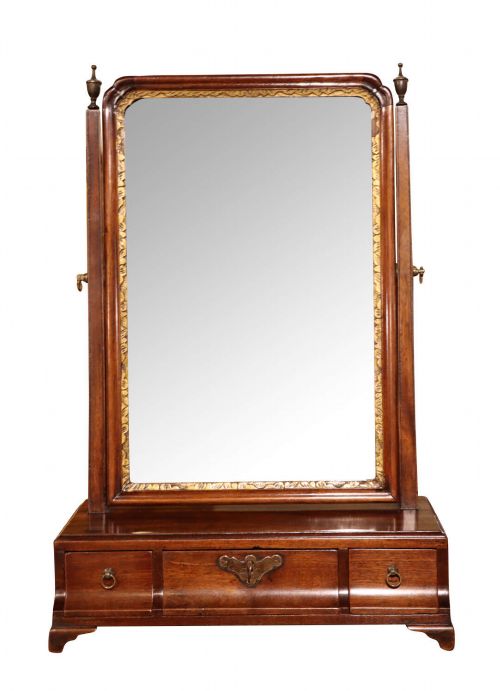
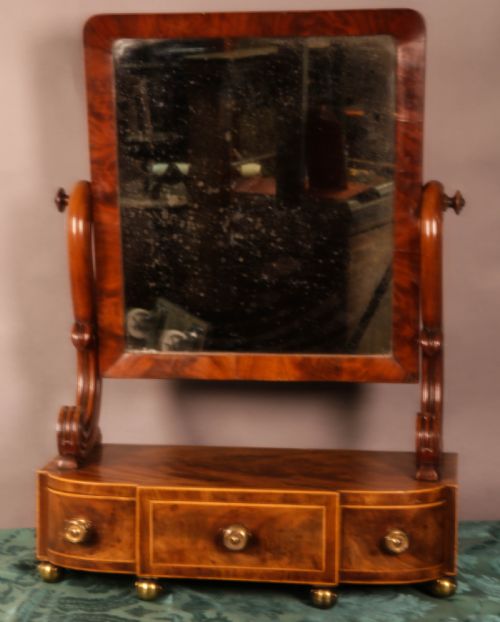
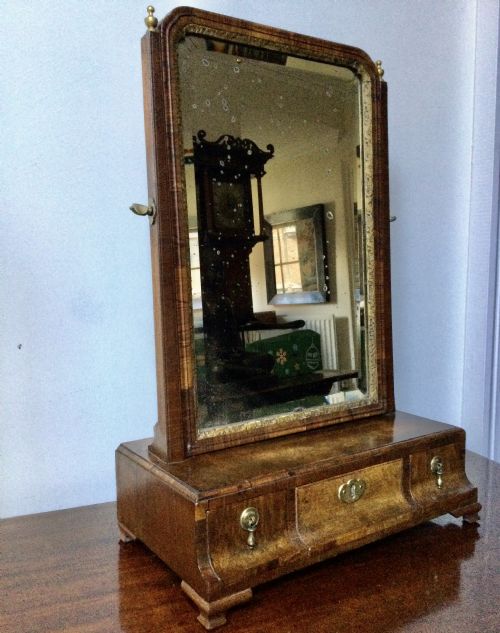
A victorian vanity box mirror brings together a portable table mirror and a fitted compartment for cosmetics and trinkets, serving the dressing table or the travelling desk. These pieces range from simple swing mirrors mounted on mahogany boxes to elaborate travelling cases lined in velvet with silver-gilt fittings.
The domestic versions sit upon chests of drawers or dressing tables, featuring pivoted glass held by upright arms above single or multiple small drawers. Travelling variants pack mirrors into folding lids or lift-out panels alongside compartments designed to secure bottles and brushes.
Originating largely from the nineteenth century, the examples here draw on Regency, William IV, and Queen Anne styles alongside straightforward Victorian forms. The overarching form remains consistent: an upright glass paired with a wooden carcass built to hold personal valuables.
How they were made
Cabinetmakers constructed the main carcasses from dense timbers such as mahogany, walnut, and burr walnut, frequently selecting finely figured veneers for the exterior surfaces. Brass mounts, escutcheons, and hinges provided structural reinforcement and decorative contrast to the dark wood.
Interiors relied on textiles like velvet to cushion glass bottles and silver items within purpose-built partitions. The swing mirrors themselves utilised pivoting screw mechanisms supported by wooden upright arms attached directly to the box or base.
Victorian Vanity Box Mirror Retail Price Guide 2026
Typical asking prices for victorian vanity box mirror among the pieces listed under this phrase on Sellingantiques today, from the lower quarter to the upper quarter. They describe what is for sale here now, not the wider market.
The inventory combines simple single-drawer tabletop swing mirrors with complex travelling cases housing sterling silver and velvet interiors.
What varies in quality
The sophistication of the internal fitting distinguishes standard utility boxes from high-status examples, particularly where secret drawers, sterling silver fittings, and celluloid accessories are present. Superior construction shows in the tightness of the dovetail joints and the selection of richly figured burr walnut or marquetry veneers.
The weight and clarity of the mirror glass, alongside the robustness of the brass swivelling hardware, dictate the overall durability of the piece. Master craftsmen ensured that the pivoting frame balanced securely at any angle without slipping.
The Victorian Vanity Box Mirror Glossary
- Swing mirror
- A looking glass mounted on vertical pivots allowing the plate to tilt back and forth. This arrangement became standard on dressing tables from the eighteenth century onward.
- Burr walnut
- Timber sliced from the gnarled growths of a walnut tree, yielding a swirling, mottled grain pattern. Cabinetmakers used these veneers on high-end Victorian furniture surfaces.
- Dovetail
- A joint formed by interlocking wedge-shaped fingers, prized for holding box corners firmly together without nails. It is a reliable indicator of traditional cabinetmaking skill.
- Sterling silver gilt
- Silver that has been coated with a thin layer of gold, providing a rich metallic finish often found on internal travelling set lids and bottle mounts.
- Marquetry
- Inlaid patterns of wood veneer or other materials assembled to form decorative motifs across a flat surface. This technique appeared on select Victorian boxes.
Victorian Vanity Box Mirror: Frequently Asked Questions
How do I date a dressing mirror?
Examine the timber, construction joints, and edge bevelling of the glass plate to determine the period of manufacture.
Earlier pieces often show hand-cut dovetails and simpler secondary woods, whereas later Victorian examples utilise machine-sawn components and richer burr veneers.
Were these used for travel?
Many examples functioned as travelling sets, equipped with secure locks and fitted compartments for bottles, brushes, and personal documents.
Smaller tabletop versions stayed fixed in a bedroom, while heavier cases with robust carrying handles accompanied owners on extended journeys.
What is the difference between a toilet mirror and a dressing mirror?
The terms are largely interchangeable in historical descriptions, generally referring to any small mirror designed to sit atop a dressing chest or table.
Some variants include integrated storage boxes with drawers, while others consist solely of a pivoting frame mounted on a modest plinth base.
How should I clean the wood and glass?
Dust the mahogany or walnut surfaces gently with a dry cloth and apply a traditional wax polish sparingly to maintain the finish.
Avoid commercial liquid sprays on antique timber, and clean the mirror glass with a mild solution applied directly to the cloth rather than the frame.