


Silver Top Dressing Jar
A silver top dressing jar brings a crisp weight of sterling silver and glass to the dressing table.
Silver Top Dressing Jar
A silver top dressing jar is a vanity accessory designed to hold powders, creams, and perfumes upon a dressing table. When searching this phrase, a buyer encounters containers ranging from small scent bottles to substantial rectangular trinket boxes.
The pieces on this page span the Victorian and Edwardian eras through to the Art Deco period of the 1920s and 1930s. The most common form met here pairs a faceted glass or crystal body with a removable sterling silver lid.
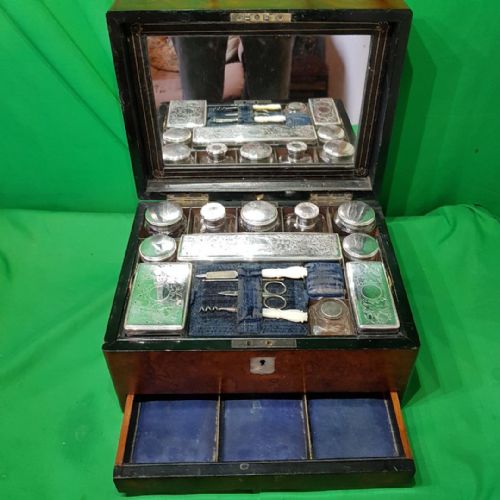
Many items originate from early twentieth-century Birmingham workshops, though examples also surface from London and provincial assay offices. They formed part of larger travelling sets and dressing cases, or stood independently as dressing table essentials.
Materials and Construction
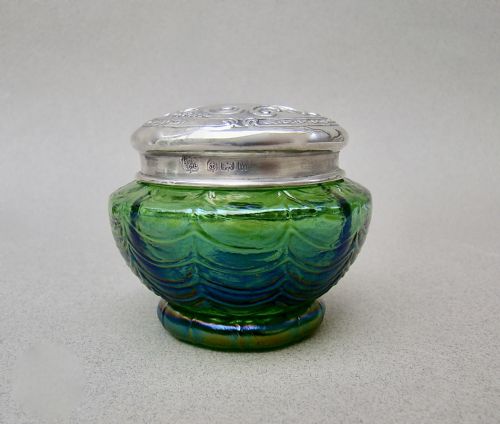
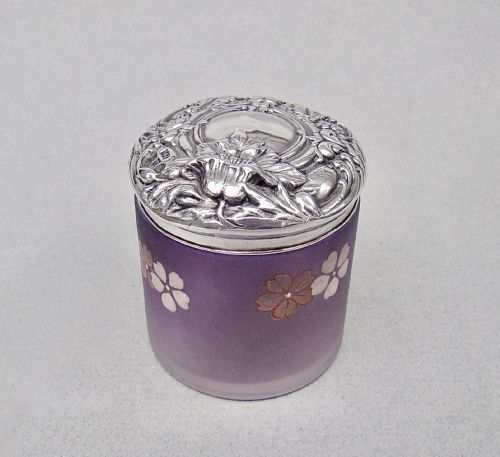
Makers formed the bodies of these vessels from heavy cut glass, moulded crystal, and occasionally coloured glass such as cranberry, amethyst, or Kralik wares. This glass was frequently deep-cut with geometric patterns or etched with floral motifs to catch the light.
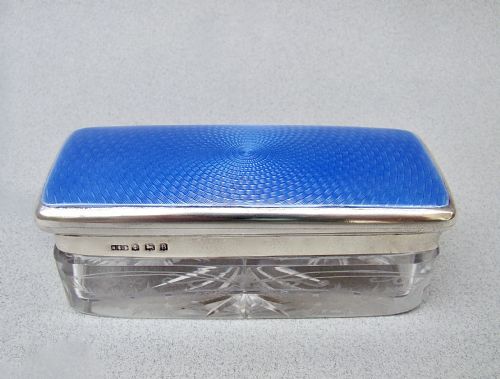
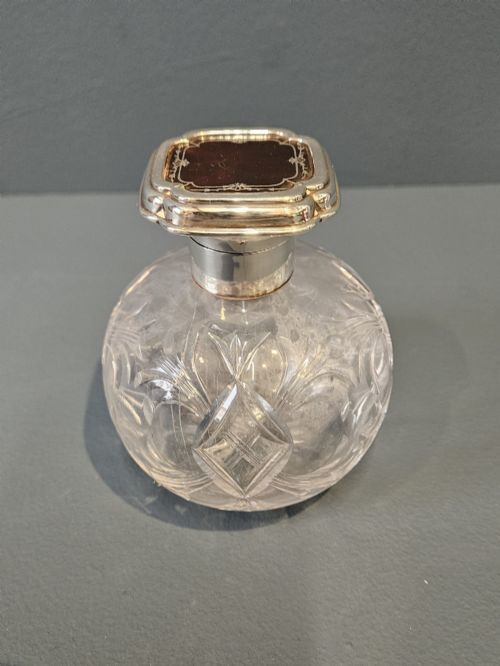
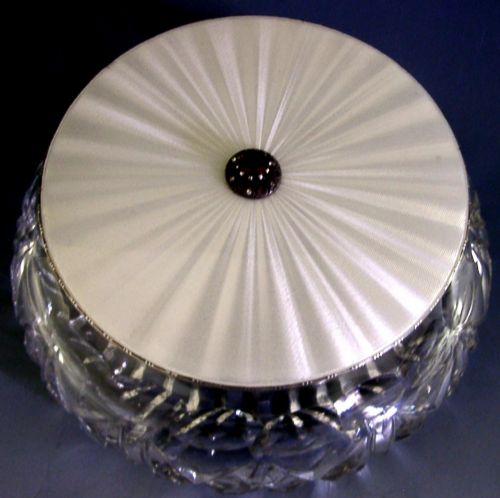
The lids and mounts utilise sterling silver, shaped by stamping, spinning, or casting, and finished with hand-engraved engine-turned patterns or smooth polished surfaces. Many lids incorporate decorative panels of tortoiseshell or translucent guilloché enamel over engraved silver bases.
Listings feature sterling silver and cut glass items spanning the Victorian, Edwardian, and Art Deco periods, alongside French pieces.
Distinctions in Quality
The distinction between standard utility items and finer examples rests upon the depth of the glass cutting and the weight of the silver lid. Heavier gauge silver resists denting and maintains crisp hallmarks, while deep-cut crystal provides a sharper refraction of light than pressed glass.
Superior pieces feature intricate additions such as multi-coloured enamel work, pique-work tortoiseshell inlay, or maker attributions to notable firms like the Goldsmiths and Silversmiths Company or Baccarat. The integration between the silver collar and the glass neck determines the structural integrity of the piece.
A J Pepper & Co·Henry Clifford Davis·Adie Brothers Ltd·Barnsley & Co
The Silver Top Dressing Jar Glossary
- Guilloché
- A decorative technique where a precise, intricate geometric pattern is mechanically engraved into a metal surface. This engraved base is then frequently covered with translucent enamel.
- Assay Office
- An official body that tests the purity of precious metals and stamps them with hallmarks. Common locations include Birmingham, Sheffield, and London.
- Engine-Turning
- A method of mechanical engraving that produces geometric patterns of fine lines on metal items. It was widely used on Edwardian and Art Deco silver lids.
- Piqué
- The decorative art of inlaying tiny pins or plates of gold or silver into tortoiseshell or ivory. It appears on select vanity boxes and lids from the late nineteenth century.
- Sterling Silver
- An alloy of silver containing 92.5 percent silver and 7.5 percent other metals, usually copper. This standard composition is marked on British silver components.
Silver Top Dressing Jar: Frequently Asked Questions
What is a silver top dressing jar?
A silver top dressing jar is a vanity container featuring a glass or crystal base paired with a solid sterling silver lid. These pieces were historically used to hold cosmetics, pins, or fragrances on a dressing table.
They emerged in various geometric and bulbous forms, often matching other items in a fitted dressing case or vanity set.
How do I date a silver lid?
Dating a silver lid relies upon the set of hallmarks stamped into the metal by an official assay office. These marks typically include a maker's mark, a lion passant indicating sterling standard, a city mark, and a date letter.
Matching the date letter against official assay tables reveals the exact year the silver component was hallmarked.
Can I use them for daily vanity storage?
These jars remain entirely functional for holding small modern items such as cotton wool balls, jewellery, or hair pins. The glass bodies clean easily with warm soapy water.
Care should be taken with antique enamel or tortoiseshell lids, as these decorative materials require gentle handling away from excessive moisture.
What is guilloché enamel?
Guilloché enamel is a decorative process where metal is first machine-engraved with a repetitive pattern and then coated with layers of translucent enamel. This allows the underlying engraved design to show through with distinct depth.
It is frequently found on Art Deco and Edwardian dressing table pieces in shades of blue, green, and pink.