



Wooden Vanity Dressing Case
A wooden vanity dressing case is a portable compartment for grooming and valuables, combining fine timber with clever internal fittings.
Wooden Vanity Dressing Case
A wooden vanity dressing case brings together several compartments for cosmetics, jewellery, and writing materials within a single portable box. When searching for a wooden vanity dressing case, buyers encounter objects spanning the Georgian, Regency, and Victorian periods, alongside occasional Art Deco pieces.
The selection here heavily favours nineteenth-century examples in richly figured timbers. Boxes range from simple lined jewellery caskets to elaborate travelling cases fitted with glass bottles and silver items.
How they were made
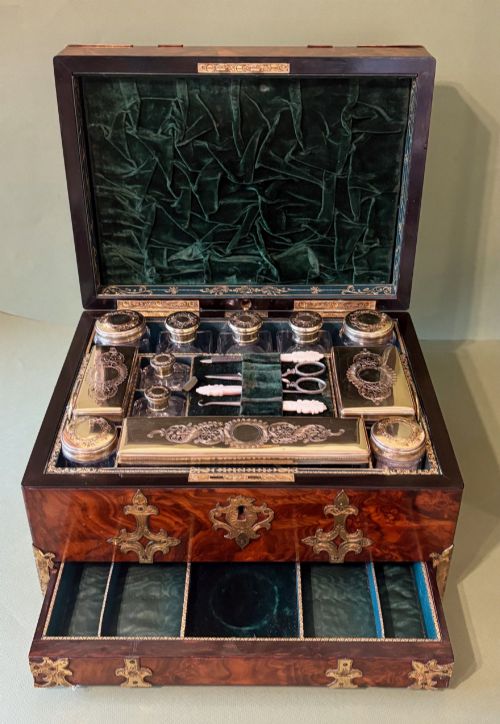
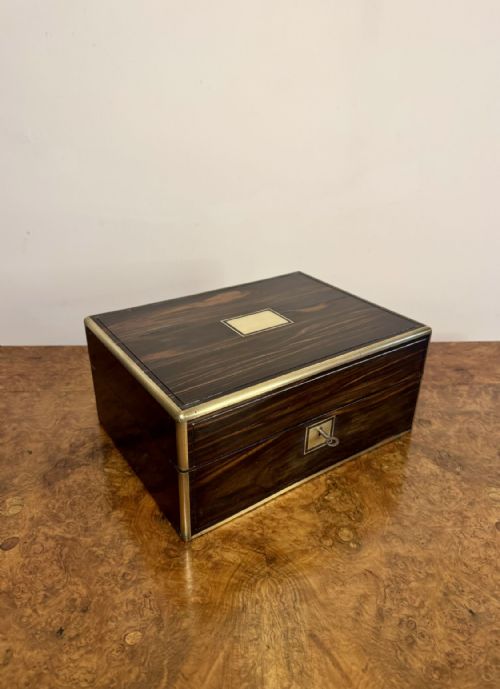
Cabinet makers utilised dense exotic timbers such as rosewood, coromandel, and burr walnut, often laid over a sturdy structural carcass. Brass banding, inlay, and mother-of-pearl escutcheons reinforced corners and added decorative contrast to the polished wood surfaces.
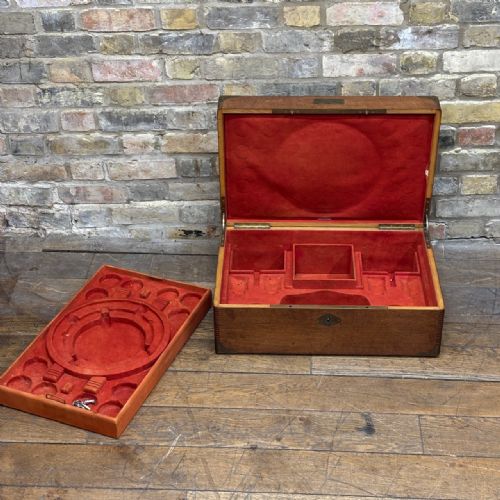
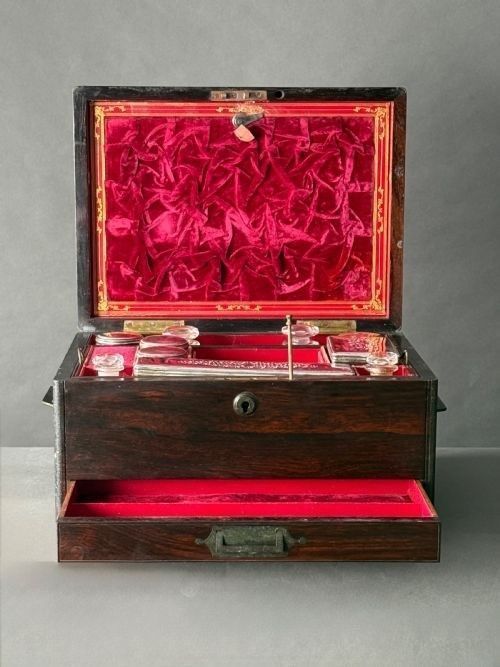
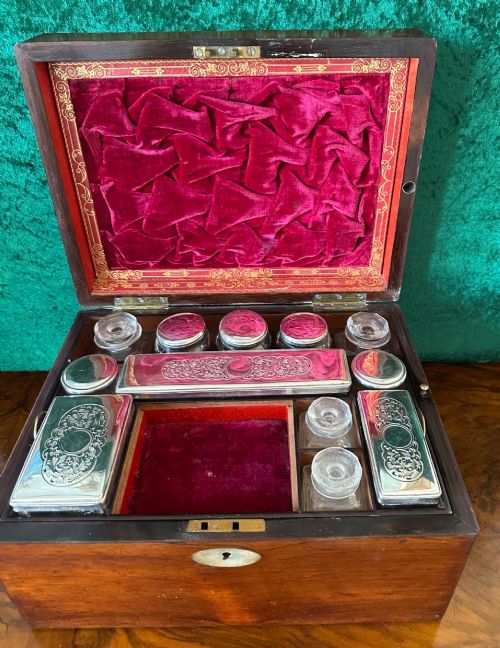
Interiors required intricate carpentry to create concealed drawers, folding writing slopes, and precise recesses for glass and silver containers. Silk, velvet, and leather linings cushioned compartments designed to hold delicate personal possessions securely during travel.
Wooden Vanity Dressing Case Retail Price Guide 2026
Typical asking prices for wooden vanity dressing case among the pieces listed under this phrase on Sellingantiques today, from the lower quarter to the upper quarter. They describe what is for sale here now, not the wider market.
What varies in quality
Quality rests in the selection of the timber grain, the precision of the internal carpentry, and the integrity of the metal fittings. A superior box displays book-matched veneers, smoothly operating secret drawers, and substantial brass hardware that aligns perfectly.
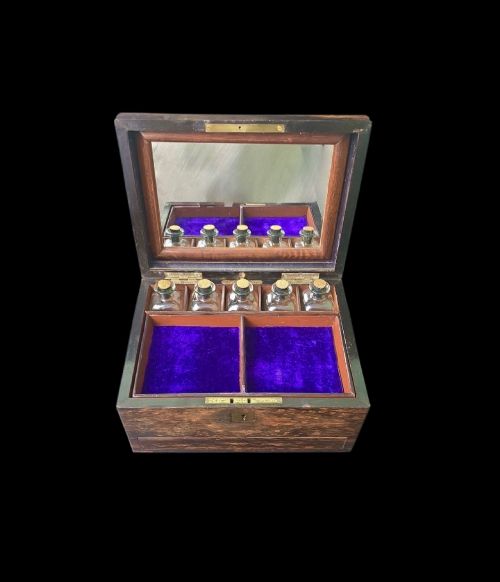
The complexity of the fitted interior also dictates the standing of the piece. Simpler workboxes contrast with fully equipped dressing cases containing original hallmarked silver tops, cut glass bottles, and maker stamps from prominent retailers.
H Mitchell·Parkins and Grotto·Edwards·JH Browne
The Wooden Vanity Dressing Case Glossary
- Coromandel
- A dense, heavily figured Southeast Asian timber prized for its dark brown colour and striking black stripes. It was frequently used for high-end Victorian dressing cases.
- Escutcheon
- A protective plate surrounding a keyhole, usually made of brass or mother-of-pearl. It prevents the surrounding wood from wearing down through repeated use of the key.
- Writing slope
- A hinged writing surface built into the lid or interior of a box, often opening to reveal a compartment for paper and ink. Many travel cases combined dressing functions with writing facilities.
- Tantalus
- A locking beverage frame holding decanters, sometimes incorporated into multi-purpose nineteenth-century caskets. The term derives from the mythological figure, describing bottles visible yet secured behind bars.
Wooden Vanity Dressing Case: Frequently Asked Questions
What fits inside these boxes?
These boxes accommodate jewellery, writing equipment, sewing tools, and glass bottles for perfumes or lotions. Interior trays lift out to reveal deeper storage wells beneath.
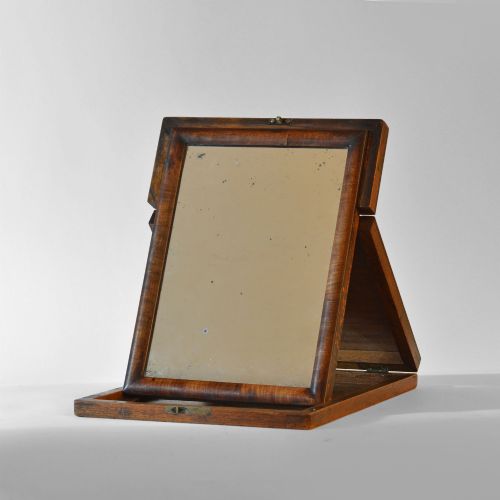
Fittings vary from basic velvet-lined compartments to elaborate sets containing matching silver-topped jars and folding mirrors.
How do I date my box?
Dating relies on timber choices, brass hardware styles, and maker marks or retailer signatures stamped on the locks or leather linings. Regency pieces often show lighter mahogany and simpler lines.
Victorian boxes frequently employ coromandel or burr walnut with heavy brass banding and complex spring-loaded mechanisms for secret drawers.
Are keys usually included?
Many nineteenth-century boxes retain their original working keys, though replacement keys are common due to centuries of travel. Locks are typically small brass lever mechanisms set flush into the wood.
Testing the lock requires care, as antique mechanisms can be delicate after years of storage.
How should I clean the wood?
Maintenance requires only a soft cloth and occasional application of appropriate furniture wax to nourish the antique polish. Water and modern chemical sprays must be avoided.
Velvet and silk interiors benefit from gentle brush cleaning to remove dust without disturbing fragile historic fabric.