




Antique Biscuit Jar
An antique biscuit jar sits on the sideboard as a solid container for keeping dry baked goods fresh.
Antique Biscuit Jar
An antique biscuit jar functions as a lidded container designed for the dining table or drawing room to hold dry biscuits and sweets.
Most examples found here date from the Victorian and Edwardian eras, spanning periods such as 1860, 1880, 1900, and 1910.
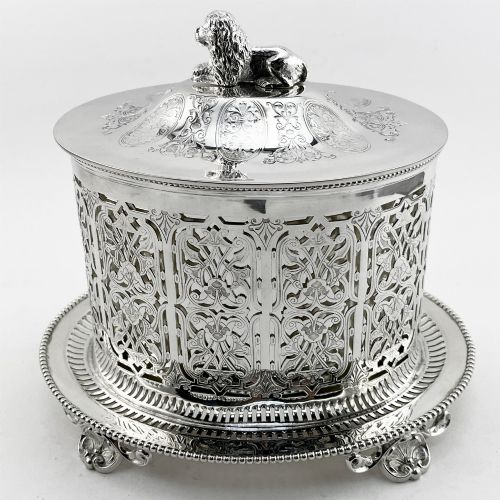
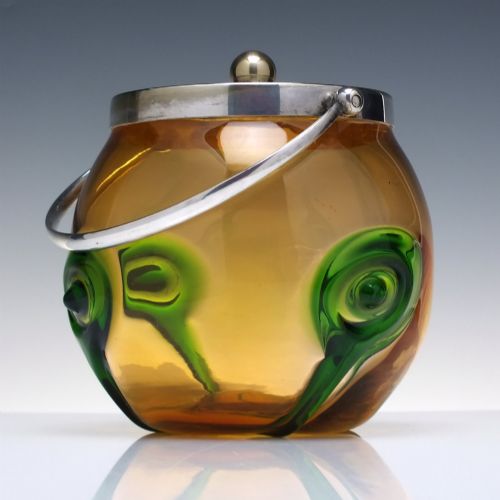
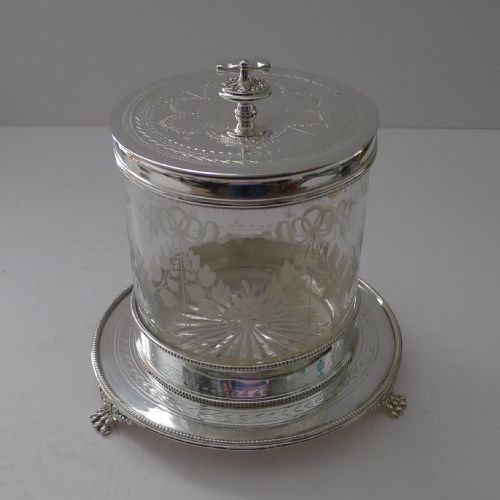
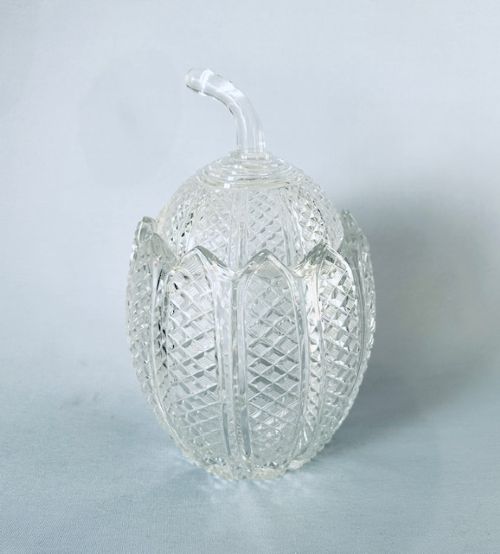
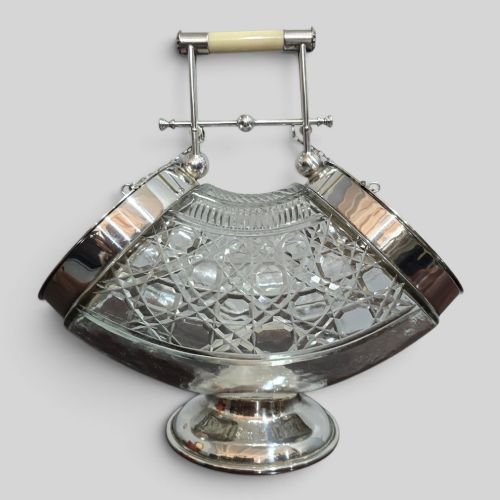
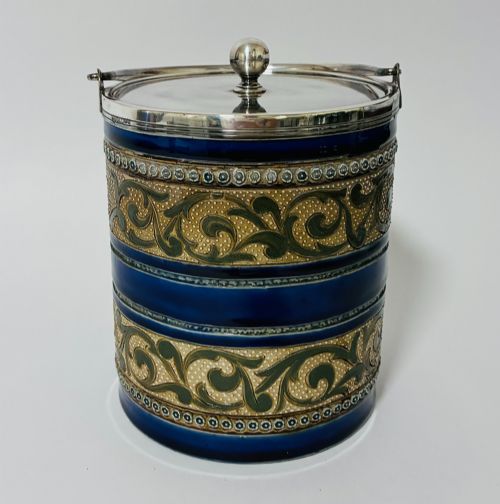
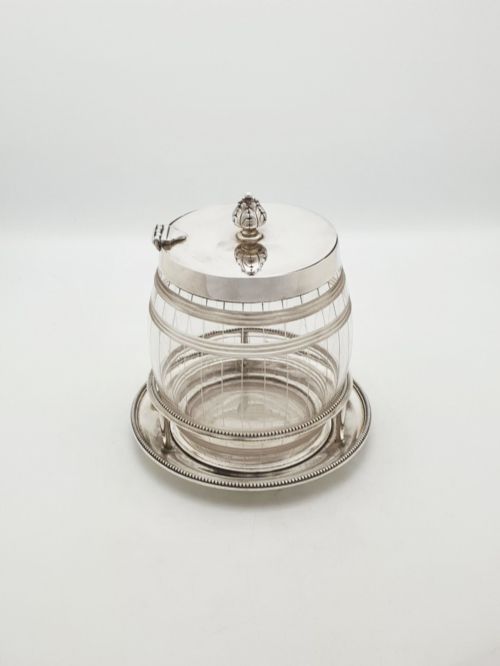
The common forms include glass barrels with silver plated mounts, ceramic bodies like stoneware and Jasperware, and novelty shapes including drums and weights.
How They Were Made
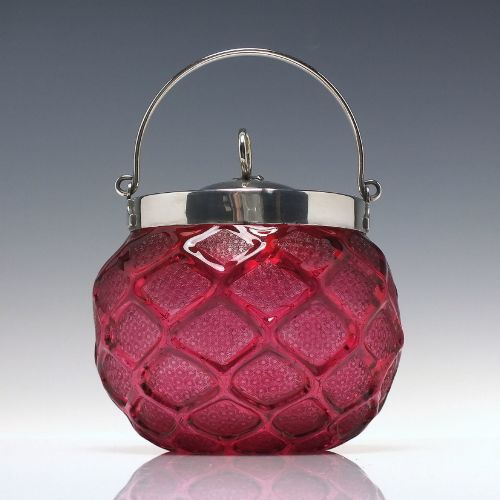
Makers combined silver plate with cut glass, cranberry glass, or ceramic bodies to create durable vessels for daily household use.
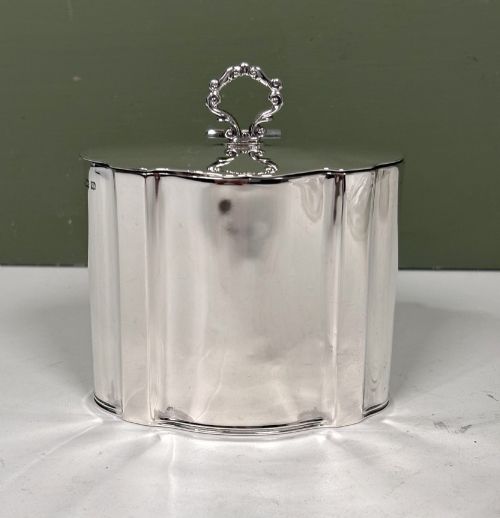
Silversmiths formed mounts, lids, and handles from silver plate or sterling silver, while potters shaped earthenware, stoneware, and Jasperware bodies.
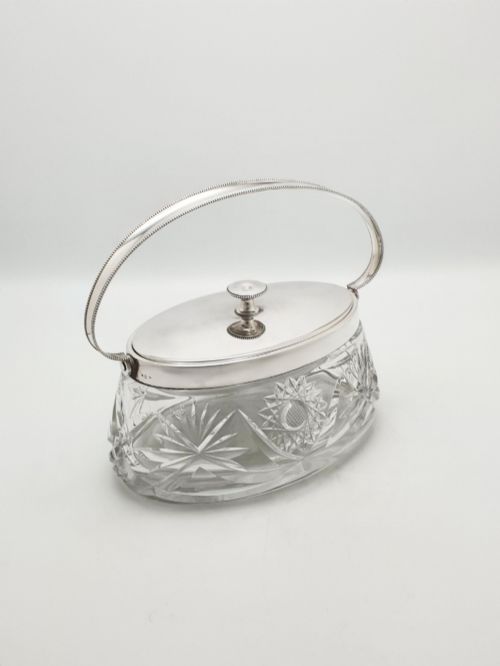
Glassmakers utilised hobnail cutting, etching, and enamel painting to decorate the transparent or coloured vessels.
Antique Biscuit Jar Retail Price Guide 2026
Typical asking prices for biscuit jar among the pieces listed under this phrase on Sellingantiques today, from the lower quarter to the upper quarter. They describe what is for sale here now, not the wider market.
Materials in the listings include silver plate, cut glass, stoneware, oak, cranberry glass, and Jasperware across Victorian and Edwardian periods.
What Varies in Quality
The weight and thickness of the glass liner and the gauge of the silver plate define the substance of a piece.
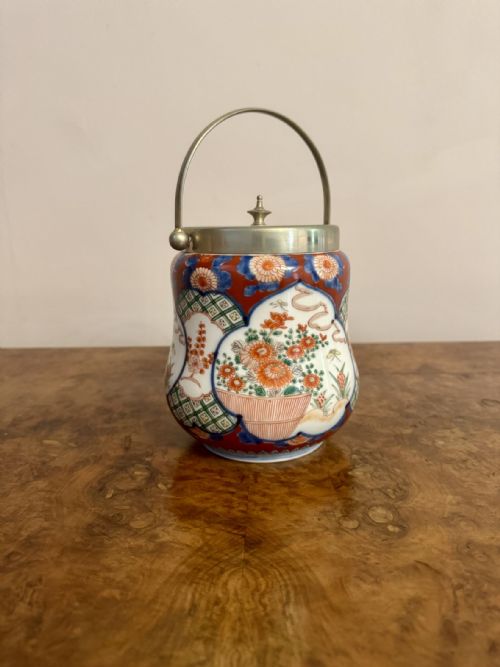
Detailed hand-painting on enamel and crispness in the moulding of ceramic reliefs separate standard vessels from finer workshop productions.
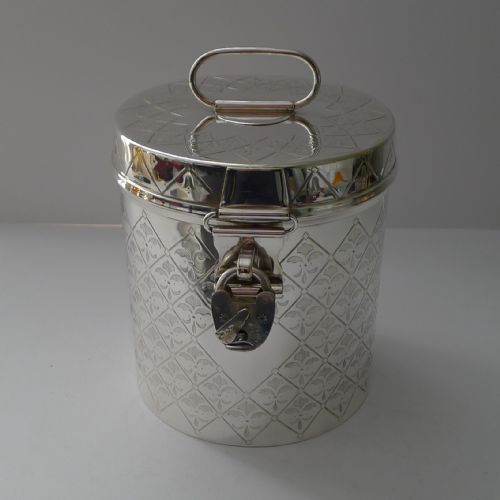
Intricate mechanical actions on locking lids and engraved mounts demonstrate greater skill in construction.
Mappin and Webb·Elkington·WMF·Thomas Bradbury·Robert and Belk·Walker and Hall·Doulton Lambeth·Wedgwood·Crown Devon·Carlton Ware
The Antique Biscuit Jar Glossary
- Jasperware
- A type of fine stoneware developed by Wedgwood, typically featuring white raised classical reliefs against a coloured matte background.
- Silver plate
- A layer of silver fused to a base metal such as copper or nickel brass, commonly utilised for mounts and lids.
- Cranberry glass
- A rich red-pink transparent glass created by adding gold chloride to the molten batch, popular in late nineteenth-century tableware.
- Hobnail cut
- A sharp, geometric decorative pattern cut into the surface of glassware, catching the light across multiple facets.
- Finial
- A decorative knob or ornament fixed to the top of a lid for lifting.
Antique Biscuit Jar: Frequently Asked Questions
What is an antique biscuit jar?
An antique biscuit jar is a lidded container made to store and serve dry baked goods at the table. They gained popularity in the nineteenth century as formal dining expanded.
These pieces combine materials like silver plate, cut glass, and ceramic bodies into functional table ornaments.
How were biscuit jars used?
Household staff filled them with sweet or savoury biscuits to accompany tea or after-dinner drinks. The tight-fitting lids helped keep the baked goods dry and crisp.
Hosts placed them on sideboards or dining tables for guests to help themselves during gatherings.
How do I clean silver plated mounts?
Silver plated mounts require gentle cleaning with a soft cloth and a specialised silver polish formulated to protect thin plating. Avoid abrasive cleaners that strip the silver layer from the base metal.
Glass liners and ceramic bodies wash easily in warm soapy water once removed from the metal frame.
How can I tell a Victorian jar from an Edwardian one?
Victorian jars often display heavier, ornate decoration with elaborate floral engraving or heraldic motifs. The metalwork can feel substantial and heavily detailed.
Edwardian examples frequently lean towards lighter cut glass, simpler silver mounts, and brighter pastel ceramic tones.