






Silver Mounted Oak Box
A silver mounted oak box brings together sturdy timber and bright metal work, offering a practical container for cards, cigars or documents.
Silver Mounted Oak Box
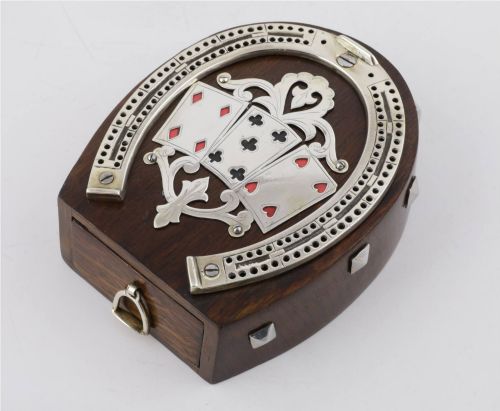
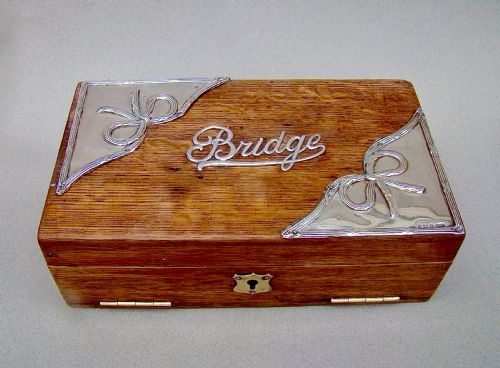
When you examine a silver mounted oak box on this page, you encounter sturdy timber containers fitted with metal mounts from the Victorian and Edwardian periods. These pieces serve various functional purposes, appearing as cigar boxes, bridge playing card boxes, inkstands, and larger games compendiums.
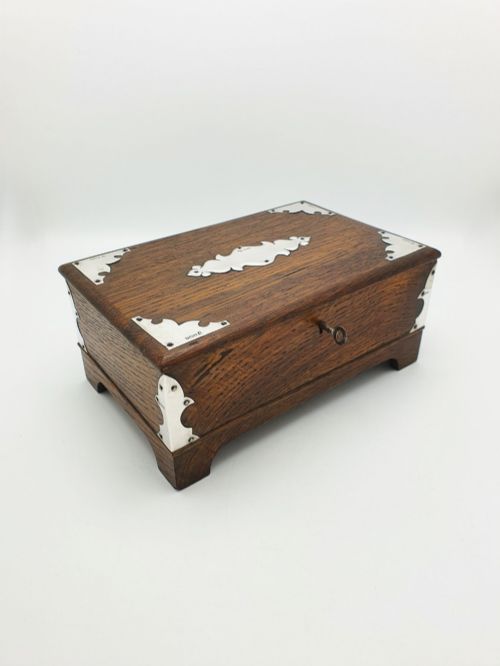
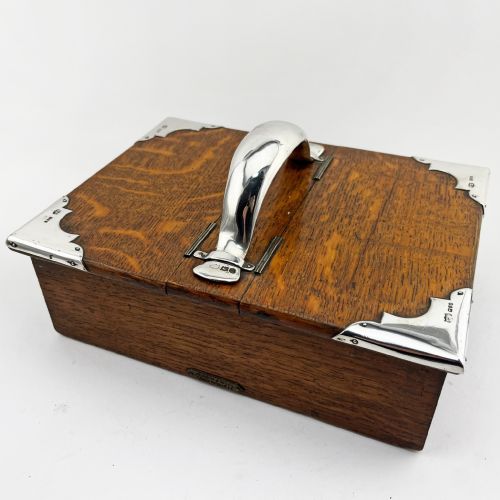
The version you are most likely to meet on this page is the Edwardian or late Victorian cigar box or desktop container, frequently lined with cedar or velvet and secured with sterling silver hinges and shields. Oak forms the robust carcase of each piece, ranging from blonde oak to darker tones, while silver plate or sterling silver provides the decorative mounts.
Beyond standard desktop containers, the selection extends to drum form biscuit barrels, silver chests banded in iron, and complex tantalus and games compendiums housing decanters and cards. Each object demonstrates the late nineteenth and early twentieth century preference for combining durable English timbers with bright metal hardware.
How they were made
Craftsmen built the carcases of these containers using solid oak, occasionally employing blonde oak or cedar for internal linings, and joined the corners with secure box joints or dovetails. The timber was planed and polished to showcase the natural grain while providing a durable structure capable of withstanding daily handling.
Silversmiths shaped sterling silver or silver plate into mounts, corners, escutcheons, and hinged lids, attaching them to the wood with tiny pins or screws. Hallmarks stamped into the silver plates record the city of assay, such as Birmingham, and the maker's mark, anchoring the metalwork to specific workshops.
Silver Mounted Oak Box Retail Price Guide 2026
Typical asking prices for silver mounted oak box among the pieces listed under this phrase on Sellingantiques today, from the lower quarter to the upper quarter. They describe what is for sale here now, not the wider market.
One exceptional drum form biscuit barrel allows your dry snacks to travel in the guise of a miniature military drum.
What varies in quality
The distinction between standard containers and finer specimens lies in the substance of the metalwork and the precision of the joinery. Solid sterling silver mounts supplied by recognised makers elevate a piece above those fitted with simple silver plate or base metal bands.
Interior fittings also determine the standard of the object, with cedar linings, fitted compartments for cards or cigarettes, and intact glass inserts representing superior manufacturing. The weight and condition of the oak carcase, free from major shrinkage cracks or replaced hardware, complete the measure of quality.
Levi & Salaman·Mappin & Webb·John Grinsell & Sons
The Silver Mounted Oak Box Glossary
- Sterling silver
- A silver alloy containing 92.5 percent pure silver and 7.5 percent other metals, typically copper. This standard is indicated by specific hallmarked symbols on the metal mounts.
- Silver plate
- A thin layer of silver bonded to a base metal foundation such as copper or brass. This technique offered the visual appeal of solid silver at a lower cost.
- Humidor
- A moisture-controlled box designed to store cigars. In these examples, cedar wood linings help maintain the proper humidity for the tobacco.
- Tantalus
- A locking drink cabinet that displays decanters while preventing access without a key. They frequently form part of larger oak games compendiums.
- Escutcheon
- A protective metal plate surrounding a keyhole. On these pieces, they are commonly cast from sterling silver or plated metal.
Silver Mounted Oak Box: Frequently Asked Questions
What were silver mounted oak boxes used for?
These containers served practical domestic functions in country houses and town residences, holding cigars, cigarettes, bridge playing cards, hairpins, and stationery. Their sturdy construction protected delicate luxury items from damage while remaining presentable on desks and smoking tables.
Larger variations integrated games compendiums and decanters to entertain guests in the evening. Their durable materials ensured they endured regular daily use in Victorian and Edwardian households.
How do I care for my oak box?
Keep the timber clean by dusting with a dry, soft cloth and avoid placing the container near direct heat sources or in damp environments. Excessive temperature changes can cause the oak carcase to warp or the internal cedar linings to dry out.
Polish the silver mounts sparingly with a specialised cloth, taking care not to rub metal polish into the surrounding wood grain. Proper maintenance preserves both the finish of the timber and the crisp detail of the hallmarks.
How can I tell the period?
Examine the silver hallmarks stamped on the metal mounts, which reveal the assay office and the exact year of manufacture. Stylistic clues such as Gothic revival details or Edwardian inlay also indicate the era in which the container was made.
Construction methods further help date the piece, as machine-sawn timber and specific hinge types became more common by the twentieth century. Comparing the form with dated examples in the archive narrows down the timeframe.
Are the interiors usually lined?
Many cigar and cigarette containers feature cedar wood linings designed to preserve the moisture and aroma of the tobacco. Other desktop boxes rely on plain oak interiors or incorporate velvet and satin fabric bases for stationery and trinkets.
Survival of these internal linings varies depending on the intensity of past use. Original cedar or fabric additions contribute significantly to the integrity of the piece.