
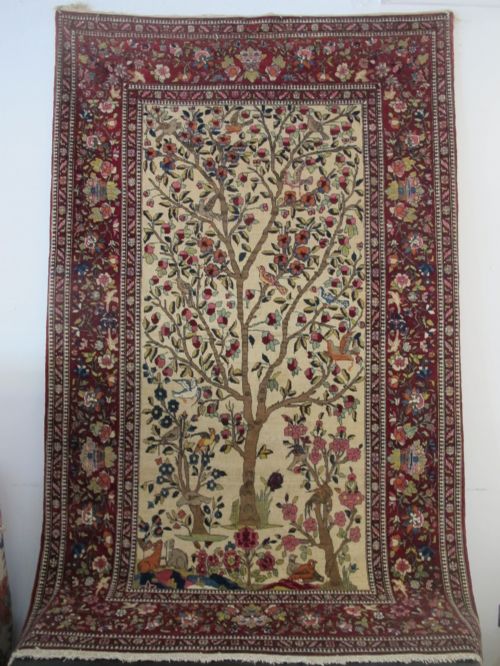


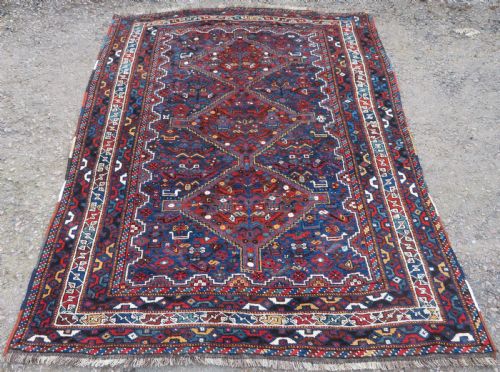


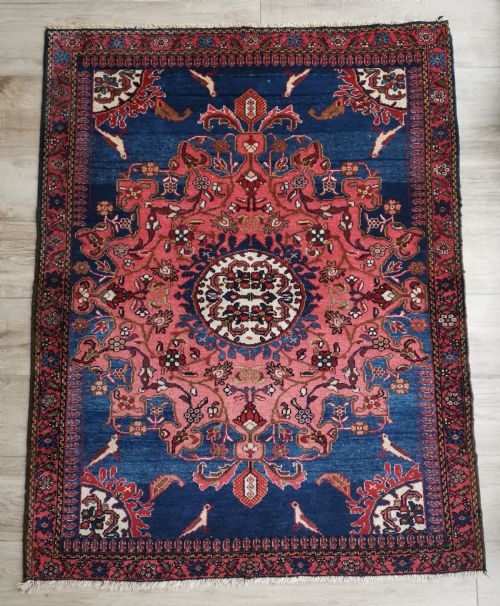

Antique Bird Rug
An antique bird rug brings the natural world indoors, displaying woven avian motifs from Persian and Caucasian weaving traditions.
Antique Bird Rug
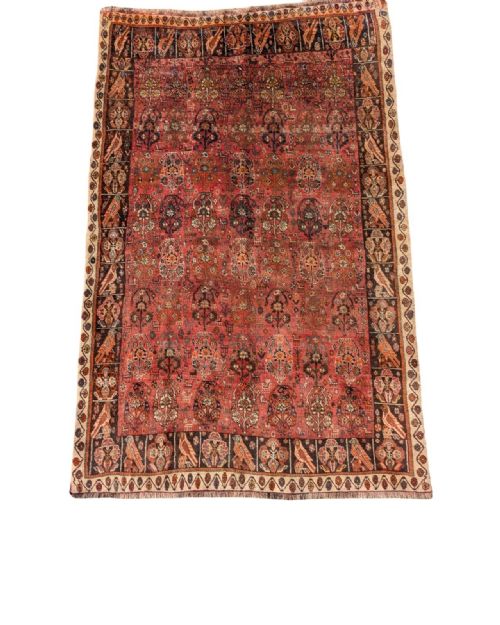
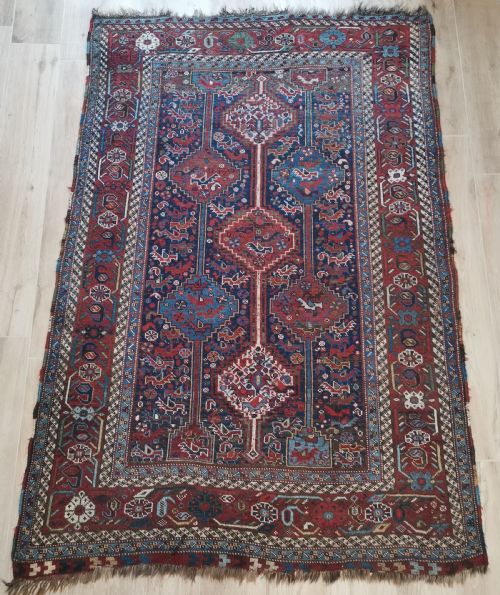
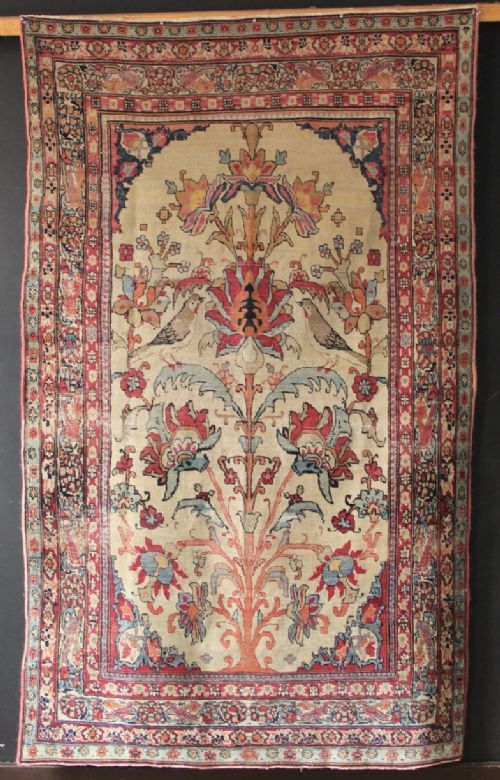
An antique bird rug is a woven textile featuring stylized avian motifs, ranging from pecking chickens to perched songbirds among trees. These pieces originate primarily from Persian tribal groups such as the Khamseh and Qashqai, as well as Caucasian workshops in Shirvan and Kuba.
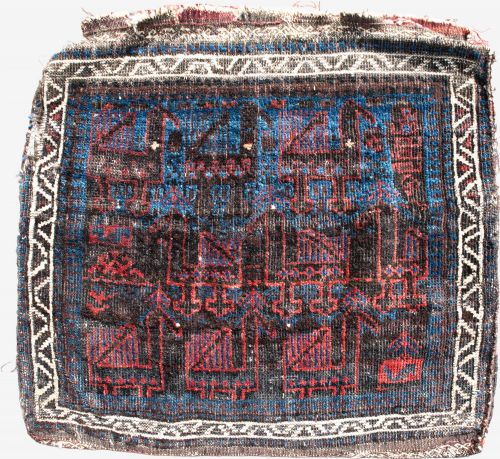
The format varies from full-sized carpets and area rugs down to smaller utility pieces like bag faces and runner rugs. Many examples incorporate traditional village and nomadic designs alongside representations of animals and floral elements.
Makers utilise wool, cotton, goat hair, and occasionally silk to construct these textiles. Dating spans from the late nineteenth century through the early decades of the twentieth century.
How They Were Made
Weavers construct these pieces using hand-spun wool and cotton foundations, often incorporating goat hair for durability on tribal formats. Natural and vegetable dyes provide the palette, yielding saturated colours that age gracefully over time.
Techniques range from standard pile knotting to flat-woven Soumak structures employed on bags and smaller panels. Pile rugs utilise dense wool knotting to define intricate geometric and figurative borders.
Several carpets capture animated scenes of chickens actively pecking at the ground among traditional tribal medallions.
What Varies in Quality
Quality rests upon the clarity of the avian motifs and the crispness of drawing within the borders and medallions. Finer examples display meticulous execution of intricate details like pecking chickens and tree branches.
The depth and saturation of the natural dyes significantly influence visual impact. Purity of wool and tightness of the foundation weave further distinguish superior tribal and village outputs.
The Antique Bird Rug Glossary
- Khamseh
- A confederation of pastoral tribes in southwest Persia known for dark wool foundations and distinctive bird motifs. Their weaving often employs deep indigo and madder red hues.
- Shirvan
- A region in the eastern Caucasus producing geometric rugs with crisp rectilinear designs and specialised bird borders. These pieces typically feature finely clipped wool pile.
- Soumak
- A flat-weave technique where wrap threads are wrapped with coloured wefts to create a strong, durable textile without a raised pile. This method is frequently seen on antique bag faces.
- Morghi
- A descriptive term often applied to Khamseh carpets featuring chicken or bird patterns. The word relates directly to the avian imagery embedded within the field.
- Boteh
- An almond-shaped or paisley motif representing a floral shoot, frequently integrated alongside birds in Persian village rugs. It is one of the most enduring symbols in oriental carpets.
Antique Bird Rug: Frequently Asked Questions
What is an antique bird rug?
An antique bird rug is a hand-knotted or flat-woven textile originating from Persian or Caucasian regions that incorporates avian imagery into the design. These range from tribal village carpets to small nomadic bag faces.
Weavers rendered chickens, perched birds, and mythical creatures alongside geometric medallions and floral trees. Such pieces reflect the local fauna and traditional storytelling of the makers.
How were these rugs used originally?
Nomadic and village weavers produced these textiles for daily utility inside tents and homes as floor coverings, sleeping mats, and storage bags. Smaller formats like saddle bags served practical transportation needs.
Over time, many of these utilitarian textiles transitioned into decorative wall hangings and collector pieces. Their sturdy construction allowed them to withstand heavy daily wear.
How do I care for an antique wool rug?
Protect antique textiles by placing them in low-traffic areas and using a breathable rug underlay to prevent sliding. Regular gentle vacuuming without a rotating brush roll keeps dust from settling into the wool foundation.
Professional cleaning tailored for antique natural-dye carpets ensures the wool and dyes remain preserved. Avoid direct exposure to harsh sunlight to prevent fading.
How can I tell a Persian bird rug from a Caucasian one?
Persian examples, particularly those from the southwest, frequently employ softer wool, darker indigo grounds, and more organic depictions of animals. Khamseh and Qashqai pieces often display warmer colour palettes.
Caucasian rugs from Shirvan or Kuba tend to feature crisper geometric drawing, ivory or saturated primary fields, and rigid border alignments. The handling of the wool pile also differs between these production centres.