
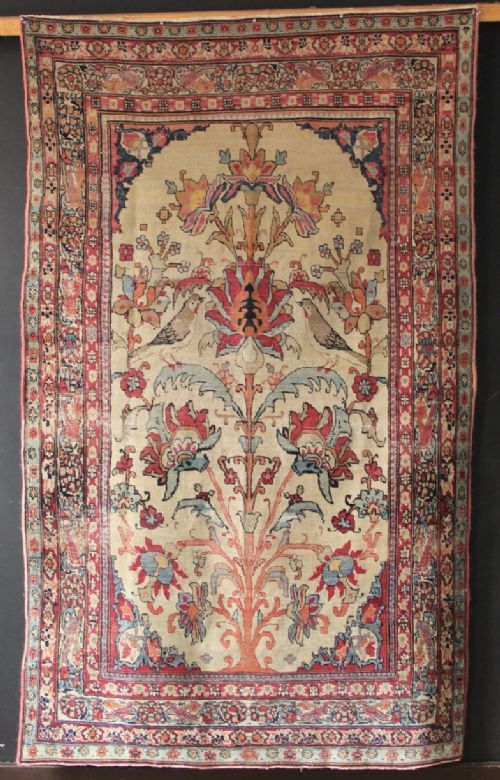
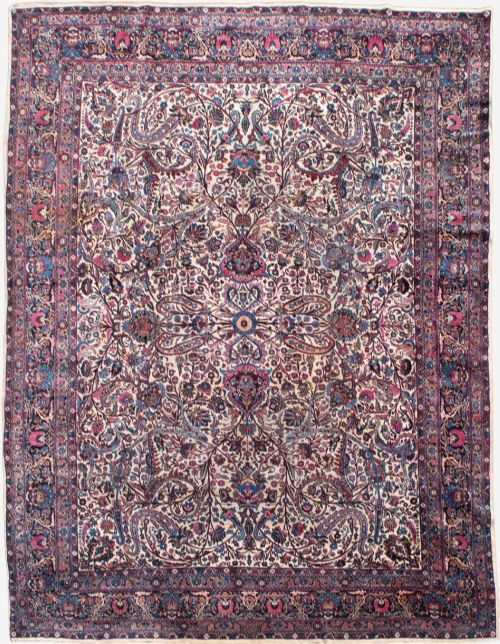
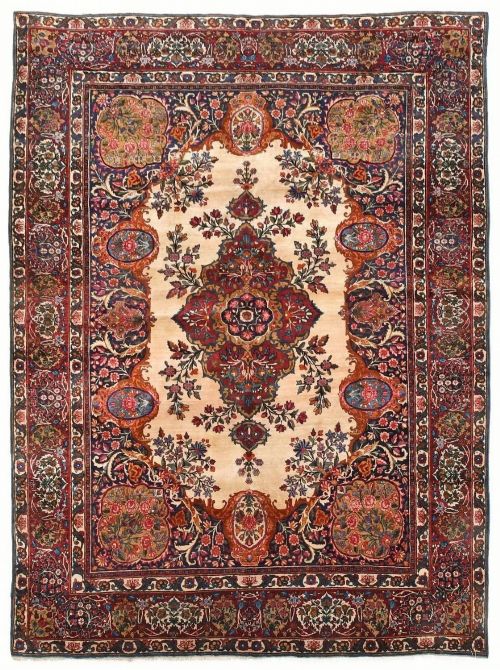


Vintage Kirman Rug
A vintage kirman rug brings Persian traditional weaving into a room, offering room-size carpets, runners and small mats.
Vintage Kirman Rug
When you search for a vintage kirman rug, you are looking at Persian floor coverings originating from Kirman, spanning dates from the late nineteenth century into the mid twentieth century. These pieces appear in various proportions, from exceptionally long narrow runners to large room-size carpets and small mats.
The most common examples on this page are antique room-size carpets from the decades between eighteen seventy and nineteen thirty, alongside smaller mats and oversized carpets. They carry traditional Persian styling with repeat floral boteh designs, shaped through decades of weaving heritage.
How they were made
These carpets and rugs are constructed using wool and cotton materials, forming durable foundations and pile surfaces. The combination of these traditional materials provides the structural integrity needed for large room-size formats and fine mats alike.
Weavers utilised traditional Persian knotting techniques to build dense piles and intricate floral patterns. This disciplined construction method allowed workshops to produce both exceptionally long narrow runners and oversized carpets with stable edges.
Vintage Kirman Rug Retail Price Guide 2026
Typical asking prices for vintage kirman rug among the pieces listed under this phrase on Sellingantiques today, from the lower quarter to the upper quarter. They describe what is for sale here now, not the wider market.
Listings span dates from eighteen seventy to nineteen forty, featuring wool and cotton materials in room-size carpets, runners and small mats.
What varies in quality
Knot density and fineness separate standard utility pieces from very fine oversized examples. Finer weaving allows for crisper floral detail and more intricate execution of traditional boteh motifs across the field.
Condition and scale also define the standing of individual pieces. While distressed surfaces show the patina of age, intact pile and balanced proportions in room-size carpets represent the higher end of the range.
The Vintage Kirman Rug Glossary
- Boteh
- A traditional teardrop or almond-shaped motif filled with floral details. This pattern repeats across the field of many Persian carpets.
- Runner
- A long narrow carpet format designed for hallways or corridors. These pieces maintain elongated proportions relative to their width.
- Pile
- The upright yarn surface of a rug formed by knotted wool. It provides the texture and colour beneath the foot.
- Foundation
- The underlying structure of cotton warp and weft threads that supports the wool knots. It determines the stability of the carpet.
Vintage Kirman Rug: Frequently Asked Questions
How do I clean a vintage kirman rug?
Gentle surface care and professional specialist washing preserve the wool pile and cotton foundations. Avoid harsh chemical treatments that weaken the fibres.
Vacuum with care using suction attachments rather than rotating brush rolls. This protects the historic weave from unnecessary friction.
Where should I place a runner?
Narrow runners suit hallways, corridors and galley spaces where floor areas demand elongated proportions. Their length bridges rooms effectively.
Ensure you use a secure underlay to keep the rug flat and prevent slipping on smooth flooring.
Are these carpets suitable for heavy traffic?
Wool and cotton construction provides natural resilience for daily use in living areas and dining rooms. Room-size formats distribute footfall evenly across the pile.
Pieces showing heavy distress benefit from placement in lower-traffic zones to preserve their remaining fabric.
How do I identify a lavar kirman?
Lavar pieces represent a specific refined subdivision within Kirman weaving traditions. They typically exhibit exceptional fineness and delicate floral patterning.
Examining the density of the wool knots on the cotton foundation reveals the elevated standard of these specific items.