




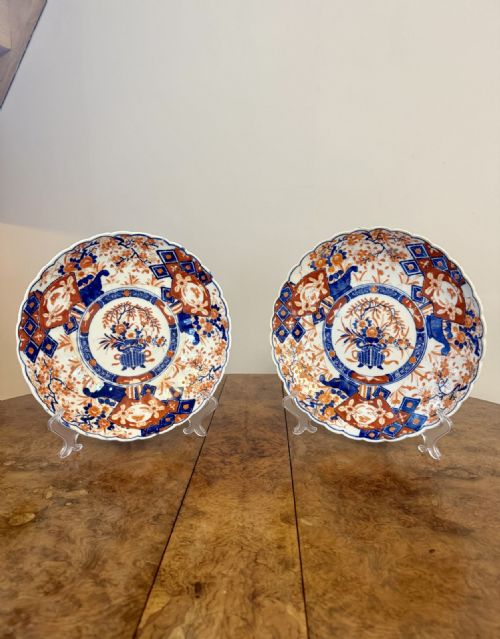
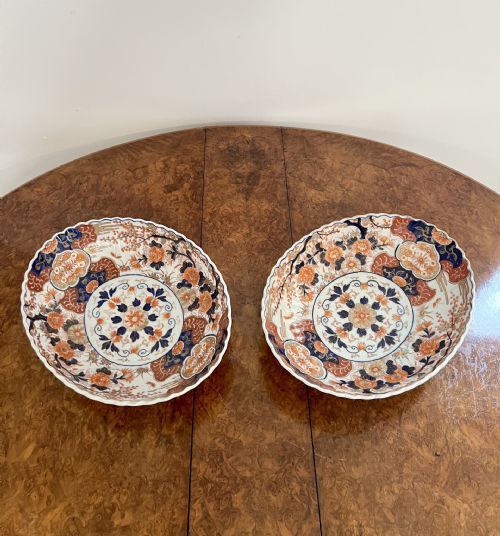


Antique Asian Display Charger
These antique asian display charger pieces bring rich palette and form to a wall or table, drawing the eye with centuries of craft.
Antique Asian Display Charger
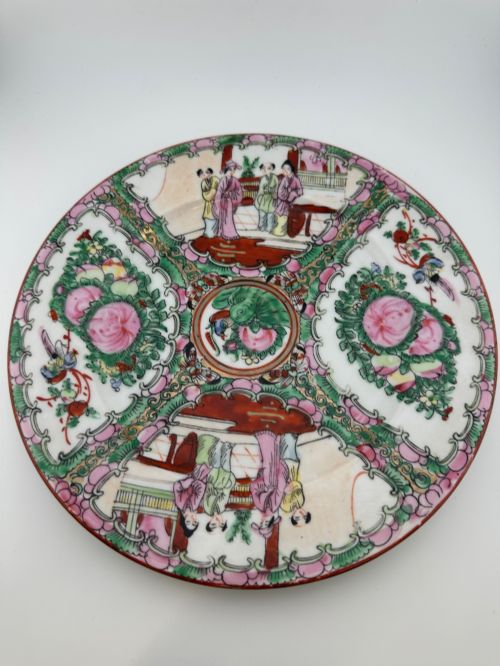
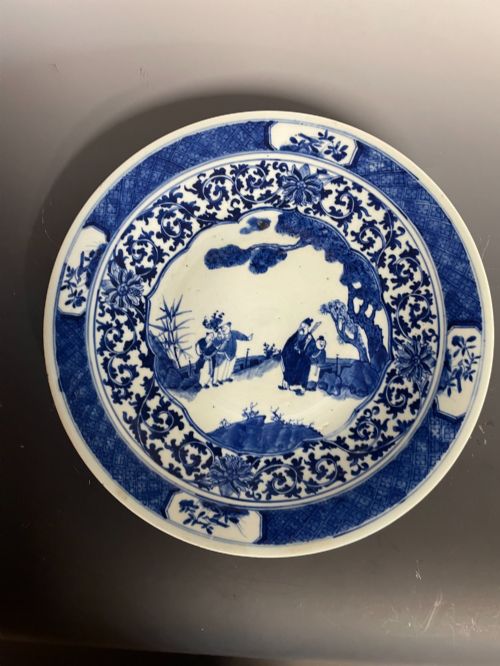
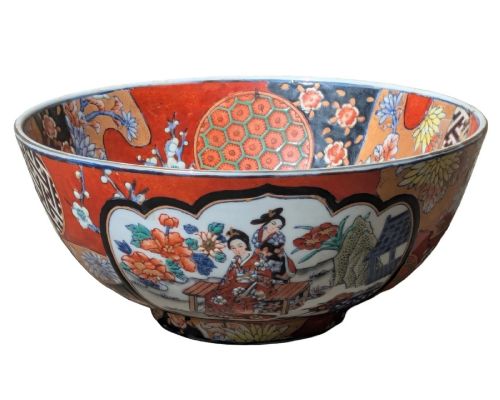
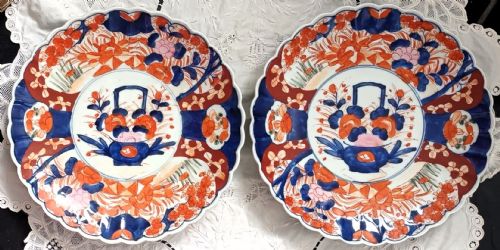
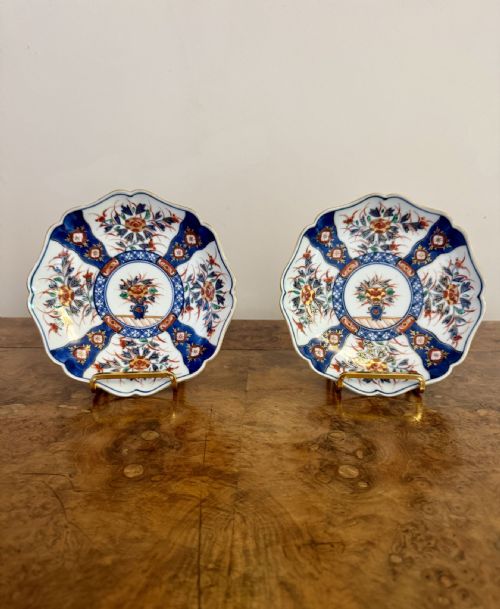
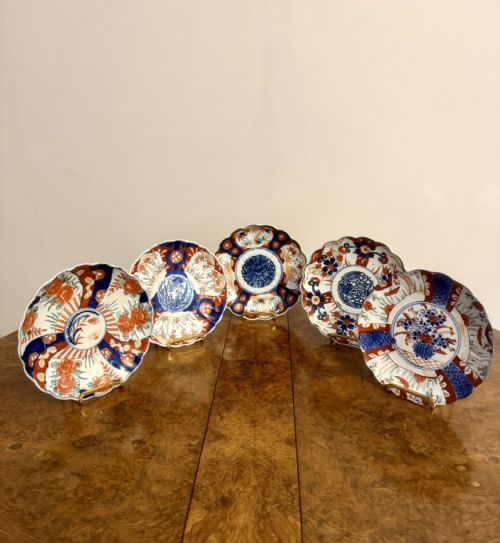
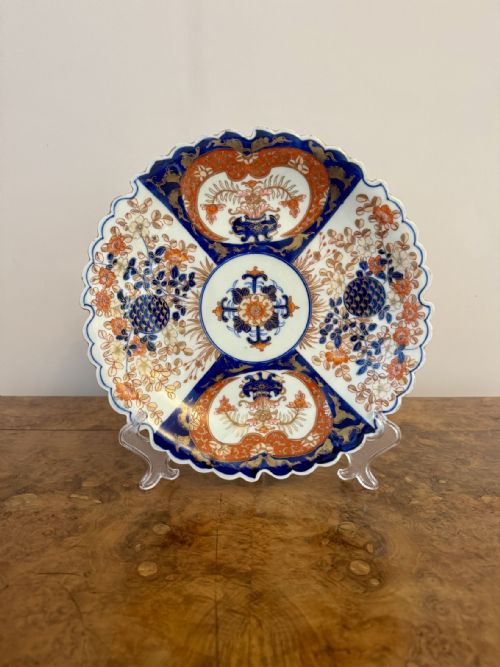
An antique asian display charger serves primarily as a decorative plate or broad dish rather than tableware, designed to be mounted on walls or set upon stands. When searching this phrase, a buyer encounters large ceramic platters and metal trays created across the eighteenth, nineteenth, and early twentieth centuries. The selection on this page relies heavily on Japanese Imari porcelain and Meiji period cloisonne enamel vessels.
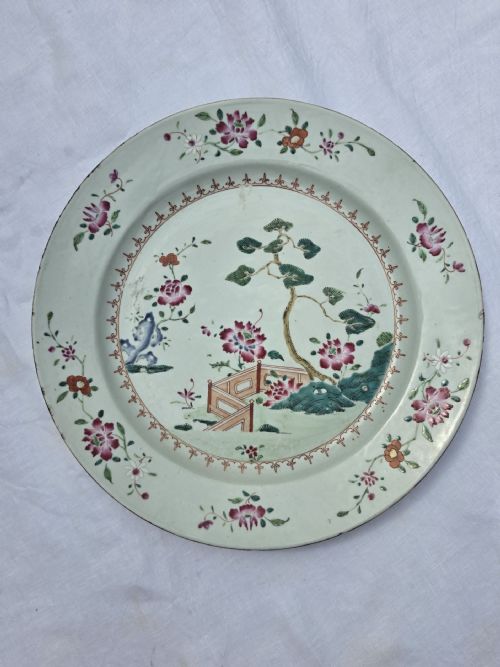
Forms range from deep circular chargers and scalloped plates to square dishes and substantial decorative bowls. Japanese examples span the Edo, Meiji, and Taisho periods, while Chinese pieces include Qing dynasty export porcelain. Collectors also find brass and bronze plates alongside hand-painted porcelain.
The decorative schemes frequently depict natural motifs such as birds, phoenixes, koi, and mount Fuji, alongside human figures including the seven lucky gods and buddhas. These objects were produced for export to western markets as well as domestic display, maintaining utility as ornamental centerpieces.
How They Were Made
Porcelain pieces are shaped from clay, fired, and hand-painted using iron red, cobalt blue, and gilt highlights to build intricate patterns. Cloisonne enamel chargers utilise thin copper or brass wire soldered to a metal base to form cells, which are then filled with coloured glass paste and fired multiple times before polishing.
Metal vessels such as brass and bronze plates are cast or hammered into form, sometimes integrating incised details or applied metal elements. Glazes are applied by hand, resulting in variations of texture and tone across each individual surface.
Several plates depict solemn religious figures sitting just inches away from leaping koi fish and startled owls.
What Varies in Quality
The distinction between standard and superior pieces rests on the precision of the hand-painting and the complexity of the design. In cloisonne works, finer wirework and an absence of pitting in the enamel indicate superior skill from the workshop.
Porcelain quality reveals itself in the crispness of the underglaze cobalt and the restraint or opulence of the overglaze gold leaf. Heavier gauge metal and balanced symmetry elevate the standing of cast brass and bronze items.
Koshida
The Antique Asian Display Charger Glossary
- Imari
- A style of Japanese porcelain featuring a distinct palette of cobalt blue, iron red, and gold. These pieces were exported in quantity through the port of Imari.
- Cloisonne
- A technique where metal wires form compartments on a vessel body to hold coloured enamel paste. The surface is subsequently fired and ground smooth.
- Meiji Period
- The era in Japanese history spanning from 1868 to 1912, noted for a surge in decorative arts produced for international exhibition.
- Famille Rose
- A palette of Chinese porcelain decoration distinguished by opaque pink or rose enamel, introduced during the Qing dynasty.
- Edo Period
- The period in Japanese history running from 1603 to 1867, preceding the Meiji era and associated with early Imari production.
Antique Asian Display Charger: Frequently Asked Questions
How do I hang a heavy charger?
Large chargers require secure, coated spring hangers that distribute weight evenly across the rim without putting pressure on the body. Wall fixings should anchor directly into solid masonry or studwork.
Avoid wire attachments glued to the footring, as centuries-old porcelain glazes can fail under sustained tension. A padded wooden display stand offers a safer alternative for cabinet placement.
Were these plates used for dining?
Most large chargers and display plates served ornamental functions, acting as centerpieces on sideboards or hung in reception rooms. Their generous diameters and intricate enamel or gilt surfaces made them impractical for daily dining.
Some smaller dishes saw domestic use, but the heavy gilding and delicate cloisonne work found on these examples point directly to visual display.
How do I date a Japanese charger?
Dating relies on stylistic clues, paste composition, and the character of the base footring. Edo period pieces often show heavier potting and deeper cobalt tones, while Meiji items feature tighter brushwork and frequent use of gold leaf.
Factory marks, where present, help pinpoint specific decades, though many export pieces carry apocryphal or decorative marks rather than maker signatures.