

Antique Apprentice Drawers
These antique apprentice drawers are miniature chests crafted to demonstrate skill, offering practical desktop storage with period charm.
Antique Apprentice Drawers
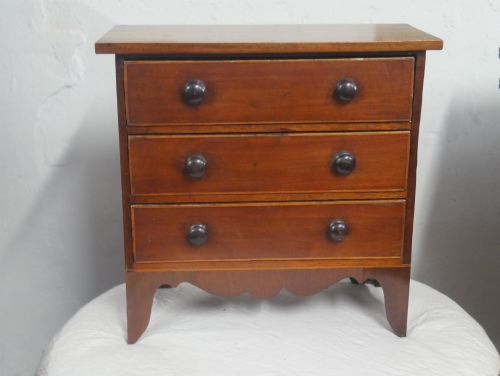
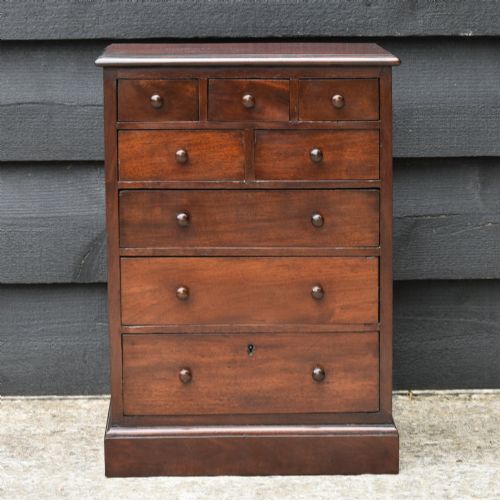
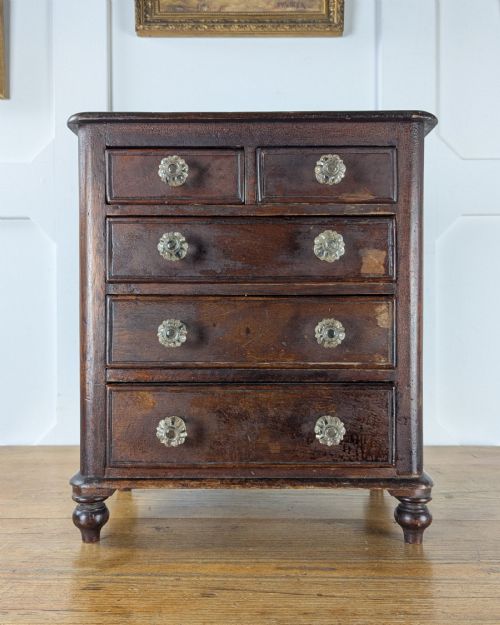
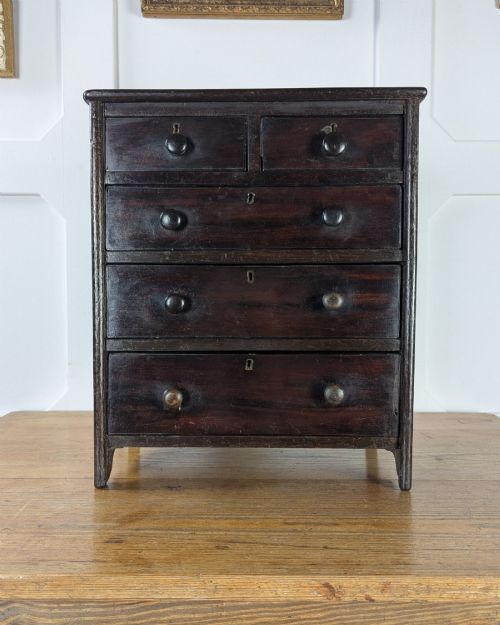
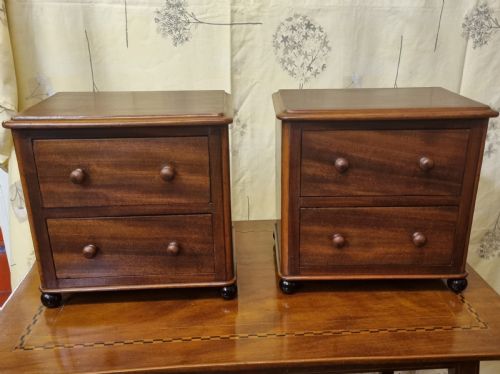
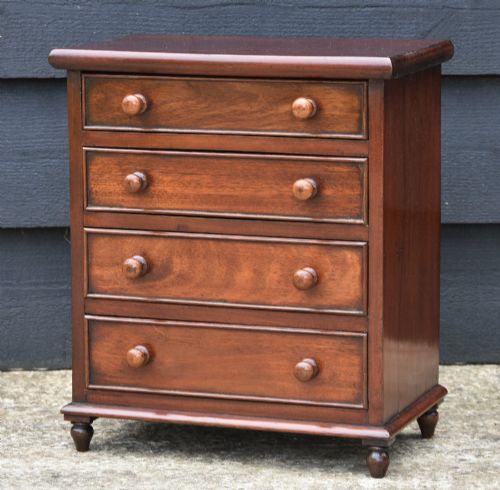
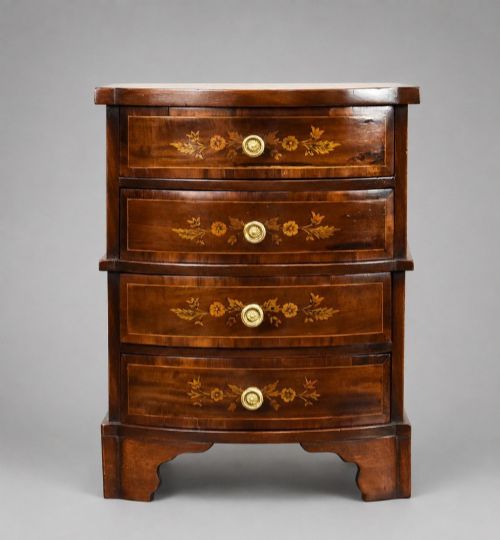
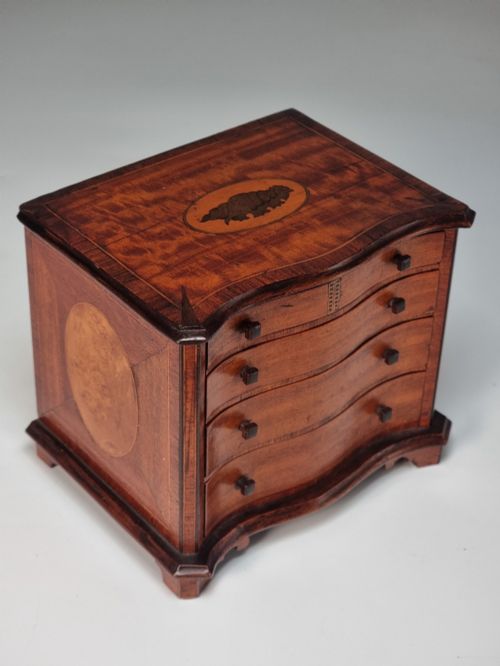
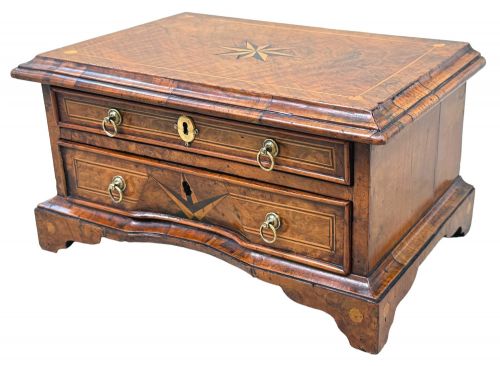
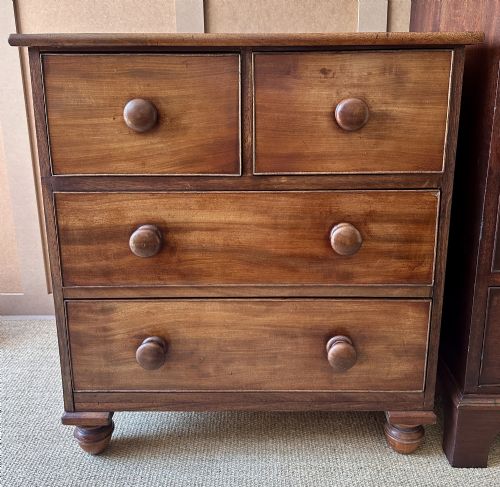
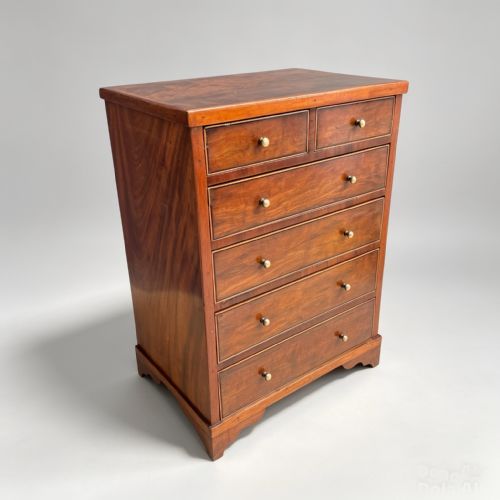
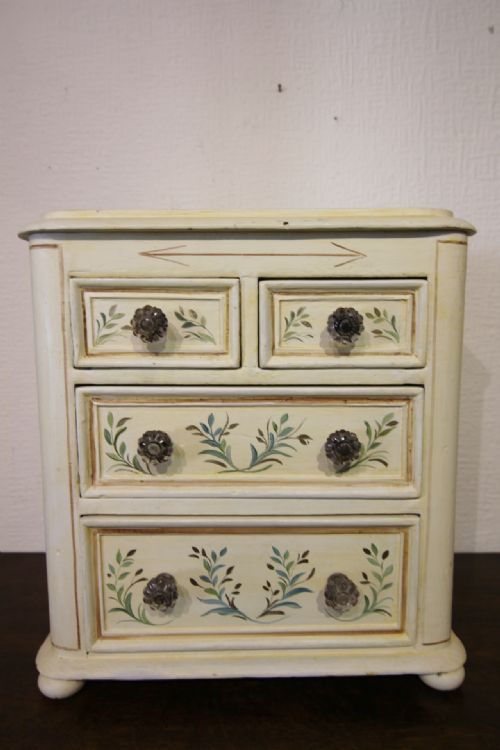
Antique apprentice drawers comprise miniature chests of drawers, tabletop cabinets, and specimen cases produced across the eighteenth and nineteenth centuries. You will most frequently meet Victorian mahogany examples alongside Georgian walnut and Regency burr oak pieces.
Cabinet makers often created these smaller works as demonstration pieces to prove proficiency in complex woodworking techniques before entering a guild. Others served as salesman samples or intricate domestic trinket storage for jewellery.
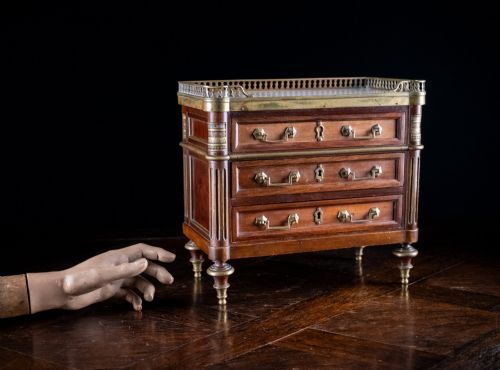
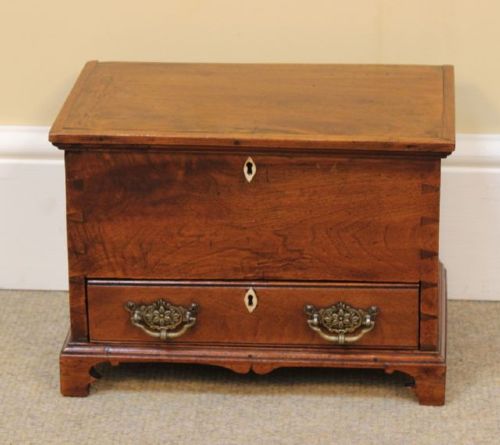
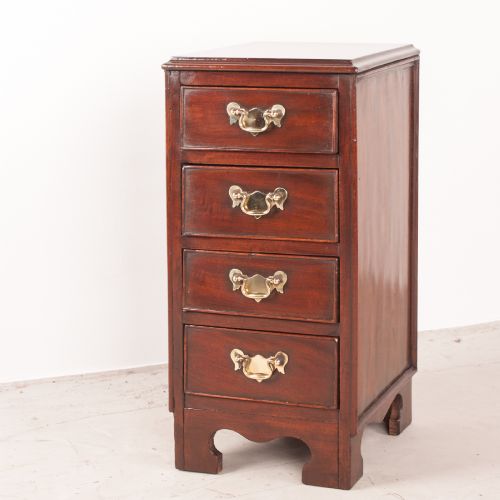
The forms range from straight-fronted chests and bowfronts to specialised collectors cabinets, mule chests, and kneehole desks. They replicate full-size furniture down to the smallest detail, including secret compartments and turned feet.
Materials and construction methods
Makers utilised dense hardwoods such as mahogany, walnut, and rosewood, alongside secondary timbers like pine and oak for internal framing. Selected pieces incorporate decorative veneers, satinwood inlay, and brass handles or escutcheons.
Joinery mirrored full-scale cabinetry, employing dovetailed drawer construction and precise miniature framing. Surfaces received hand-polished finishes to highlight the natural grain of the wood.
Listings feature mahogany, walnut, oak, and pine across Georgian, Victorian, and Edwardian periods.
Quality variations in miniature furniture
Quality rests on the fidelity of proportion and the precision of the miniature joinery. Superior examples maintain exact architectural scaling and clean dovetails that match the standards of full-size master furniture.
Finer specimens display choice timber selections with well-figured veneers and original brass hardware. Lesser items show simpler secondary woods, heavier joints, or replacement fittings.
A. F. Lloyd
The Antique Apprentice Drawers Glossary
- Apprentice piece
- A small-scale item created by a craftsman in training to demonstrate mastery of joinery techniques to a guild. These objects mirror full-sized furniture designs.
- Bowfront
- A curved cabinet front that swells outward in the centre. This style gained popularity during the Georgian and Regency periods.
- Mule chest
- A storage chest fitted with one or more working drawers at the base beneath the primary compartment. Early examples appear in walnut and oak.
- Escutcheon
- A protective plate surrounding a keyhole, often cast in brass. They serve both a functional purpose and as decorative accents on drawer fronts.
- Secret drawer
- A hidden compartment concealed within the framework of a chest, accessed via a secret mechanism or removable panel.
Antique Apprentice Drawers: Frequently Asked Questions
What were antique apprentice drawers used for?
These small chests served primarily as working credentials for craftsmen seeking admission to trade guilds. They demonstrated a maker's ability to execute complex joints and proportions on a reduced scale.
Over time, many found practical use in domestic settings as jewellery boxes, trinket holders, or desktop storage for precious items.
How do I date a miniature chest?
Dating relies on identifying period styles, timber choices, and construction methods. Georgian pieces often feature oak linings and walnut or mahogany veneers, while Victorian examples frequently showcase heavier mahogany or walnut with turned feet.
Examining the drawer dovetails and hardware styling further helps narrow the decade of manufacture.
Where should I place apprentice drawers at home?
Their compact scale makes these chests versatile additions to tabletops, sideboards, or desks where they function as decorative storage. They suit spaces that require subtle antique character without occupying floor area.
Keep them away from direct sunlight and heat sources to protect sensitive wood veneers and polished finishes.
Are all miniature chests apprentice pieces?
Not every small chest stems from an apprenticeship, as the category also encompasses salesman samples, miniature collectors cabinets, and domestic trinket boxes. Contemporary makers and retailers produced various small-scale display pieces for the home.
Distinguishing between them often depends on the level of fine joinery detail and documented provenance.