
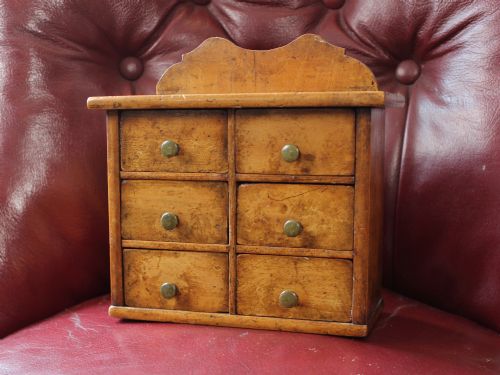


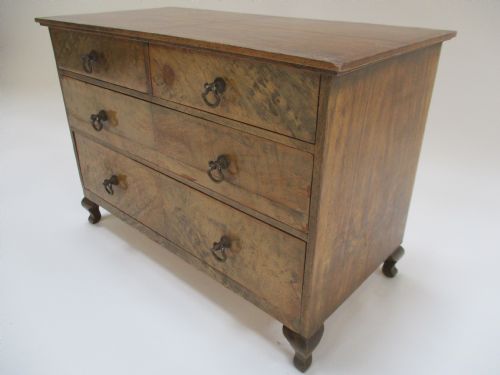
Vintage Wooden Trinket Drawers
These vintage wooden trinket drawers offer compact storage for small valuables, combining period craftsmanship with practical desktop organisation.
Vintage Wooden Trinket Drawers
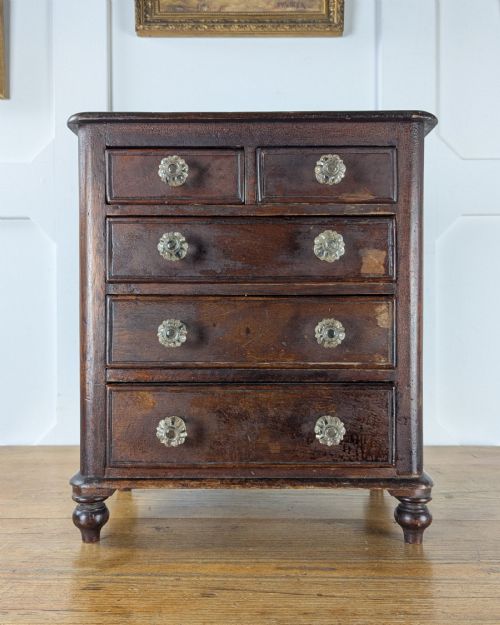
When you search for vintage wooden trinket drawers, you encounter miniature chests, spice cabinets, and jewellery boxes spanning the Georgian, Victorian, and Edwardian eras. These small pieces serve to store precious items, desk accessories, and personal keepsakes.
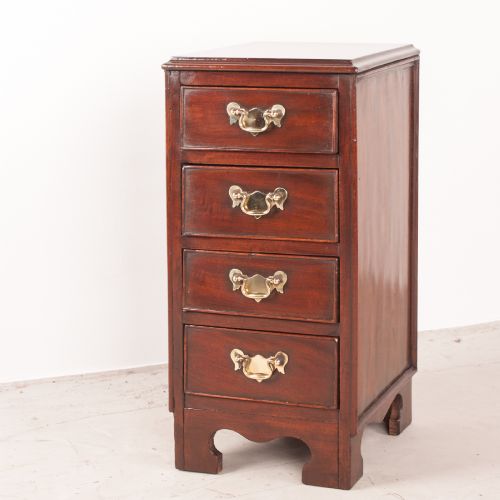
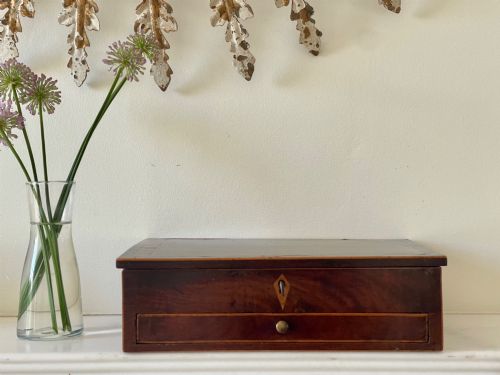
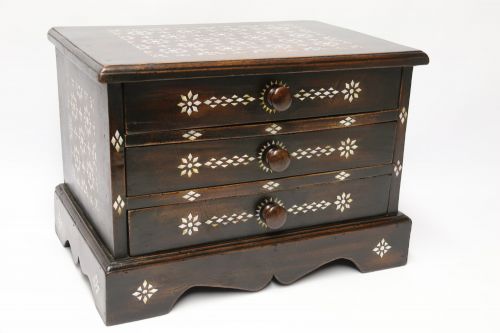
The selections on this page appear in various forms, including miniature apprentice chests, table cabinets, and hardwood caskets. Mahogany and walnut appear frequently, alongside rarer examples in burr walnut and fruitwood.
How they were made
Cabinet makers constructed these small chests using solid hardwoods like mahogany, walnut, and oak, often applying flame veneers or decorative inlays to the exterior surfaces. Brass handles, escutcheons, and small turned feet finish the construction of these desktop pieces.
Regional techniques emerge through styles such as Anglo-Indian hardwood carving and Dutch Colonial joinery. Black lacquered finishes and fine fruitwood construction demonstrate the diverse methods used across different workshops.
Geographic origins range from British workshops to Anglo-Indian and Dutch Colonial centres of cabinet making.
What varies in quality
Quality rests in the precision of the joinery and the selection of timber figures, such as flame mahogany or burr walnut. Finer boxes utilise secondary woods thoughtfully and maintain original brass hardware rather than later replacements.
The refinement of miniature proportions and the complexity of internal compartmentalisation distinguish superior examples from simpler utilitarian storage. Carved details on hardwood panels also indicate the skill level of the original maker.
The Vintage Wooden Trinket Drawers Glossary
- Apprentice piece
- A small item of furniture demonstrated by a craftsman to prove skill before gaining guild admission. These miniature chests of drawers often served this purpose.
- Flame mahogany
- A wood veneer showing a distinct feather-like flame pattern derived from the fork of the mahogany tree. Cabinet makers used this figure on prominent drawer fronts.
- Escutcheon
- A protective plate surrounding a keyhole, usually fashioned from brass. These small fittings prevent wear around the lock.
- Burr walnut
- A prized timber cut from the abnormal growth of a walnut tree, yielding swirling knot patterns. This material appears on luxury Victorian boxes.
- Spice cabinet
- A small wooden chest containing multiple tiny drawers designed originally for culinary ingredients. Later periods adapted these forms for general trinket storage.
Vintage Wooden Trinket Drawers: Frequently Asked Questions
What were vintage wooden trinket drawers used for?
These small chests originally stored precious personal items, sewing accessories, spices, or documents. Their compact scale suited placement on dressing tables and desks for daily use.
Over generations, owners repurposed them for modern jewellery, office supplies, and small collections. Their divided interiors kept delicate belongings organised and secure.
How do I date an antique miniature chest?
Dating relies on identifying timber choices, construction methods, and hardware styles associated with specific periods. Georgian pieces often display flame mahogany veneers, while Victorian examples frequently utilise burr walnut.
Secondary woods inside the drawers provide further clues about the era of manufacture. Examining dovetail joints helps distinguish older handmade pieces from later reproductions.
Are all miniature chests apprentice pieces?
Not every small chest served as an apprentice piece, despite traditional marketplace labels. Many functioned as desktop collector chests, jewellery caskets, or spice cabinets for domestic settings.
Actual apprentice pieces represent specific tests of joinery skill for aspiring craftsmen. Documentation or distinct construction anomalies usually confirm true apprentice origins.
How do I care for polished wood trinket boxes?
Maintain the surface by applying natural beeswax periodically to nourish historic wood finishes. Avoid placing these pieces in direct sunlight or near heat sources to prevent timber cracking.
Handle brass fittings gently and clean glass panels with soft cloths. Stable room humidity preserves both the solid timbers and delicate interior linings.