


Victorian Miniature Drawers
Victorian miniature drawers offer compact scale and meticulous joinery, capturing full-size furniture details in tabletop formats that appeal to collectors.
Victorian Miniature Drawers
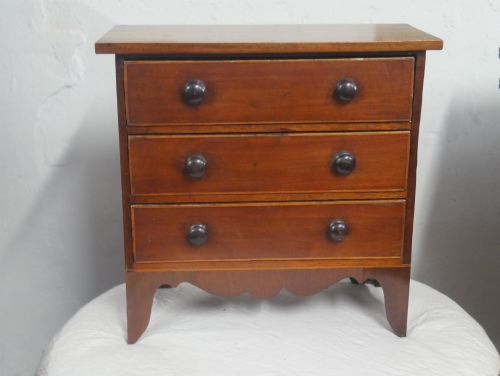
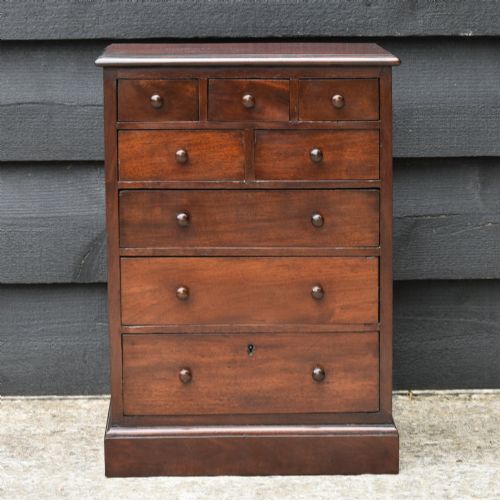
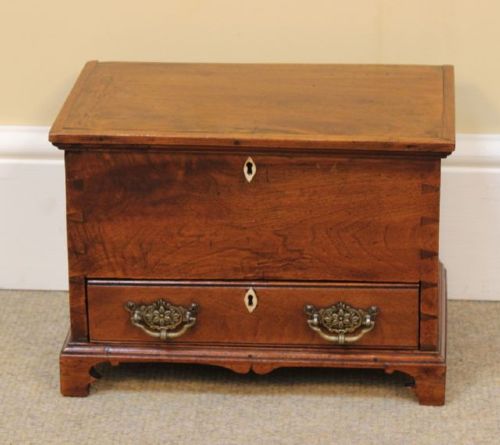
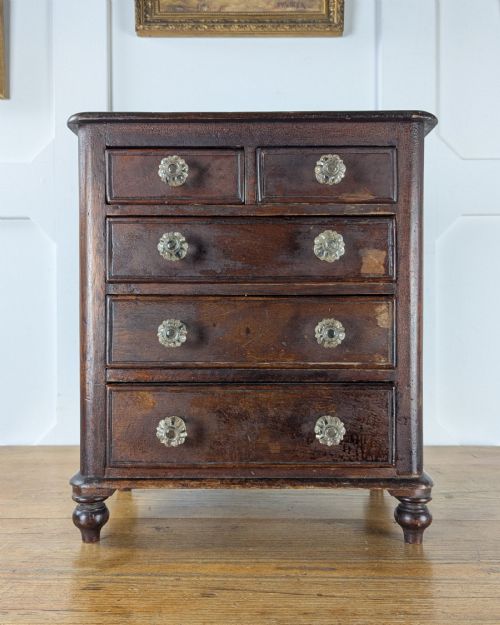
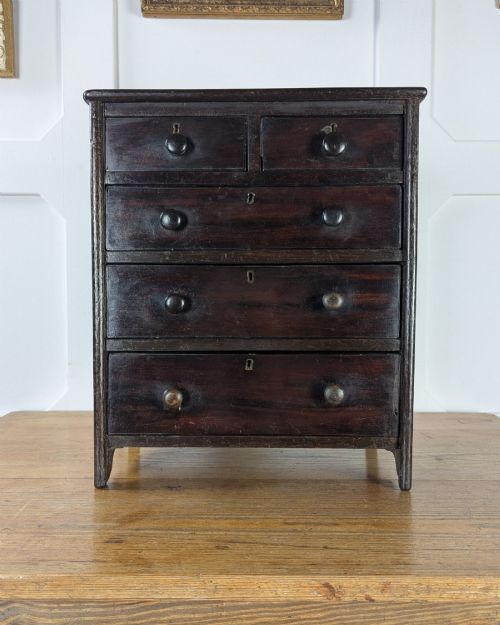
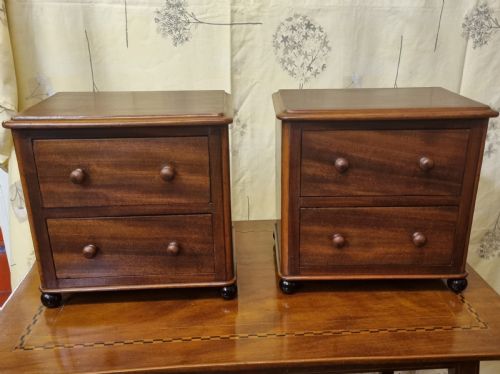
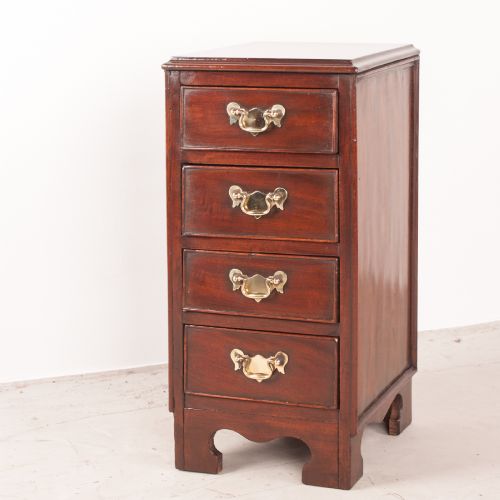
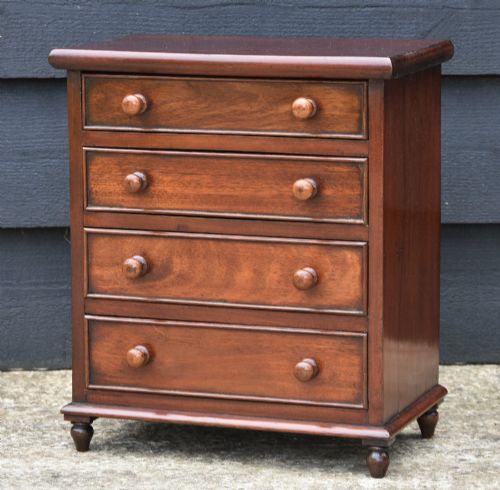
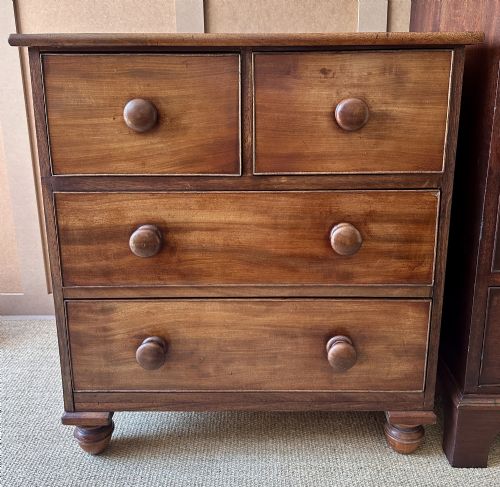
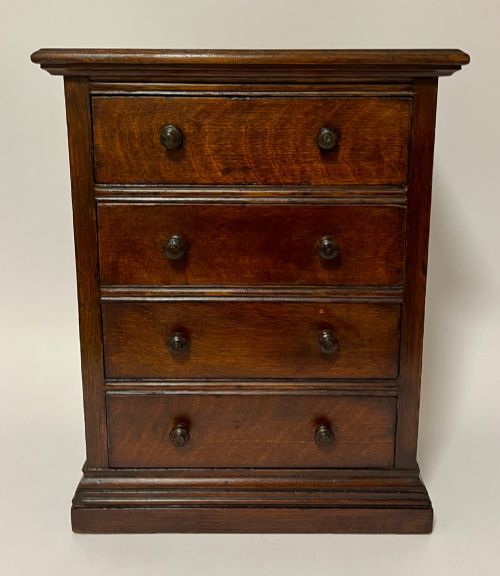
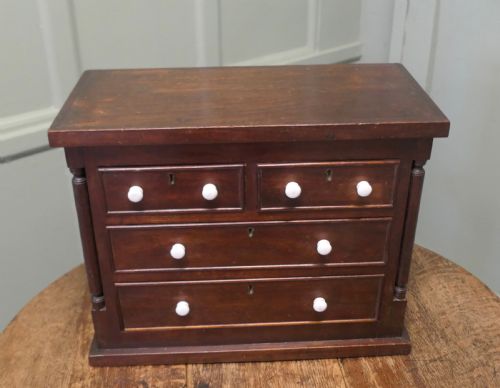
When buyers search for victorian miniature drawers, they encounter scaled-down items often traditionally referred to as apprentice pieces, salesman samples or salesman's pieces. These small-scale items served various household purposes, functioning as trinket storage, jewellery chests, spice drawers or desktop specimen cabinets. The selection on this page centres predominantly on 19th-century and Victorian examples alongside related table cabinets.
Forms vary from classic bowfront and Scotch chests to Wellington chests and bureau fitments, demonstrating the full breadth of domestic cabinet-making scaled down. Materials range from traditional timbers like mahogany and walnut to pine, oak, fruitwood and occasional alternative mediums such as carved slate or folk art models. Buyers select these pieces for their intricate proportion and utility as desktop or table-top storage.
Materials and construction methods
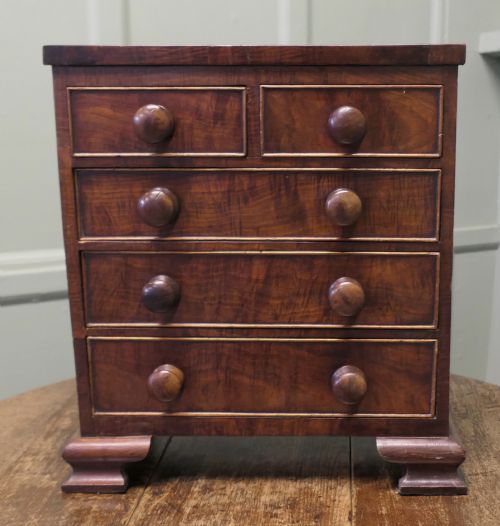
Cabinet-makers utilised dense hardwoods such as mahogany, walnut, burr walnut and amboyna, often pairing them with secondary woods like pine for internal drawer framing. Figures in the wood grain were carefully matched across drawer fronts, while finer examples incorporated brass handles, engraved escutcheons, secret drawers or inlaid details.
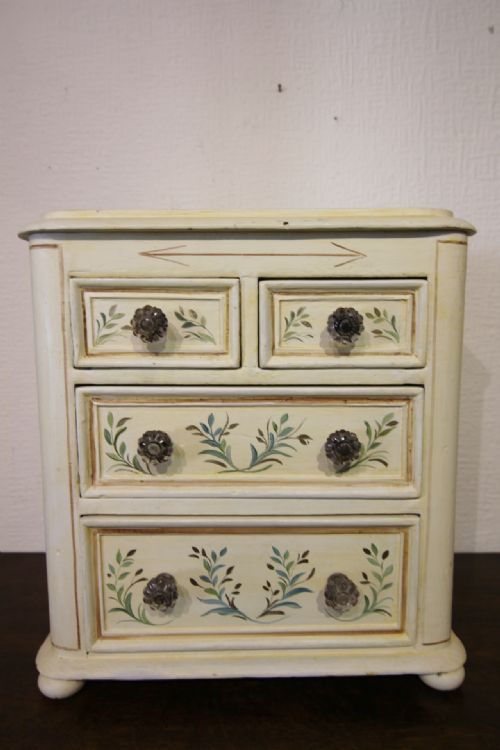
Alternative constructions recorded in the evidence include folk art models carved from slate, painted finishes on wood surfaces, and parquetry or tiling work using diverse timbers. Turning techniques produced small support feet and column details, maintaining exact proportions relative to the reduced overall dimensions.
Among the miniature chests, one tiny model is carved entirely from Welsh slate rather than wood.
Distinctions in quality and execution
Quality rests upon the fidelity of the scaling and the precision of the miniature dovetail joints connecting the drawer carcases. Superior examples maintain strict architectural proportions that mirror full-sized furniture, whereas lesser pieces rely on simplified joinery and heavier proportions.
The choice of timber veneers, such as highly figured burr walnut or select mahogany, combined with internal secondary woods and functional touches like lockable drawers or secret compartments, elevates specific pieces above standard utility items.
The Victorian Miniature Drawers Glossary
- Apprentice piece
- A small item demonstrating a craftsman's skill before gaining master status. These pieces show advanced joinery scaled down to miniature dimensions.
- Salesman sample
- A portable scaled model utilised by commercial travellers to demonstrate furniture designs to prospective buyers. They replicate full-size items precisely.
- Wellington chest
- A tall, narrow chest featuring a hinged side locking stile that secures all drawers simultaneously. Miniature versions preserve this specific security mechanism.
- Bowfront
- A furniture front curved outward in a convex arc. This styling appears frequently on miniature and full-size chests alike.
- Specimen cabinet
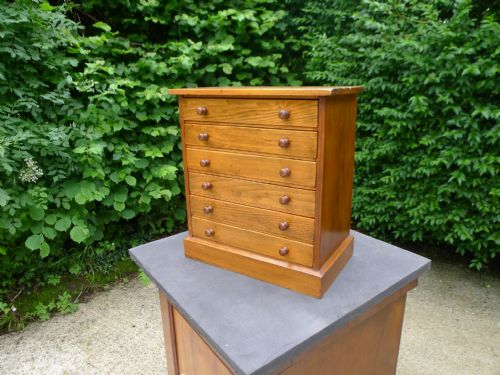
- A specialised small cabinet containing multiple shallow drawers designed for storing natural history collections or microscope slides.
Victorian Miniature Drawers: Frequently Asked Questions
What were miniature drawers used for?
These small chests served multiple domestic functions, operating as desktop storage for trinkets, letters or jewellery. They were also utilised for organising small collections such as microscope slides or botanical specimens.
Cabinet-makers and trainees sometimes produced them to demonstrate technical proficiency to potential employers or clients.
How do you date a miniature chest?
Dating relies on observing timber choices, construction techniques, and stylistic markers characteristic of specific periods like the Georgian era or the Victorian reign. Secondary woods, drawer dovetailing methods, and hardware styles provide key chronological clues.
Comparing the piece to documented examples from the same decade helps narrow down the exact period of manufacture.
Are apprentice pieces real furniture?
Apprentice pieces are fully functional items built with the same traditional joinery techniques used for standard domestic furniture. They feature working drawers, timber frames, and proper hardware scaled down to miniature proportions.
Every structural element found on a full-size chest is typically present in miniature form.
Where should I place miniature drawers?
Their compact scale makes them suitable for placement on desks, tables, sideboards or bookshelves where floor space is limited. They function effectively as desktop storage units for small modern items.
Displaying them at eye level allows viewers to appreciate the intricate woodworking details and figured timber veneers.