
Collector Specimen Cabinet
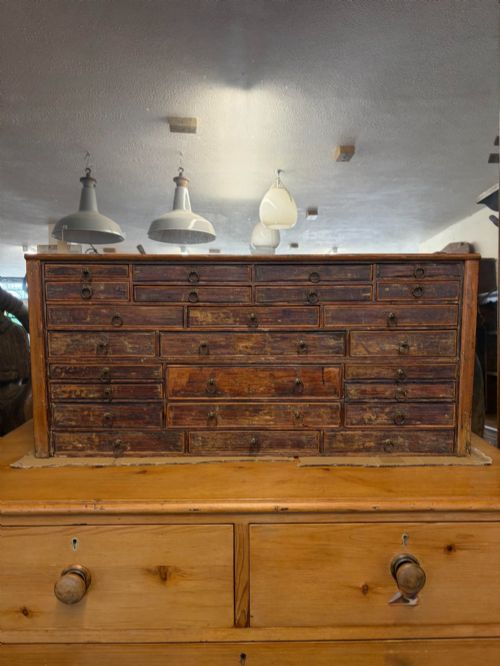
A collector specimen cabinet gathers small curiosities, insects, and natural specimens within banks of shallow drawers designed for precise organisation.
Collector Specimen Cabinet
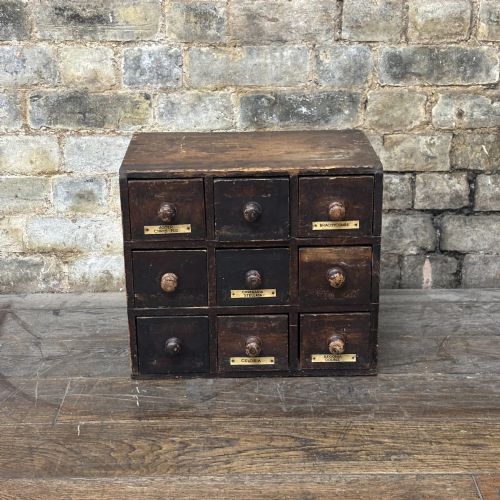
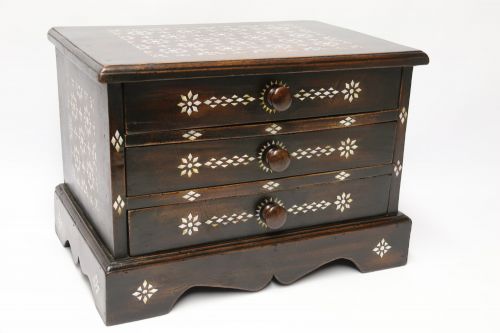
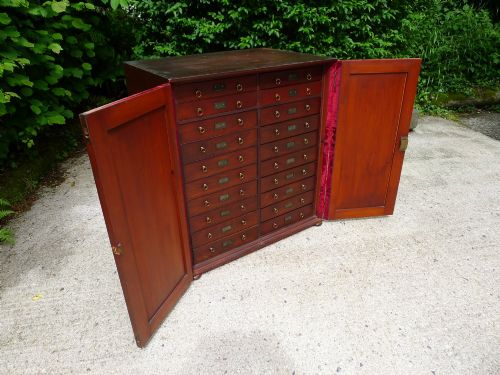
A collector specimen cabinet takes the form of multi-drawer chests, table-top cases, and apothecary units originating predominantly across the nineteenth and early twentieth centuries.
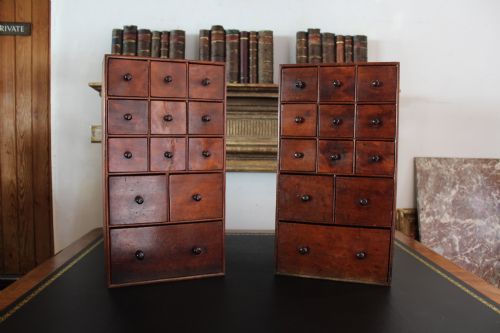
These pieces provide compartmentalised storage through rows of shallow drawers intended for fossils, butterflies, coins, and minerals.
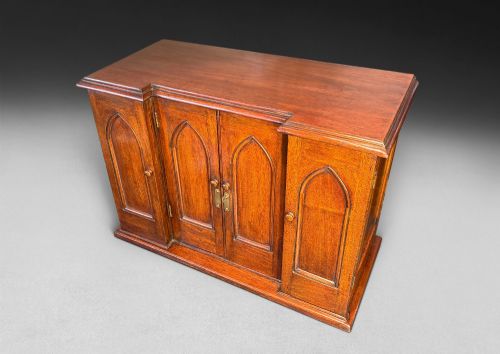
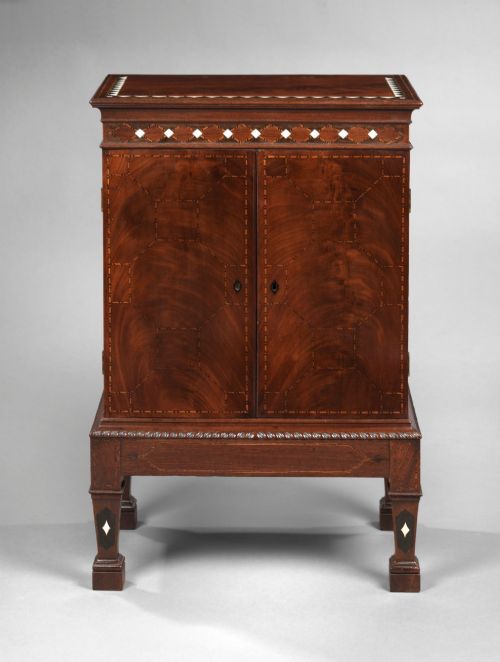
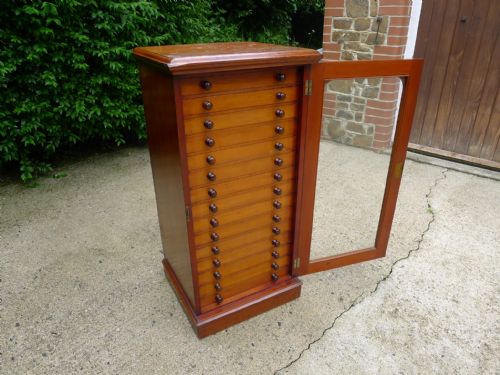
Victorian and Edwardian examples dominate this selection, frequently rendered in dense timbers with panelled doors or glass viewing fronts.
Materials and construction
Cabinet makers utilised dense hardwoods such as mahogany, walnut, and oak to construct carcases capable of supporting dozens of close-fitting internal drawers.
Drawer interiors frequently incorporate softwoods like pine and deal, sometimes lined with baize or paper to cushion delicate objects.
Brass handles, campaign-style insets, and glazed panel doors appear across specimens to secure contents and facilitate transport.
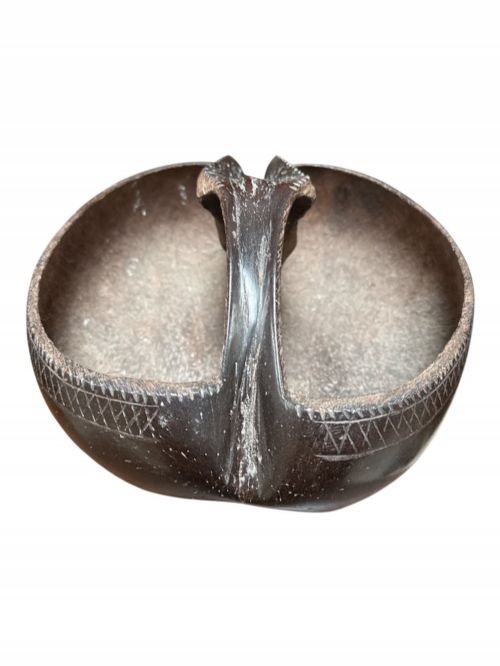
Coco de Mer natural shells appear among the wooden furniture, offering a touch of eccentric Victorian parlor wonder.
Standards of craftsmanship
Quality rests upon the precision of the drawer joinery and the density of the chosen timber, with solid mahogany and walnut commanding higher regard than stained deal or pine.
The presence of maker signatures from specialist workshops distinguishes standard utility storage from bespoke scientific furniture.
Original hardware, intact glass panes, and smooth drawer operation separate well-preserved archival pieces from heavily altered examples.
Watkins and Doncaster·Charles Brady·J.T. Crockett and Son·Jansen of London·Hills of Willesden
The Collector Specimen Cabinet Glossary
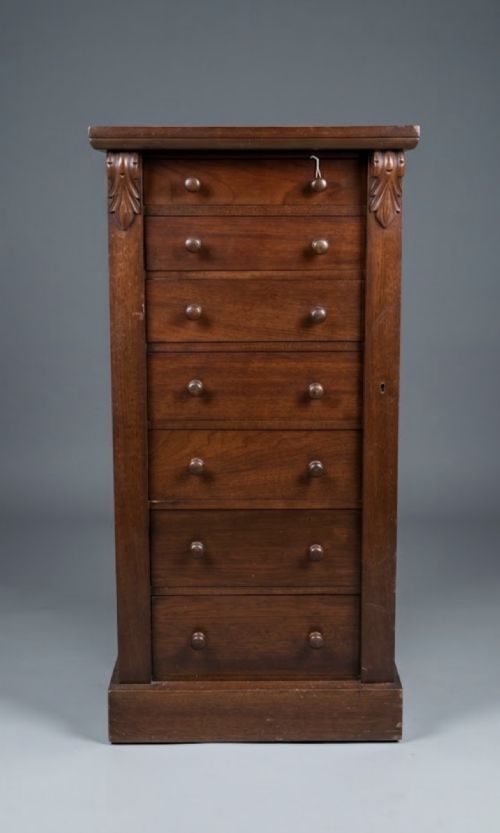
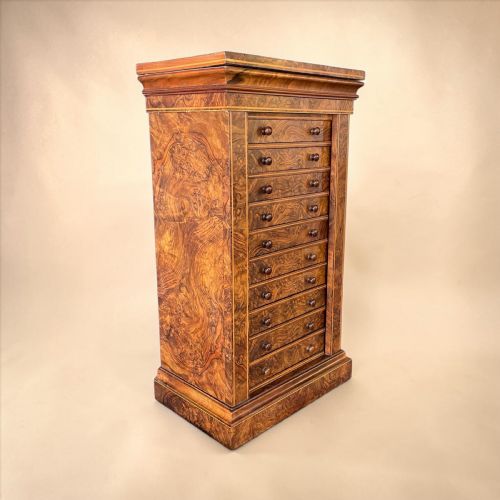
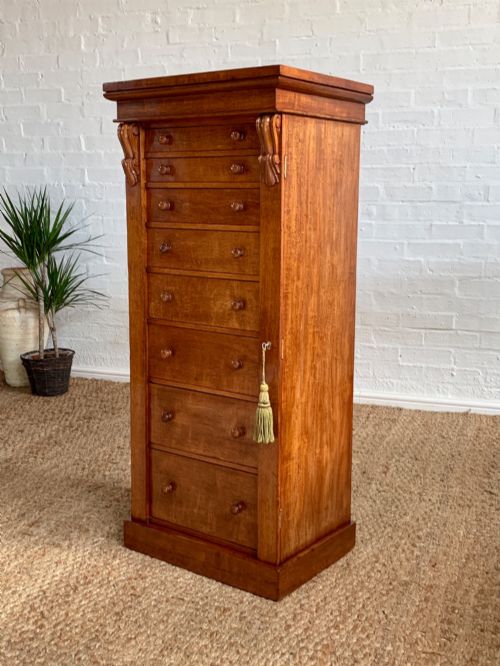
- Wellington chest
- A tall, narrow chest of drawers secured by a hinged vertical locking stile on one side.
- Entomological cabinet
- A specialist multi-drawer unit built specifically for the housing and preservation of insect collections.
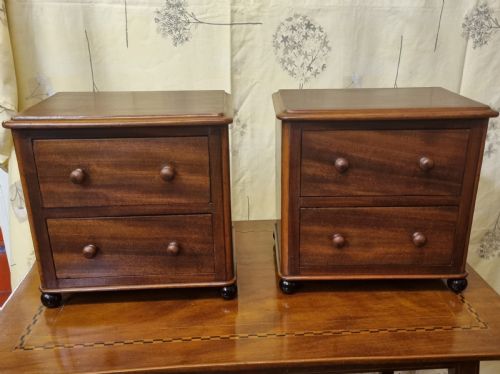
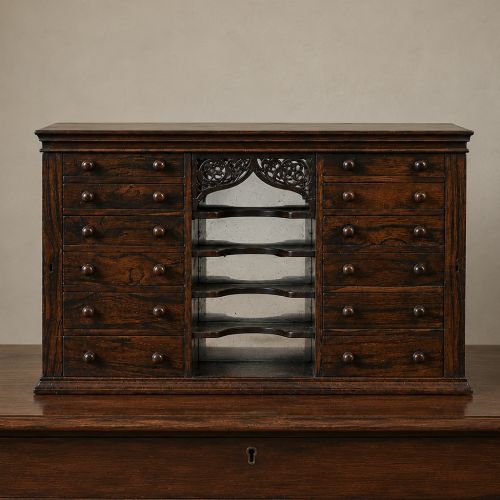
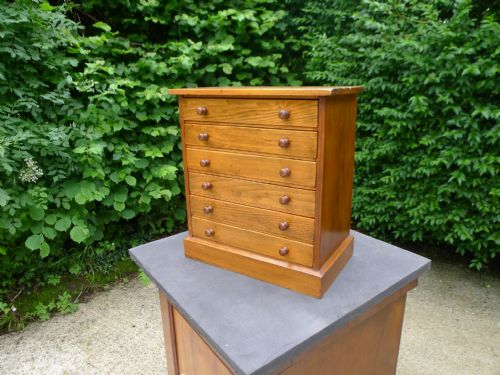
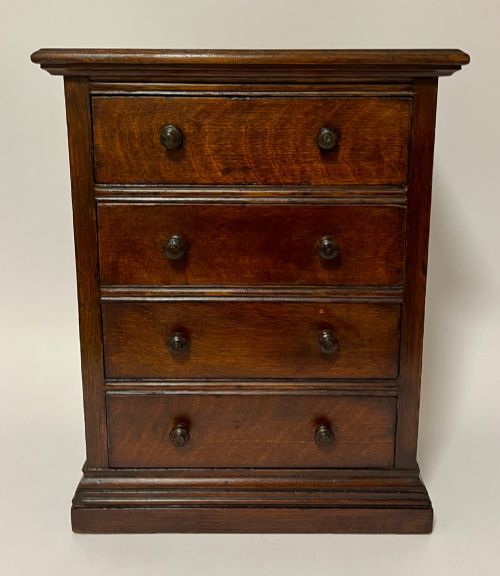
- Table-top cabinet
- A miniature set of drawers proportioned to sit upon a desk, table, or surface rather than stand on the floor.
- Deal
- A traditional term for timber cut from fir or pine trees, commonly utilised for internal framing and drawer construction.
- Standish
- A portable desk or cabinet fitted with compartments for writing materials or specialised collections.
Collector Specimen Cabinet: Frequently Asked Questions
What were collector specimen cabinets used for?
These cabinets served naturalists, doctors, and collectors who required methodical storage for classification and study. Each shallow drawer kept fragile specimens safe from dust and light.
Over time, wealthy households adopted them to display geological finds, coins, shells, and botanical samples. They functioned as both working scientific tools and parlor display pieces.
How do I date a specimen cabinet?
Dating relies on observing timber choices, construction methods, and hardware styles across the piece. Victorian examples often feature figured mahogany or walnut with turned wooden knobs.
Edwardian and later iterations lean toward satin walnut, lighter pine carcases, or campaign brass fittings. Maker stamps and interior paper labels frequently confirm the exact decade of manufacture.
Can I use these for modern storage?
The shallow drawers lend themselves perfectly to organising small items such as jewellery, stationery, craft supplies, and pocket collections. The compartmentalised nature keeps clutter neatly separated.
Care should be taken not to overload delicate antique runners. Placing them away from direct sunlight preserves the original polish and timber tones.
What is the difference between a Wellington chest and a specimen chest?
A Wellington chest is defined by its side-locking bar that secures every drawer simultaneously with a single key. They are typically tall and narrow in proportion.
A specimen cabinet focuses on multi-drawer capacity with or without locking doors, specifically engineered for shallow storage rather than deep garments.