
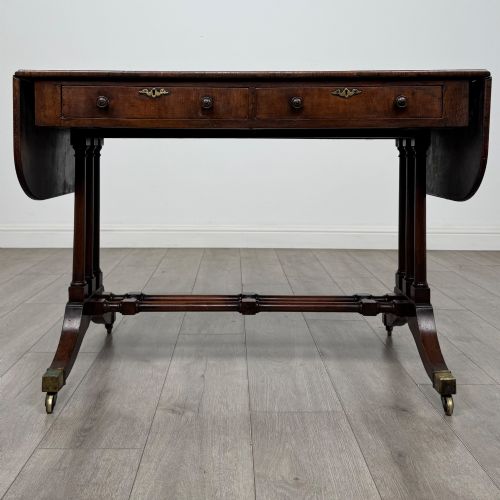
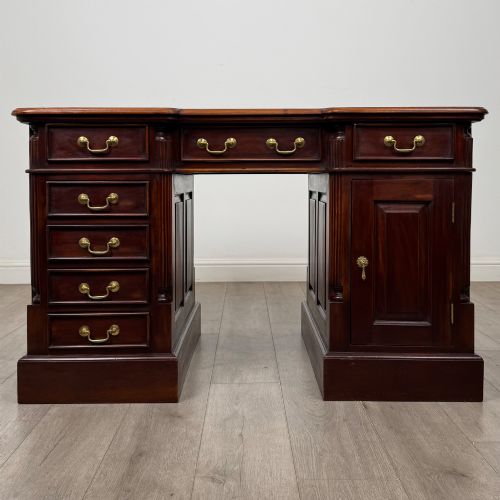
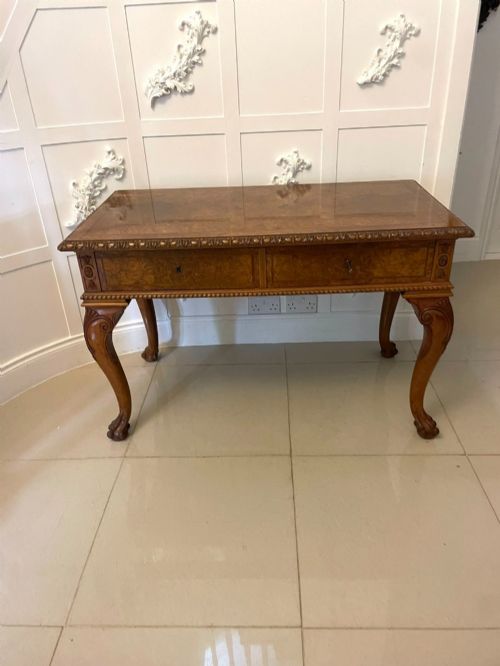
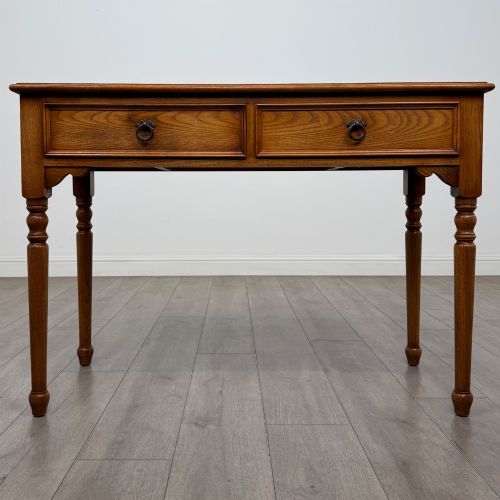



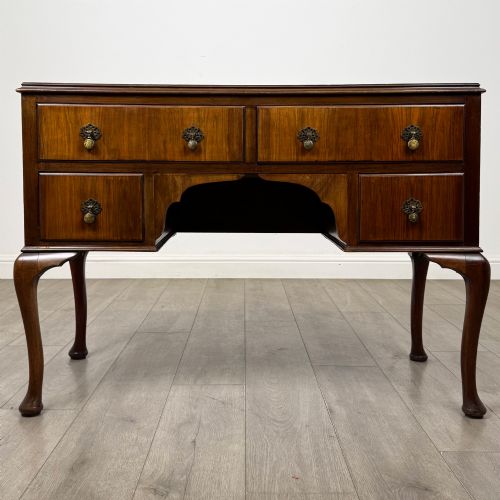
Antique Wood Desk Drawers
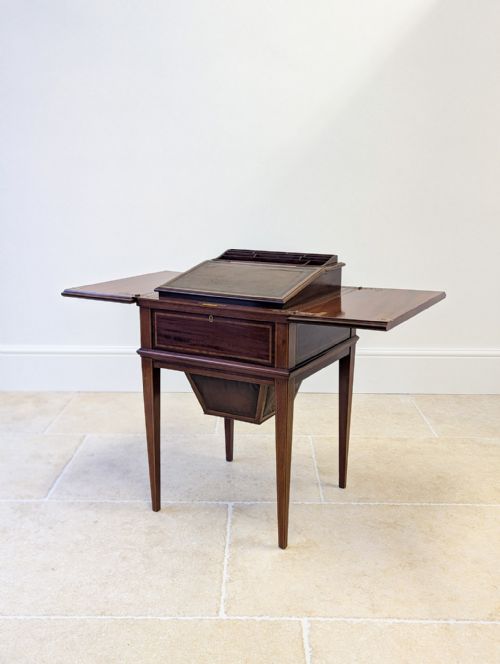
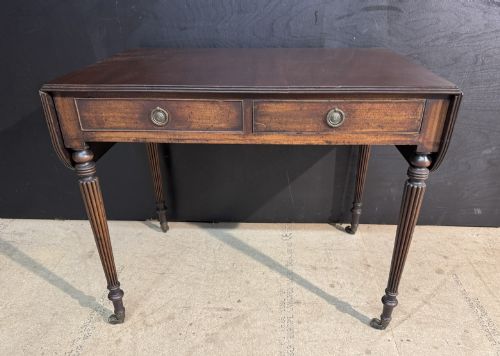
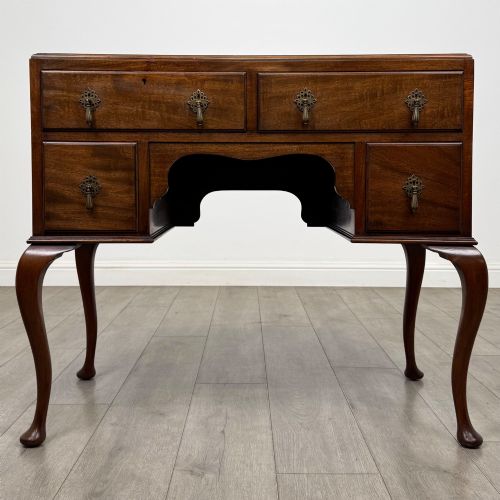
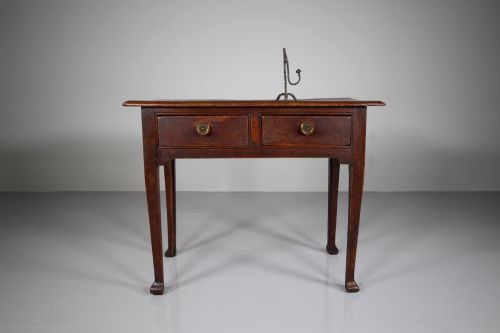
These antique wood desk drawers comprise side tables, writing tables, bureaux, and pedestal desks designed for practical correspondence and storage.
Antique Wood Desk Drawers
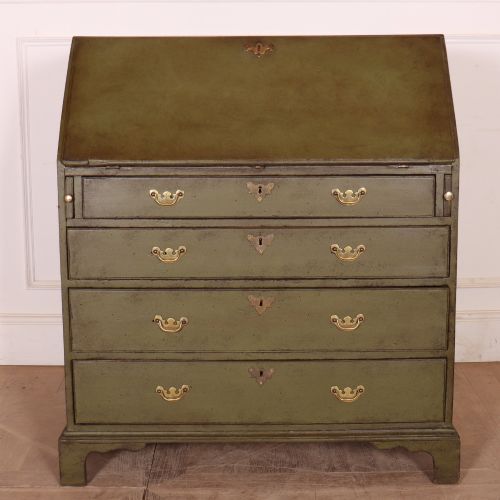
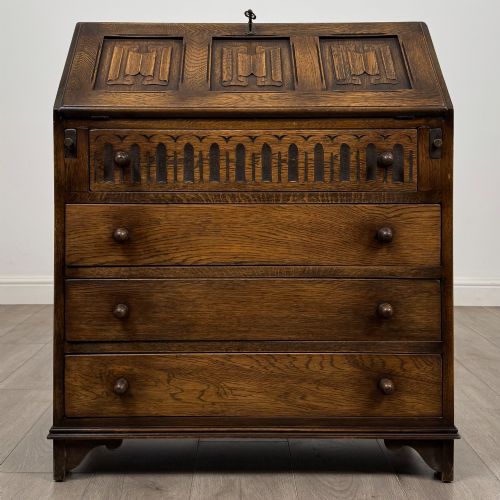
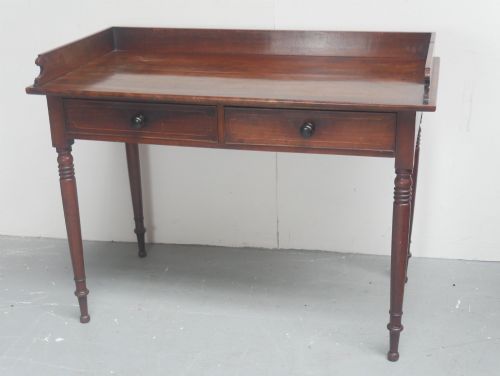
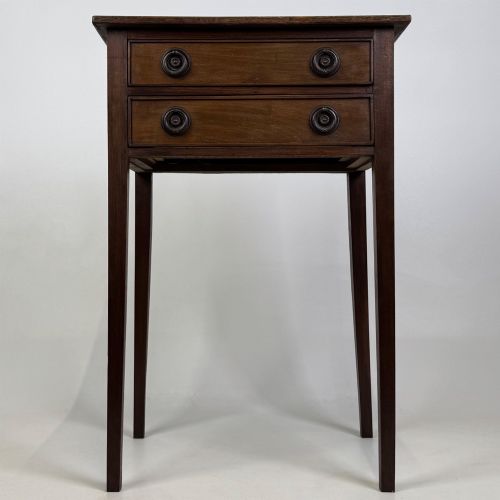
When you search for antique wood desk drawers, you encounter a varied assortment of writing furniture spanning the eighteenth, nineteenth, and twentieth centuries. The selection encompasses compact Edwardian writing tables, Victorian pedestal desks, Georgian side tables, and fitted bureaux.
The pieces originate from domestic and institutional settings, appearing in forms ranging from freestanding console tables to elaborate secretaire chests. Edwardian oak and mahogany writing tables dominate the current offerings, alongside earlier walnut lowboys and mahogany pedestals.
Buyers also encounter specialised forms such as campaign chests, Pembroke tables, and ladies work tables which integrate compartmented storage and writing surfaces. Each piece reflects the domestic habits and workspace requirements of its specific period.
Materials and construction
Cabinet makers utilised solid timbers and choice veneers, applying mahogany, oak, walnut, rosewood, and camphor wood over structural carcases. Premium examples employ figured grains, burr walnut, flame mahogany, and satin birch to create decorative visual contrast on drawer fronts and tops.
Drawer construction typically relies on hand-cut dovetail joints, reflecting traditional joinery standards of the Georgian, Victorian, and Edwardian eras. Secondary woods such as pine or oak line the interiors, whilst brass handles, escutcheons, and occasional leather writing inserts complete the fabrication.
Many writing slopes hide secret drawers requiring a sequence of hidden wooden spring catches to release the tiny compartments.
Standards of execution
Quality separates through the selection of timber veneers and the precision of the cabinet work, such as the tightness of dovetails and the smooth operation of drawer slides. Superior examples display carefully matched grain patterns across multiple drawer fronts and retain original brass hardware.
The refinement of internal partitions, secret compartments, and secondary wood choices dictates the distinction between standard utilitarian items and high-status pieces produced by notable makers. Conservation of original surfaces and patination further elevates the standing of individual items.
Gillows·Hobbs and Co·Mein of Kelso·Maison Krieger
The Antique Wood Desk Drawers Glossary
- Bureau
- A sloping writing cabinet enclosing small drawers and pigeonholes above a chest of drawers. This form evolved during the seventeenth century and remained popular through the Georgian and Edwardian periods.
- Lowboy
- A small dressing table or side table featuring one or more rows of drawers beneath a flat top. These pieces date predominantly from the eighteenth century in oak and walnut.
- Pedestal desk
- A large freestanding writing table comprising two banks of drawers supporting a single top. They frequently feature inset leather writing surfaces.
- Secretaire
- A cabinet or chest containing a pull-out writing drawer or drop-front desk section. They often incorporate hidden compartments and internal small drawers.
- Writing slope
- A portable box with a hinged sloping lid that opens to reveal a writing surface and internal stationery compartments. They frequently contain secret drawers beneath the main well.
Antique Wood Desk Drawers: Frequently Asked Questions
What is a pedestal desk?
A pedestal desk is a large freestanding writing table constructed with two distinct columns of drawers that support a wide top.
These pieces typically incorporate inset leather or tooling panels on the writing surface and offer substantial storage capacity.
What timber was used for Edwardian writing tables?
Edwardian writing tables were predominantly constructed using mahogany, oak, and walnut timbers.
Cabinet makers frequently applied figuration such as satinwood banding and inlaid stringing to enhance the surface appearance.
Where were secretaire military chests used?
Secretaire military chests were utilised by officers during nineteenth-century campaigns and travels.
Their modular construction, brass corners, and recessed handles facilitated transport while providing an integrated writing drawer.