



Dark Mahogany Bank Drawers
Dark mahogany bank drawers offer dense, compartmentalised storage built to organise everything from chemist supplies to workshop tools.
Dark Mahogany Bank Drawers
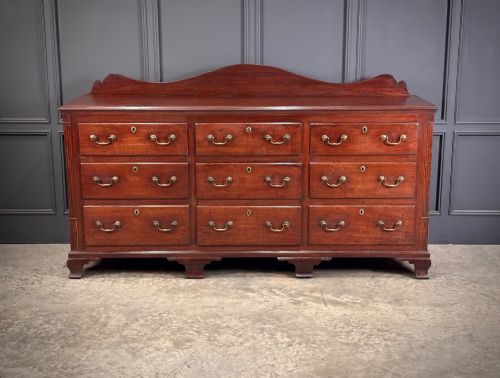
Dark mahogany bank drawers comprise multi-drawer storage units originally designed for commercial, pharmaceutical or institutional use. Collectors browsing this category encounter pieces spanning the Georgian, Victorian, and Edwardian eras, alongside later industrial workshop examples.
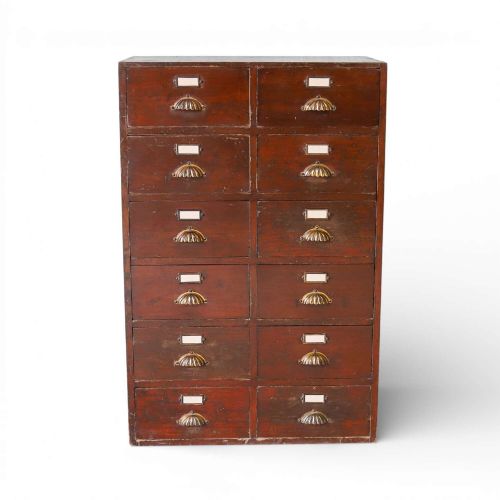
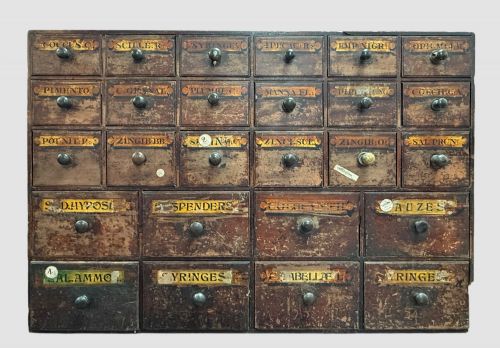
The dominant forms on this page include apothecary chests, chemist shop fittings, collectors chests, and heavy banker pedestals. These functional carcasses provide numerous small compartments configured for sorting letters, specimens, or medicinal ingredients.
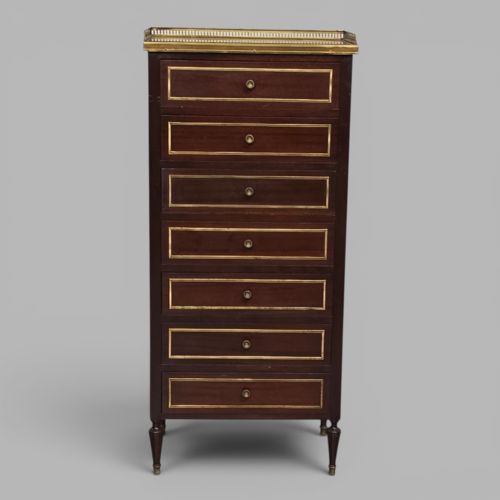
Origins stretch from English workshops to French Empire creations, showcasing both domestic utility and specialised commercial application. Each piece reflects the functional requirements of its original trade through distinct drawer layouts and cabinetry proportions.
Materials and construction
Construction relies heavily on solid mahogany framing, often paired with secondary softwoods such as pine for internal drawer boxes and carcasses. The primary timber yields a rich, dark grain that accepts traditional polishing.
Hardware details involve brass drop handles, shell pulls, and integrated label holders designed for functional daily operation. Specialised mechanisms include patent filing systems and locking cupboard pedestals fashioned from iron and wood.
Dark Mahogany Bank Drawers Retail Price Guide 2026
Typical asking prices for dark mahogany bank drawers among the pieces listed under this phrase on Sellingantiques today, from the lower quarter to the upper quarter. They describe what is for sale here now, not the wider market.
Some drawers still retain tiny paper labels detailing long-forgotten powders.
Factors influencing quality
The refinement of the joinery and the selection of the mahogany timber dictate the overarching grade of the furniture. Denser grain patterns and robust carcass construction distinguish utilitarian workshop pieces from finely proportioned Georgian and French Empire examples.
The Dark Mahogany Bank Drawers Glossary
- Apothecary chest
- A multi-drawer cabinet designed to hold medicinal herbs, powders, and ingredients. These pieces typically feature numerous small drawers to organise diverse contents.
- Shell pull
- A stamped or cast brass handle shaped like a scalloped shell, frequently incorporating a slot for a paper label. They appear commonly on Edwardian and Victorian filing furniture.
- Bankers drawers
- A heavy modular storage unit incorporating multiple rows of drawers alongside secure cupboards. They originated in commercial offices and banking institutions.
- Collectors chest
- A specialised cabinet fitted with shallow drawers designed for storing natural history specimens, coins, or medals. These units prioritise internal dust protection and orderly arrangement.
- French Empire
- A neoclassical design style spanning the early nineteenth century characterised by restrained classical proportions and dark timber surfaces. Pieces from this tradition emphasise architectural dignity.
Dark Mahogany Bank Drawers: Frequently Asked Questions
What were dark mahogany bank drawers used for?
These multi-drawer units served commercial, medical, and administrative functions in shops, offices, and workshops. Apothecaries and chemists utilised them for organising medicinal ingredients and dry goods.
Later variations accommodated correspondence, documents, and small manufactured items. Their modular compartmentalisation made them indispensable for trades requiring strict categorisation.
How do I date a bank of drawers?
Dating relies on observing construction methods, timber selection, and hardware styles across different historical periods. Georgian and eighteenth-century examples display hand-cut dovetails and specific proportions, whereas Victorian and Edwardian pieces incorporate machine-sawn elements and distinct brass pulls.
Patent marks and manufacturer labels, such as those found on nineteenth-century letter files, provide precise chronological markers. Comparing the primary mahogany and secondary pine timbers further clarifies the era of manufacture.
Where should I place these in a home?
Their substantial depth and numerous drawers suit studies, hallways, and living spaces requiring robust storage solutions. Smaller compact formats fit comfortably on tabletops or sideboards as display surfaces.
Larger apothecary and workshop units function effectively as standalone architectural statements. The dark timber tones pair well with both traditional and contemporary interiors.
How do I care for mahogany drawer furniture?
Maintain the timber by dusting regularly with a dry, soft cloth to prevent particulate accumulation on the dark polished surface. Avoid placing pieces in direct sunlight or near heat sources to protect the wood from warping.
Period brass hardware benefits from gentle cleaning without abrasive polishes that might damage surrounding timber. Wax polish applied sparingly preserves the natural sheen of the mahogany.