



Vintage Desktop Storage Chest
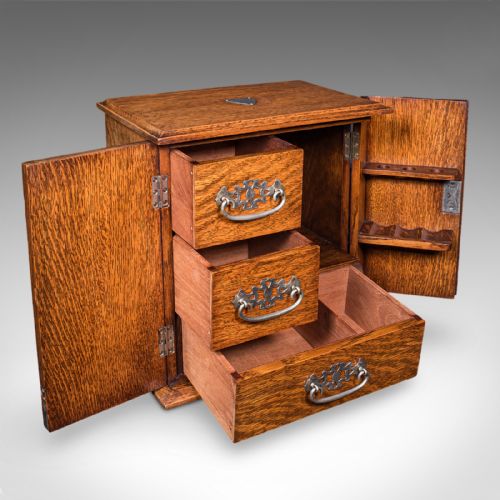
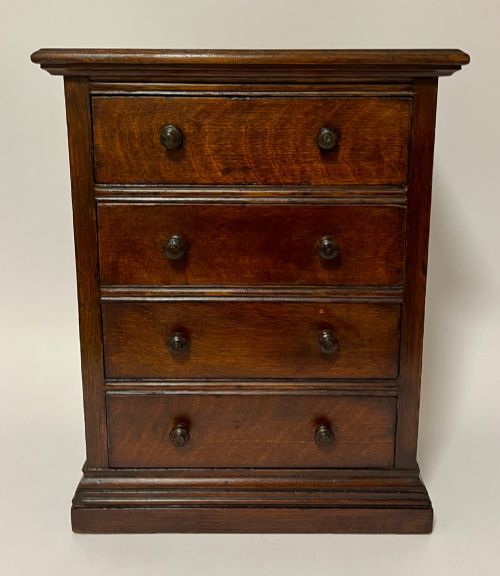
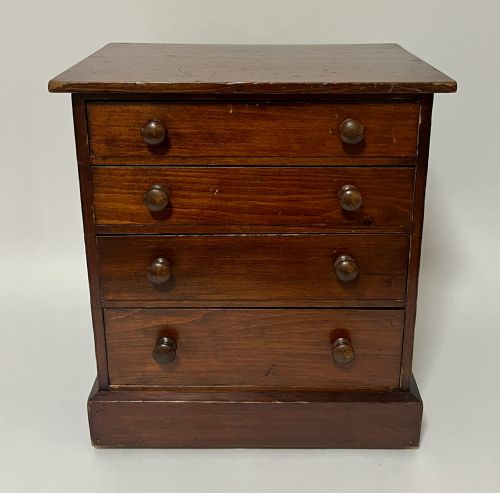
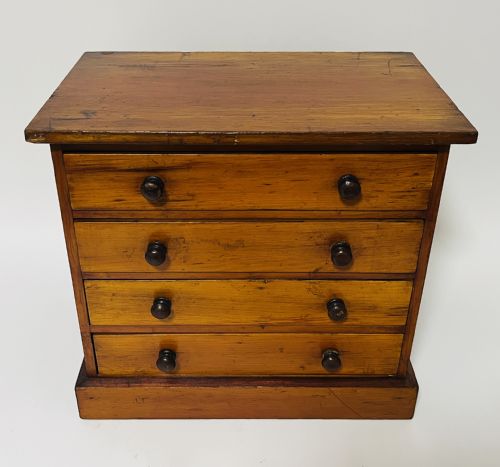
A vintage desktop storage chest organises small papers, samples and trinkets while bringing period timber and brass to a working surface.
Vintage Desktop Storage Chest
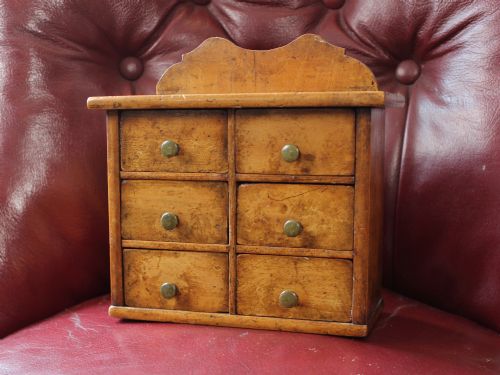
A vintage desktop storage chest groups small drawer units, specimen cases and tabletop cabinets spanning the Victorian, Edwardian and interwar decades. Buyers seek these pieces to sort correspondence, collectables or desk accessories within a compact footprint.
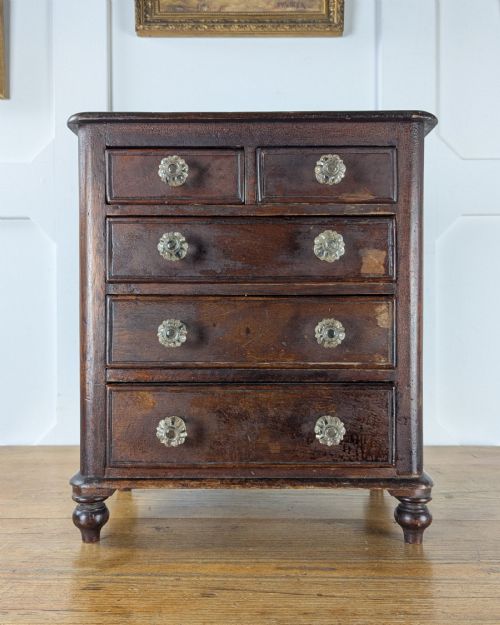
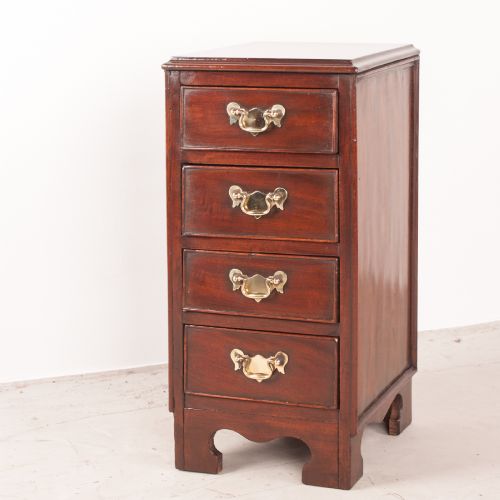
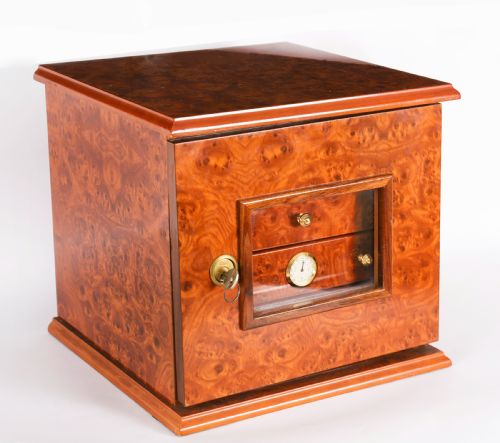
The selection on this page relies heavily on nineteenth century miniature chests of drawers, utilitarian trade cabinets and wooden humidors. Oak, mahogany and stained pine dominate the smaller drawer units designed for domestic or commercial counters.
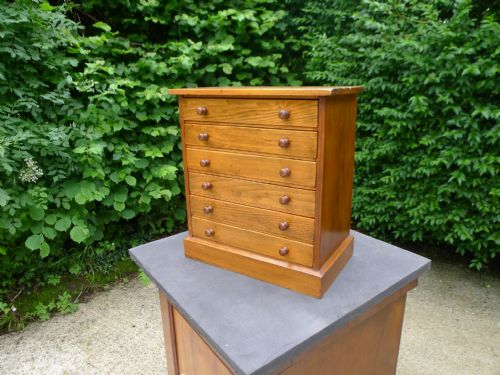
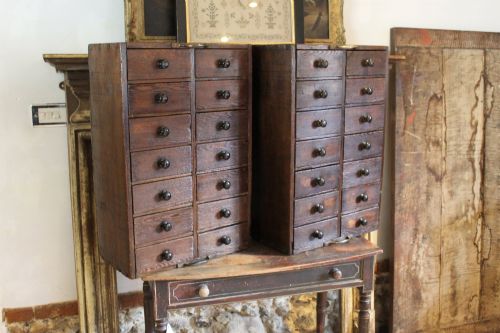
Specialised storage forms appear alongside standard drawer banks, including spice cabinets, doctor smoking cases and watchmaker cabinets. These variants reflect specific trades and past domestic habits adapted for modern tabletop use.
Materials and construction
Cabinetmakers utilised durable hardwoods such as oak, mahogany, walnut and elm alongside utilitarian pine, often joining drawer corners with tight dovetails. Timber selection depended on whether the piece served a smart parlour or a busy commercial workshop.
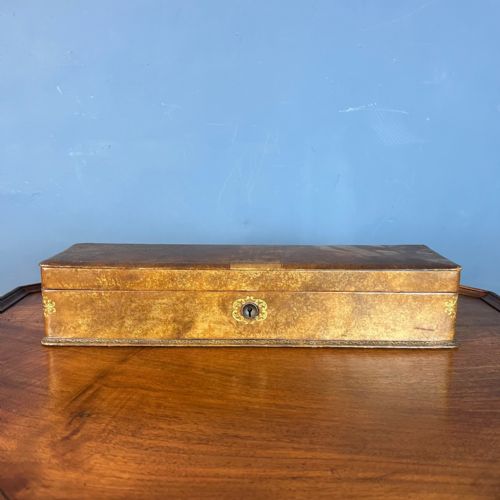
Brass handles, campaign drop pulls, hinges and escutcheons provide structural reinforcement and mechanical operation. Finer examples incorporate secondary decorative elements like tooled leather, glass panels or tambour roll-front doors.
Needle drawer cabinets once kept haberdashery sorted before finding new life organising modern craft supplies.
Quality factors
The distinction between standard utility boxes and finer cabinetwork lies in the crispness of the joinery and the selection of figured timbers. Burr walnut, satinwood inlay and substantial brass hardware elevate a simple storage box into a piece of fine furniture.
Original fitted interiors, working brass locks with functional keys and smooth-sliding drawers separate well-preserved examples from altered or heavily restored pieces. The integrity of the secondary woods and the presence of original maker stamps carry significant weight.
D Napier & Sons·Manoah Rhodes & Sons Ltd·Alfred Dunhill·Jennens & Bettridge·Amberg
The Vintage Desktop Storage Chest Glossary
- Specimen cabinet
- A small multi-drawer chest originally built to house natural history collections such as insects, fossils or botanical samples. These cabinets feature shallow drawers designed for careful sorting.
- Humidor
- A specialised wooden box lined to preserve cigars at proper humidity levels. Many vintage examples utilise tight-fitting lids and quality timber construction to maintain internal conditions.
- Tambour
- A flexible door or shutter constructed from narrow vertical strips of wood glued to a fabric backing. It slides smoothly within a grooved track to enclose shelf or drawer compartments.
- Apprentice piece
- A miniature furniture item constructed by a craftsman to demonstrate skill proficiency. These small chests replicate full-sized proportions and joinery techniques.
- Escutcheon
- A protective plate surrounding a keyhole, usually cast in brass. It prevents the surrounding timber from wearing away through repeated use of the key.
Vintage Desktop Storage Chest: Frequently Asked Questions
What fits inside these small chests?
Shallow drawers accommodate fountain pens, stationery, stamps, jewellery and small collectables. Deeper compartments hold cigars, medical instruments or pocket watches.
Larger configurations suit desk accessories and paperwork, keeping desktop clutter contained within period timber enclosures.
How do I date a wooden desktop cabinet?
Cabinet construction methods offer primary dating clues, such as hand-cut dovetails on nineteenth century pieces versus machine-cut joints on later interwar items. Hardware style, timber species and lock mechanisms further refine the period.
Victorian pieces often display heavier brass pulls and dense mahogany or walnut, while 1920s and 1930s versions frequently utilise lighter oak or simplified commercial fittings.
Are tambour doors difficult to maintain?
Tambour slats travel along grooved wooden tracks that require clean channels to slide freely. Keeping the tracks free of dust ensures smooth operation without forcing the mechanism.
Applying minimal appropriate wax helps the wooden slats glide along the curve of the housing enclosure.
Where should I place a desktop chest?
These compact units sit comfortably on top of writing desks, sideboards, bookcases or chest tops. They serve as functional organisers while displaying rich timber grain and period hardware at eye level.
Avoid positioning antique wood cabinets in direct sunlight or beside intense heat sources to prevent timber splitting.