




Antique African Carving
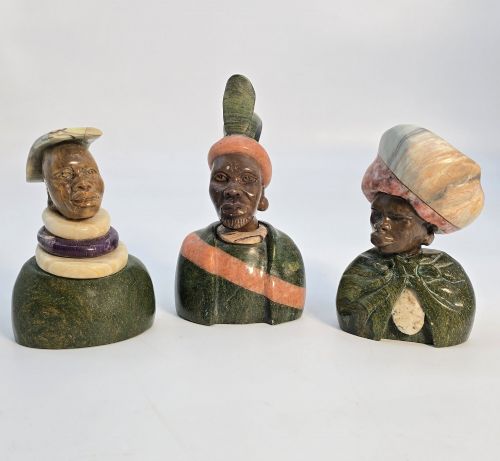
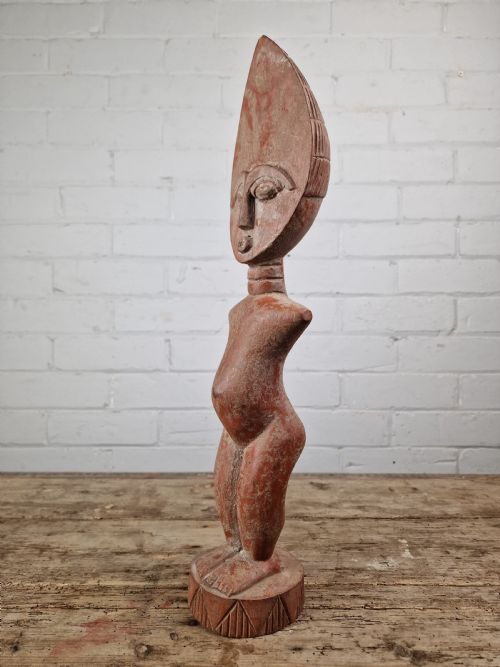
These pieces of antique african carving span tribal sculpture, furniture, and ceremonial objects made from hardwood, bone, and brass.
Antique African Carving
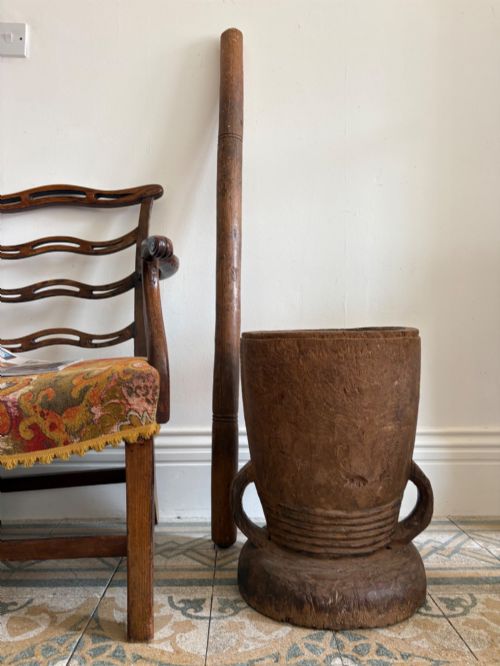
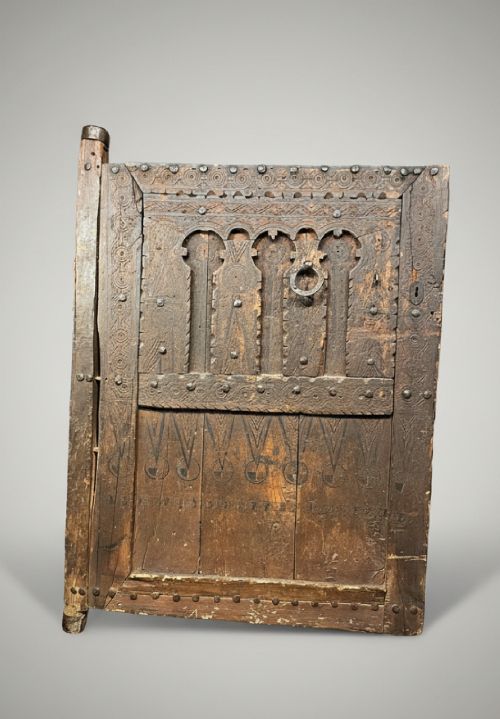
When a buyer searches for antique african carving, they encounter a diverse range of objects originating from various regions across the continent, spanning multiple centuries. The selection includes functional items such as grain mortars, architectural doors, ceremonial axes, and domestic tables alongside figurative sculptures, masks, and tribal artefacts. Most pieces appearing on this page date from the nineteenth and early twentieth centuries, reflecting both indigenous craft traditions and cross-cultural exchanges during those periods.
The regional variety is wide, encompassing West African Yoruba figures, Central African Congo masks, Southern African Zulu clubs, and North African tables or chests. Forms range from miniature bone studies of animals to large architectural elements like carved wooden doors and mosaic top dining tables. Buyers often look for authenticity in these traditional forms, which carry specific cultural, ceremonial, or utilitarian purposes tied to the peoples who created them.
How They Were Made
Makers utilised timber and hardwood as the primary medium for sculptural works, furniture, and structural elements, shaping the material with traditional hand tools. Hardwoods such as teak, fruitwood, padouk, and various indigenous timbers provide the dense foundation required for intricate detail and durable use. Artisans also incorporated bone, brass, iron, and fibre to accent surfaces, bind joints, or create inlaid details on chests, masks, and ritual objects.
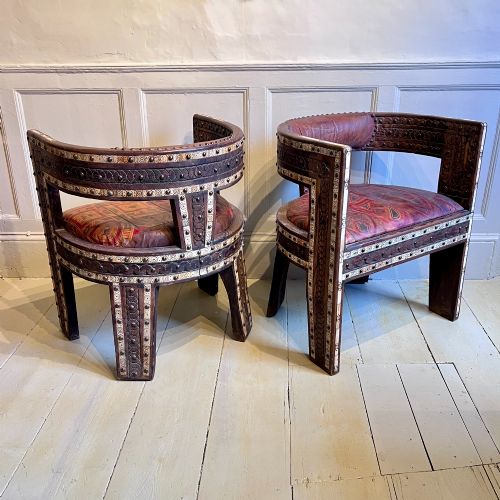
Surface treatment and assembly relied on traditional joinery, metal studs, and hand carving techniques rather than modern industrial manufacturing. Iron and brass hardware on storage chests or ceremonial weapons demonstrate period metalworking methods, while painted finishes appear on specific regional items like Moroccan chairs. The integration of bone and carved wood in smaller figures or pipes highlights the resourcefulness of makers using locally accessible materials.
A hippopotamus carved from hardwood and bone quietly shares shelf space with formidable Maasai warriors and tribal door guards.
What Varies in Quality
Proprovenance, attribution, and the survival of original surface patination significantly elevate certain objects above standard utilitarian items. Pieces that retain their authentic ritual wear, indigenous repairs, or well-documented tribal origins command greater attention from collectors. Conversely, heavily cleaned surfaces or dry, neglected timber reduce the aesthetic and historical impact of the piece.
Abegunde of Ede·Gerrard and Sons London
The Antique African Carving Glossary
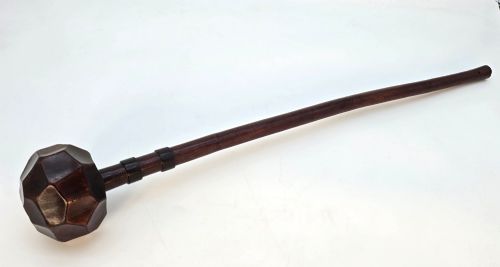
- Knobkerrie
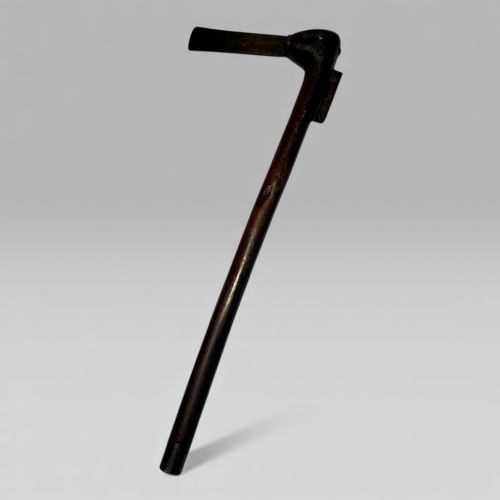
- A traditional Southern African wooden club featuring a heavy knob at the end of the shaft, utilised for hunting or combat.
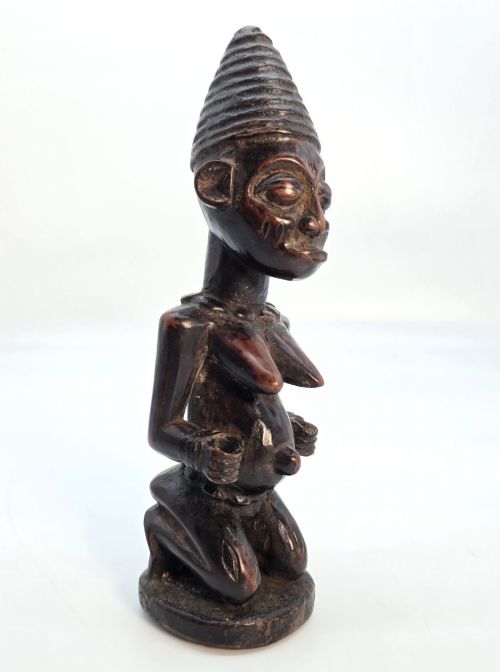
- Ibeji
- A carved wooden twin figure created among the Yoruba people of Nigeria to honour a deceased twin.
- Kifwebe
- A ceremonial mask associated with the Songye people of the Democratic Republic of Congo, characterised by striated patterns.
- Reliquary Guardian
- A sculpted figure placed above or upon a container holding ancestral relics, common in traditions from Gabon.
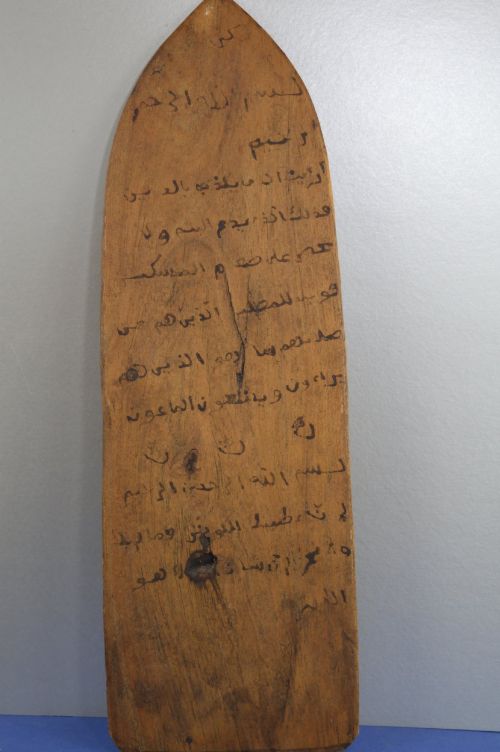
- Prayer Board
- A wooden board inscribed with Islamic script, used in West Africa for studying religious texts.
Antique African Carving: Frequently Asked Questions
What is an antique African carving?
An antique African carving encompasses handmade wooden sculptures, masks, furniture, and ritual objects produced across the African continent during earlier centuries.
These pieces reflect distinct regional cultures, traditional beliefs, and functional uses ranging from domestic seating to ceremonial worship.
How can I tell the age of these carvings?
Dating relies on material patination, tool marks left by hand shaping, tribal style evolution, and documented provenance where available.
Many examples date from the nineteenth and early twentieth centuries, showing wear consistent with traditional use and age.
How were these tribal artefacts used?
Objects served various purposes, including religious ceremonies, ancestral veneration, daily labour, warfare, and storage.
Masks and figures were often employed in ritual dances or placed near sacred sites, while items like headrests and doors served domestic functions.
How should I care for wooden tribal pieces?
Protect antique wood and bone items by keeping them away from direct sunlight, extreme heat sources, and rapid humidity changes.
Apply minimal cleaning using a dry, soft cloth to preserve the natural surface patination and historic finish.