




Dark Hardwood Sculpture
These pieces of dark hardwood sculpture bring dense, characterful grain and deep patination to a room, offering centuries of global carving traditions.
Dark Hardwood Sculpture
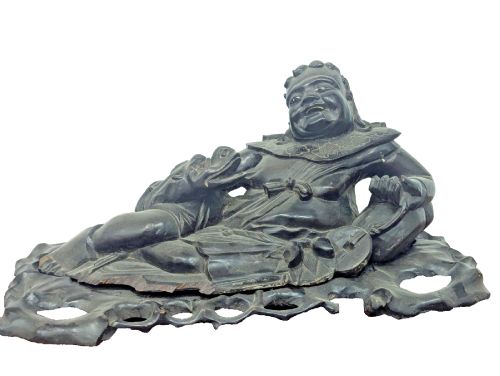
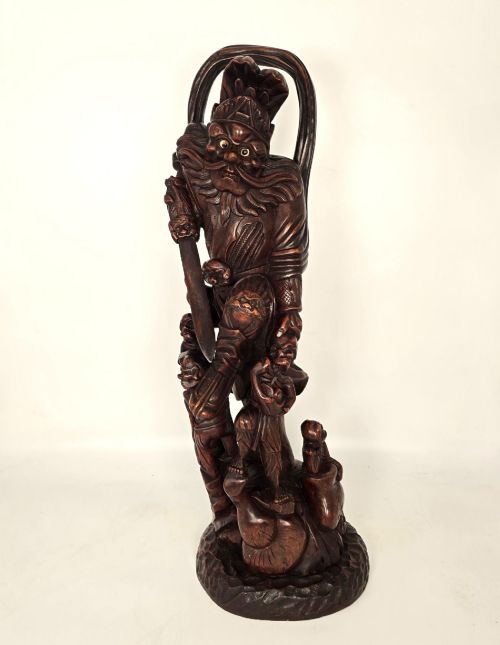
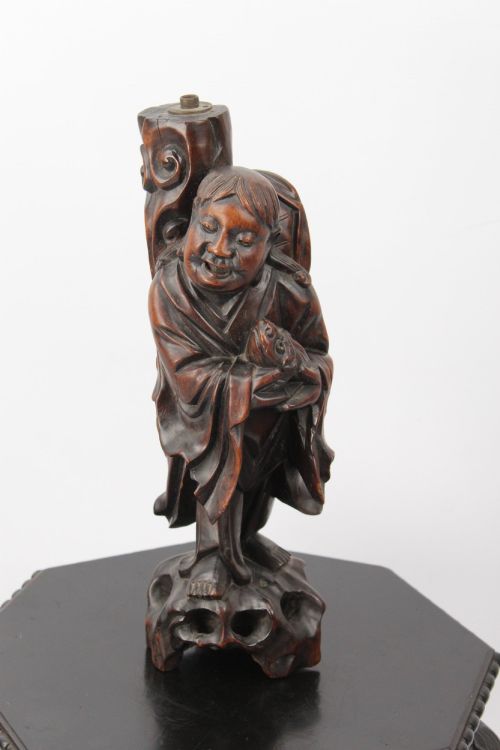
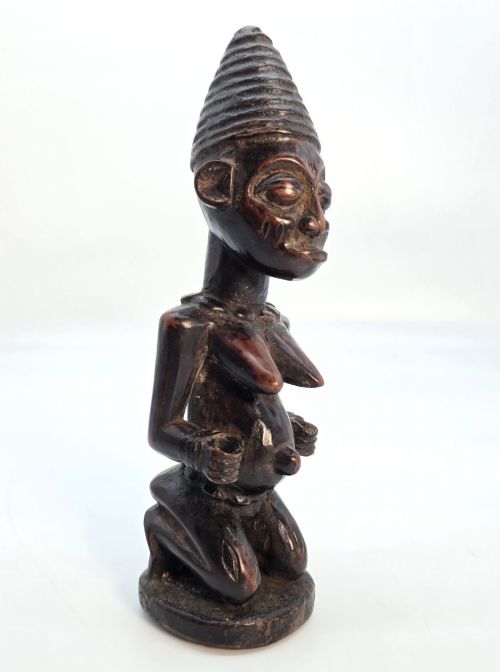
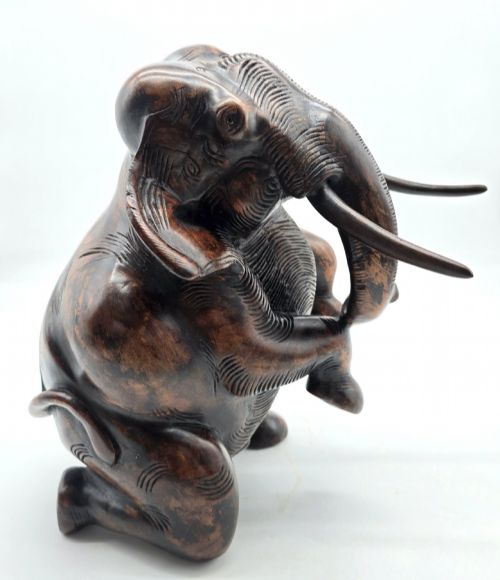
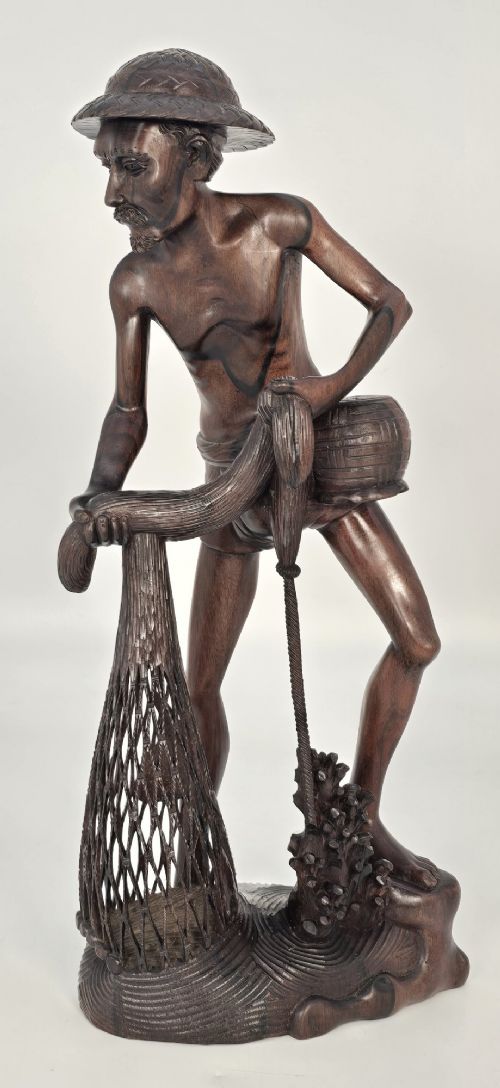
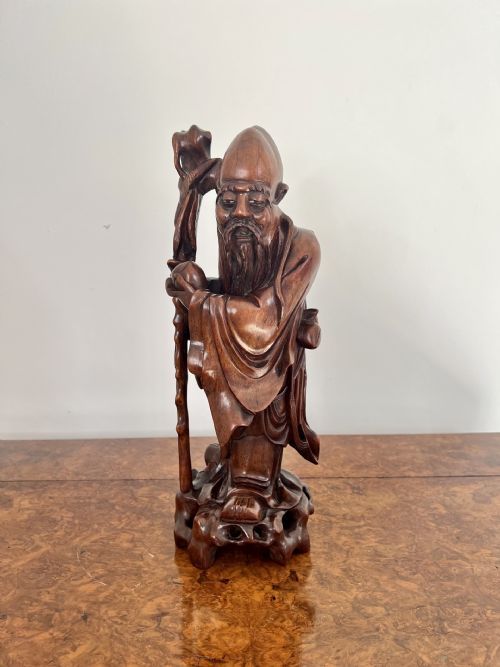
When you search for dark hardwood sculpture, you encounter figures, animals, and architectural panels originating from China, Africa, India, and Southeast Asia. These objects range from nineteenth-century Chinese Buddhas and deities to African tribal fertility figures and Raj period animal studies.
Materials and carving techniques
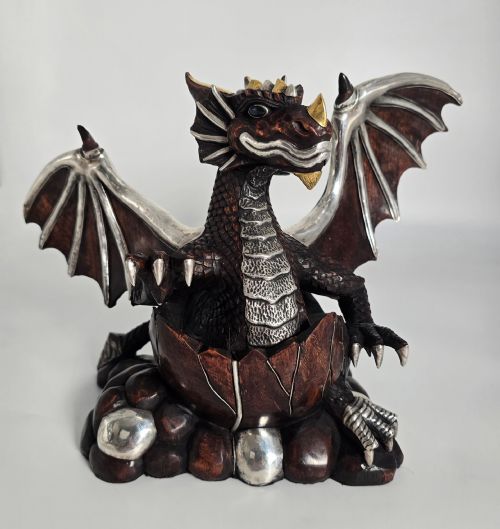
Carvers shaped these pieces primarily from dense timbers such as ebony, teak, and root wood, often employing deep relief carving to build up complex layers of detail. Certain works incorporate mixed metals, bone, or brass mounts to accentuate specific elements like bells, gongs, or harness details.
The physical weight of the object depends directly on the choice of hardwood, while the surface finish relies on hand-carving tools that cut cleanly into the tight grain. Tool marks and directional chisel strokes remain visible on many surfaces, demonstrating manual execution before any final polishing takes place.
Dark Hardwood Sculpture Retail Price Guide 2026
Typical asking prices for dark hardwood sculpture among the pieces listed under this phrase on Sellingantiques today, from the lower quarter to the upper quarter. They describe what is for sale here now, not the wider market.
Listings feature timbers like teak and ebony alongside root wood, applied to subjects ranging from Chinese deities to African tribal figures.
Distinctions in craftsmanship
The hierarchy of quality rests on the depth of the carving and the anatomical precision of the subject, whether human, animal, or mythical. Superior examples display confident command over difficult grain, rendering facial expressions, drapery folds, and muscular tension with distinct clarity.
Weaker specimens often show flat, summary carving that lacks dimensionality in the relief and ignores the natural movement of the wood. The most accomplished pieces manage to retain organic vitality within the dense material without sacrificing structural integrity.
The Dark Hardwood Sculpture Glossary
- Hardwood
- Wood from angiosperm trees, typically broad-leaved and dense, which resists dents and takes a fine carved edge. These timbers form the structural body of every piece listed here.
- Root wood
- The subterranean growth of a tree, prized by carvers for its twisted, gnarled grain patterns. Sculptors use these irregular formations to dictate the natural posture of figures and lamps.
- Deep relief
- A carving technique where the elements project far from the background plane, creating strong shadows and high dimensionality. This method appears frequently on wall panels and figural groups.
- Treen
- Small handmade wooden objects designed for domestic or utilitarian use. Collectors use this term to describe carved treen items such as architectural masks and smaller vessels.
- Patination
- The surface sheen and colour change developed by wood over decades of handling and exposure to light. Older pieces acquire a deep, warm tone that cannot be replicated artificially.
Dark Hardwood Sculpture: Frequently Asked Questions
How do I clean dark hardwood sculpture?
Dust the surface regularly with a soft, dry brush to prevent particle buildup in the deep crevices of the carving. Avoid using household polishes or wet cloths, which can damage the aged patina of the timber.
Apply a microcrystalline wax sparingly only if the wood appears dry, buffing it gently with a soft cloth. Keep the sculpture away from direct heat sources and strong sunlight to prevent the timber from splitting.
How can I tell the period of a carving?
Examine the tool marks left behind by the carver, as hand-carved nineteenth-century pieces display irregular chisel paths rather than uniform machine milling. The depth of the colour and the softness of the edges reveal age and handling over generations.
Compare the stylistic conventions, such as regional costume details or religious iconography, with documented examples from periods like the Qing Dynasty or the Raj era.
Where should I display these sculptures?
Position heavier figural pieces on stable furniture where their weight and deep tones anchor the surrounding space. Wall panels require secure fixings into solid walls to support their dense timber construction.
Ensure the display location maintains a stable room temperature away from radiators and damp zones. Good ambient lighting helps pick out the directional grain and high-relief details of the darker woods.
What is root wood furniture?
Root wood items utilise the gnarled underground sections of trees, shaped by nature and finished by carvers into lamps, stands, and sculptural objects. The chaotic grain makes each piece entirely unique.
Makers allowed the natural twists of the root to suggest the form of figures or support structures, blending organic growth with human intervention.