

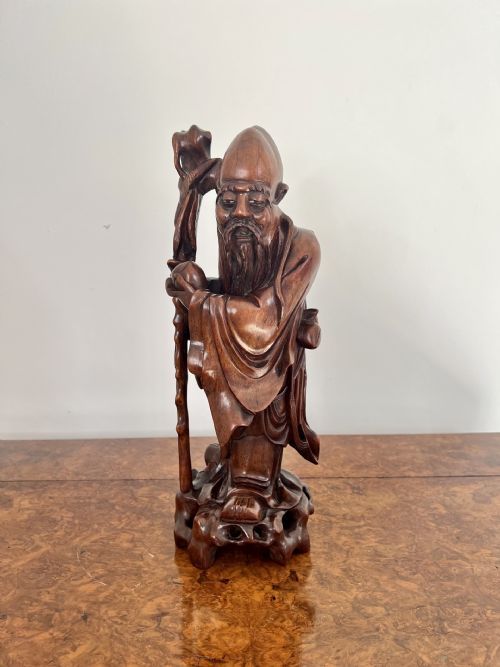


Hand Carved Asian Statue
These hand carved asian statue selections bring together centuries of timber and stone work from diverse eastern traditions.
Hand Carved Asian Statue
A hand carved asian statue encompasses figures carved from timber, stone, and jade, representing deities, scholars, fishermen, and animals. These works span centuries of regional craftsmanship, including Qing Dynasty pieces, Meiji Period carvings, and Ming style figures.
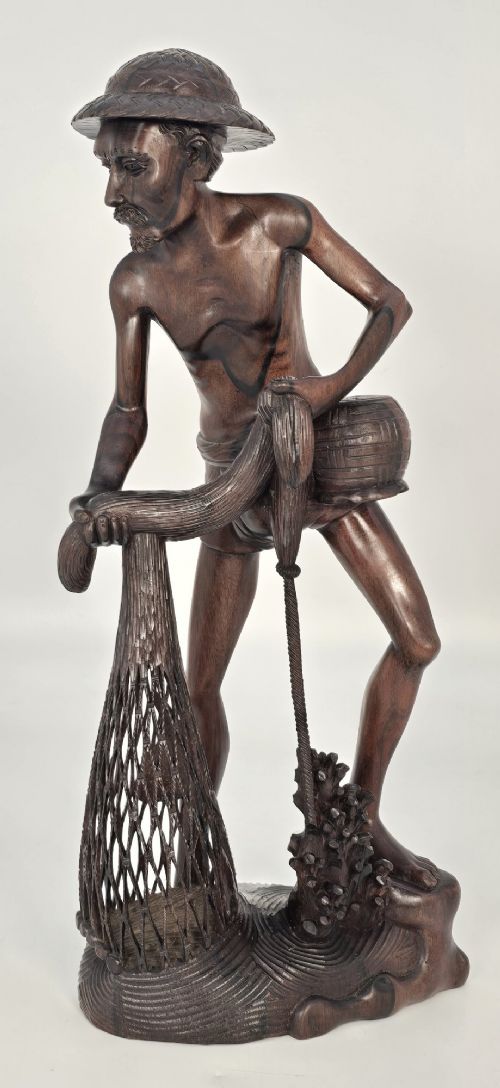
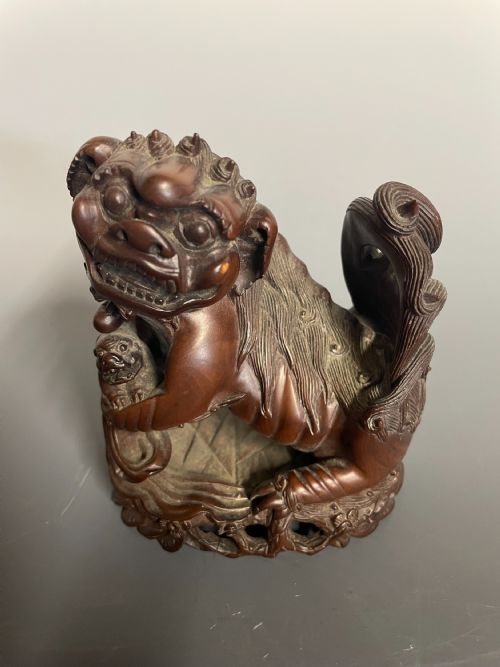
The selections here lean heavily toward hardwood and root wood sculptures alongside traditional stone and marble deities. Buyers encounter figures of immortals, temple guard dogs, and historical sages shaped through meticulous carving traditions.
What varies in quality
Quality rests on the relationship between the natural material and the carver's hand. Superior examples make clever use of gnarled root wood or stone grain to animate figures like scholars, deities, and animals with natural vitality.
Finishing work distinguishes standard items from exceptional ones. The depth of undercut details, the expression in a face, and the preservation of the original surface texture dictate the standing of each sculpture.
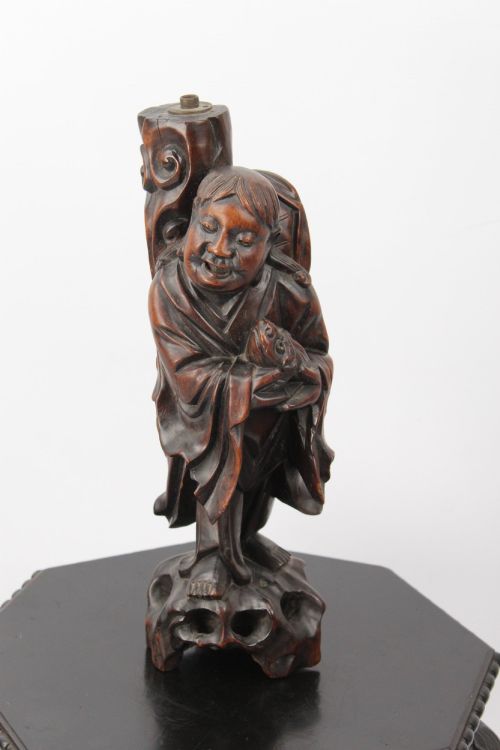
One gnarled piece cleverly uses a knot of wood to form the burden carried on a traveler's shoulders.
The Hand Carved Asian Statue Glossary
- Foo Dog
- A traditional temple guard animal resembling a stylized lion, frequently carved from wood or stone.
- Root wood
- Timber sourced from the root system of a tree, prized by carvers for its twisted, gnarled grain patterns.
- Okimono
- A Japanese decorative sculpture designed for display on a shelf or in a traditional alcove.
- Meiji Period
- A historical era in Japan spanning from eighteen sixty-eight to nineteen twelve, known for refined boxwood carving.
- Qing Dynasty
- The final imperial dynasty of China, which produced many of the hardwood and stone sculptures found in this category.
Hand Carved Asian Statue: Frequently Asked Questions
What materials are these statues made from?
These sculptures are carved from various natural mediums including dense hardwoods, gnarled root wood, boxwood, stone, marble, and jade.
Each material determined the scale and level of detail the carver could achieve within the traditional subject matter.
How do I identify the age of a wooden carving?
Age is judged by the dryness and colour of the timber, the wear patterns on the surface, and the tool marks left by the carver.
Earlier pieces often display a deeper patina accumulated over centuries of handling and environmental exposure.
Were these statues used in temples or homes?
Many figures served as temple guards, deities for domestic shrines, or scholarly desk ornaments meant to inspire contemplation.
Their original placement dictated whether they were carved on a monumental scale or designed for intimate handling.
How should I care for a historic wood carving?
Keep wooden sculptures away from direct sunlight and sudden shifts in temperature or humidity to prevent the timber from splitting.
Dust them gently with a dry, soft cloth without applying modern chemical polishes or oils.