





Nautical Wood Carving
These pieces of nautical wood carving range from scratch-built model ships to folk art figures, offering a tangible connection to maritime history.
Nautical Wood Carving
Nautical wood carving encompasses a diverse array of maritime objects, from intricately detailed model ships and dioramas to functional tools like sailors' fids and pulleys. When exploring this category, collectors encounter pieces shaped by the sea, trade, and coastal life over past centuries.
The selections on this page lean heavily towards nineteenth-century and early twentieth-century examples, including folk art figures, pond yachts, and carved marine scenes. These items reflect the craftsmanship of both professional marine carvers and skilled amateurs working within maritime traditions.
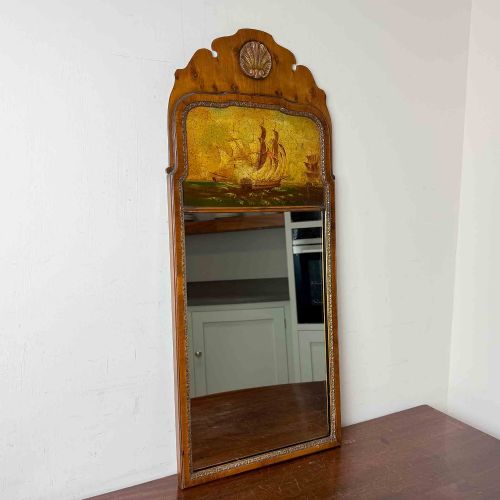
From decorative wall mirrors incorporating maritime scenes to large scale models and shop signs, these items serve as physical archives of seafaring heritage. Each form carries distinct characteristics tied to its specific period of origin, whether Victorian, Edwardian, or earlier.
Materials and construction
Makers utilised a variety of native and exotic timbers, with pine, hardwood, sycamore, elm, and rosewood appearing frequently across the selection. These woods were often chosen for their durability in marine environments or their suitability for fine detail work.
Construction techniques combine traditional carpentry with specialised maritime skills, utilising brass fittings, paint, glass, and canvas to complete models and dioramas. Many pieces display evidence of scratch-building, where makers fashioned complex rigging and hulls from raw timber without commercial kits.
Listings feature items spanning the 18th, 19th, and 20th centuries, utilising materials like pine, brass, glass, and canvas.
Assessing quality and craftsmanship
Quality in these carvings rests upon the precision of the maker's eye and the depth of detail preserved in the wood. Superior pieces exhibit anatomical accuracy in figures or structural fidelity in model vessels, distinguishing them from simpler decorative items.
The preservation of original surface treatments, such as early paint layers and patinated hardware, significantly impacts the character of a piece. Finer examples maintain their structural integrity while showing honest signs of age and handling.
The Nautical Wood Carving Glossary
- Fid
- A tapered wooden tool used by sailors for splicing rope or rigging. These items were frequently carved by hand from dense hardwoods during long voyages.
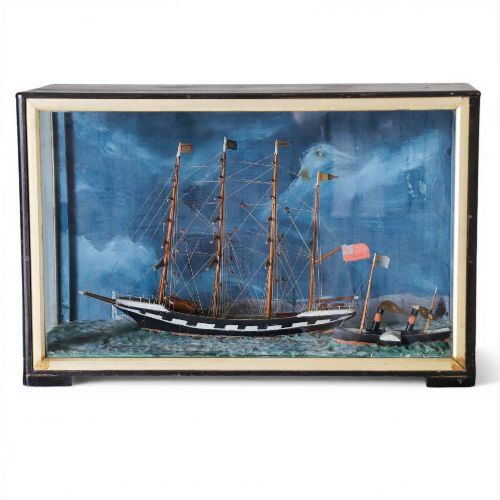
- Diorama
- A three-dimensional scene enclosed within a case, often depicting sailing vessels at sea with painted backdrops and modelled waves.
- Scratch built
- Describes a model constructed entirely from raw materials and individual components rather than from a commercial kit. This method highlights the distinct hand of the maker.
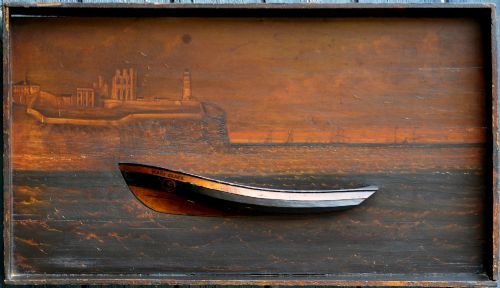
- Half model
- A three-dimensional representation of one side of a ship's hull, mounted on a board. Shipwrights used these to study hull shapes before full-scale construction.
- Whirligig
- A wind-driven folk art figure with moving parts, such as a sailor or signalman whose arms rotate in the breeze.
Nautical Wood Carving: Frequently Asked Questions
How do I identify a pond yacht?
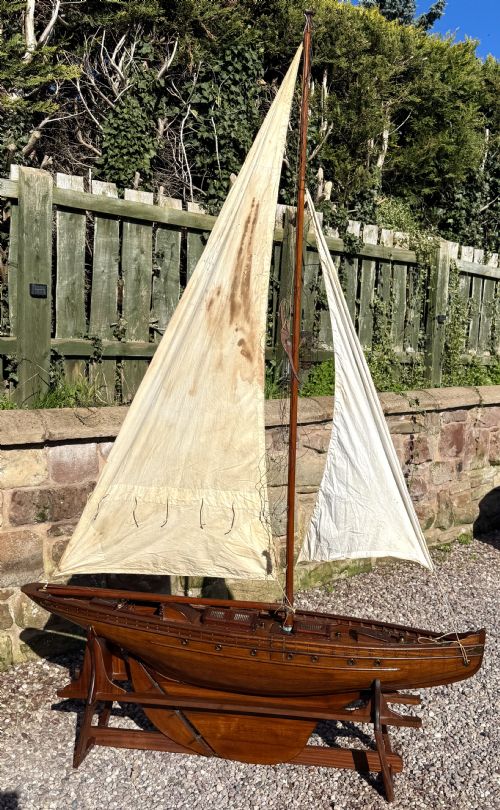
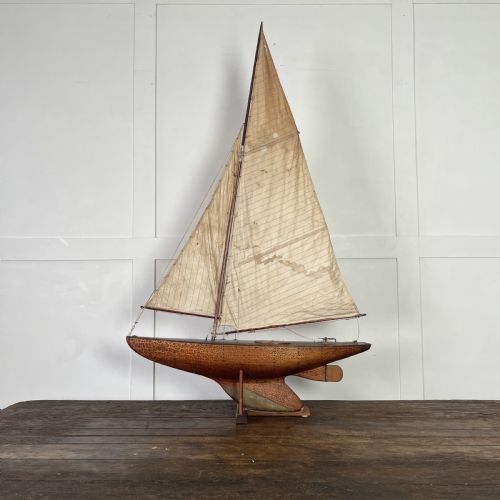
Pond yachts are model sailing boats built for recreational sailing on park lakes and coastal waters, typically featuring wooden hulls, fixed keels, and cloth sails. They range from small tabletop toys to large, deck-equipped models standing several feet high.
Distinguishing periods relies on hull construction methods, such as hollowed-out single blocks versus plank-on-frame builds, alongside the style of deck fittings. Many retain original lead ballasts and period paint schemes.
What is a marine diorama?
A marine diorama is a cased display featuring carved or modelled ships set against a painted canvas backdrop representing the sea and sky. These displays often incorporate glass fronts and detailed foregrounds modelled with plaster or putty to simulate waves.
Victorian examples frequently captured specific vessels, racing scenes, or dramatic coastal weather. The enclosed case protected the delicate rigging and painted surfaces from dust and damage.
Are these items antique?
The pieces in this category span several distinct historical periods, primarily covering the nineteenth century and the early decades of the twentieth century. Dating is determined through materials, construction methods, and stylistic cues characteristic of eras such as the Victorian and Edwardian periods.
While some utilitarian objects date back to the eighteenth century, others reflect folk art traditions continuing into the nineteen-twenties and thirties. Each piece carries markers of its specific era of manufacture.