

Oriental Hardwood Carving
An oriental hardwood carving brings dense timber, intricate chiselling and regional character into a room.
Oriental Hardwood Carving
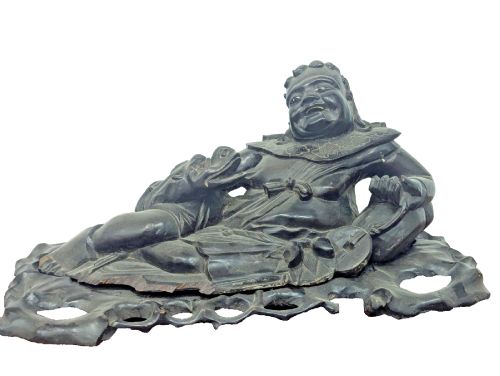
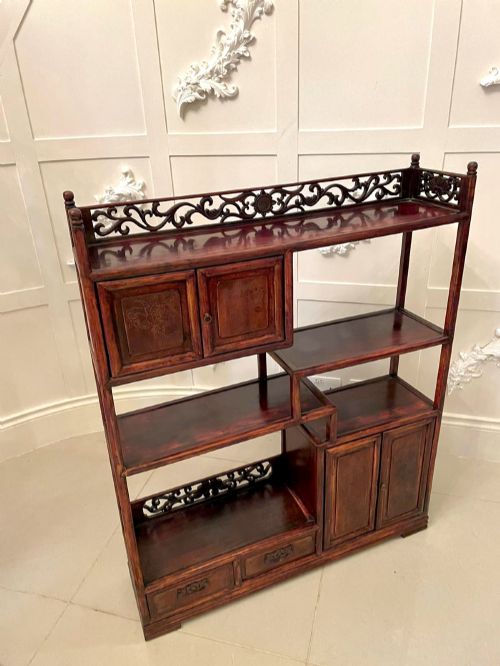
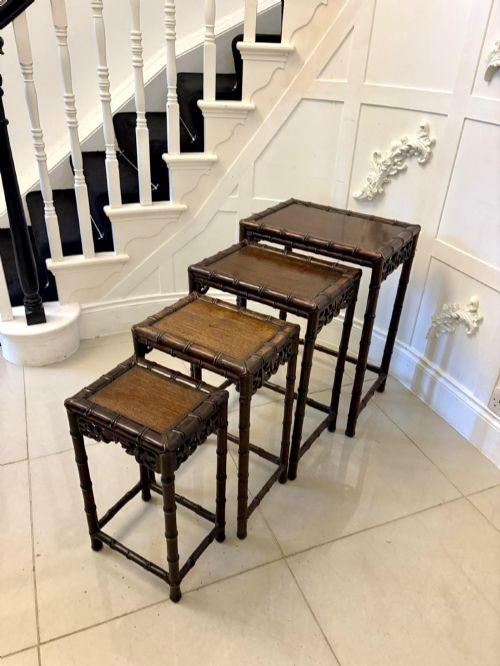
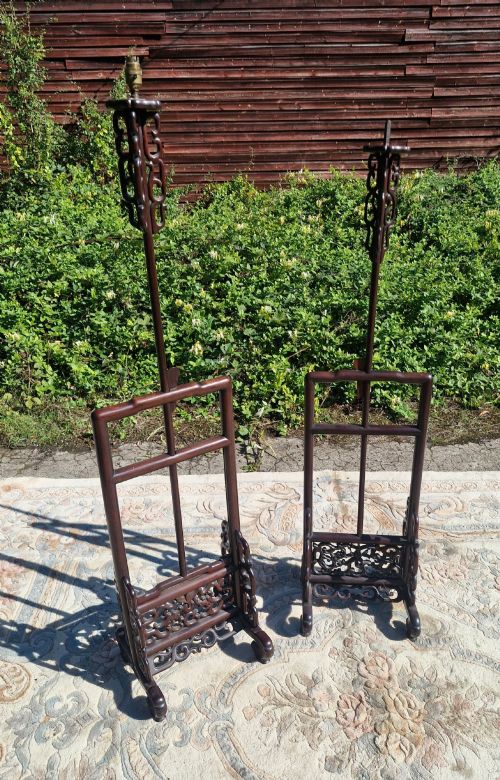
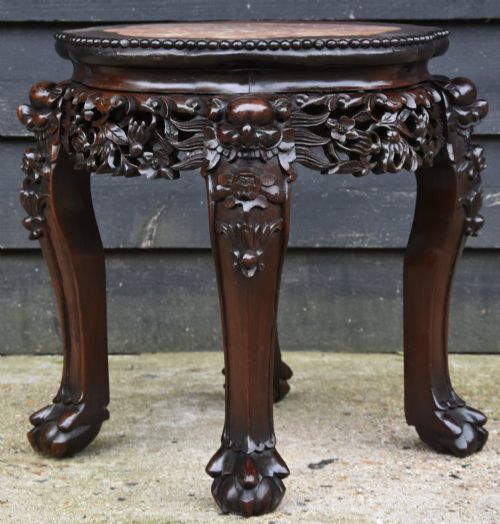
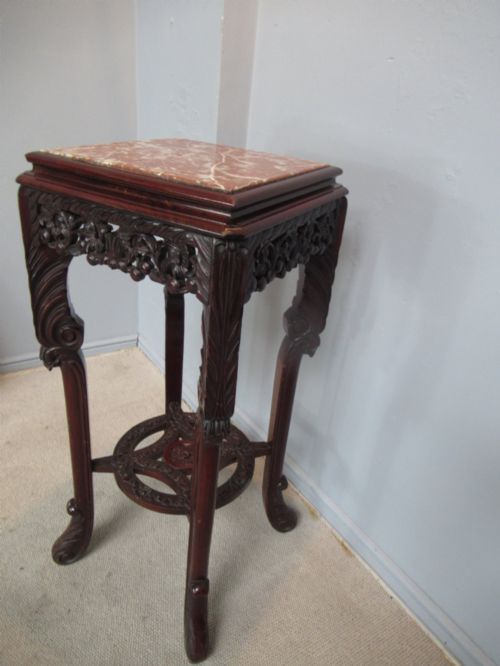
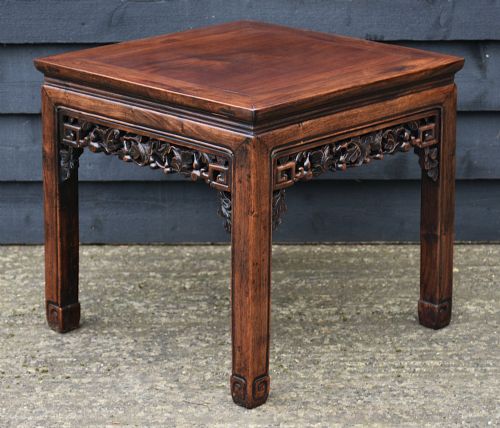
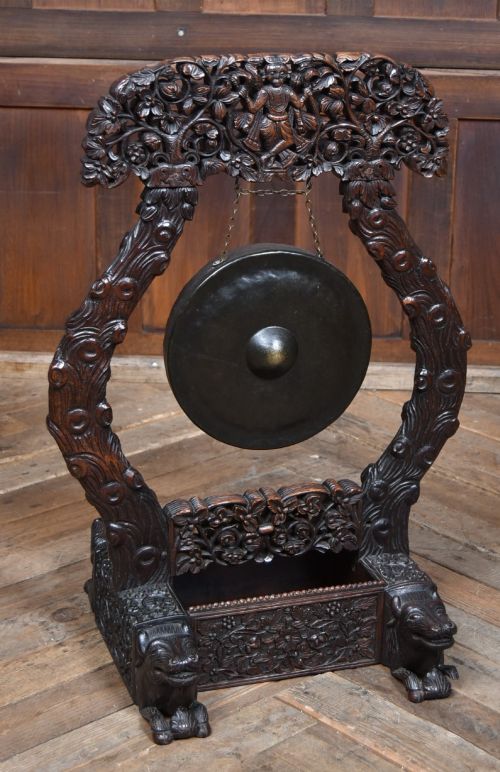
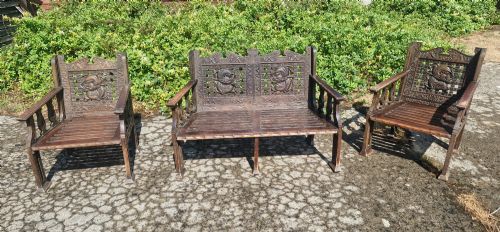
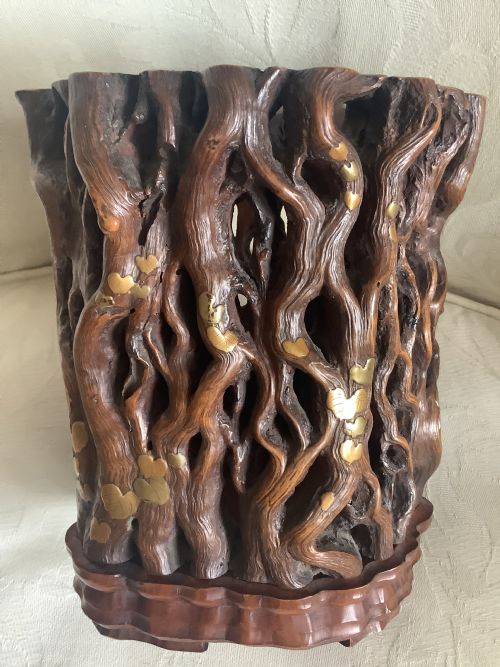
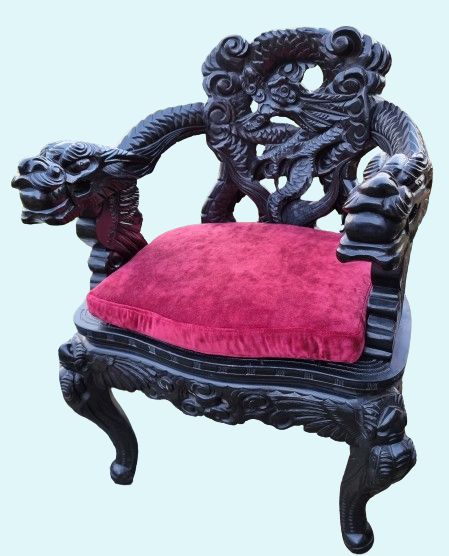
These items comprise sculptural works, seating, display stands and tables shaped from dense timbers, spanning centuries of craftsmanship across Asia. An oriental hardwood carving most frequently appears here as a low table, plant stand or nest of tables dating from the nineteenth century.
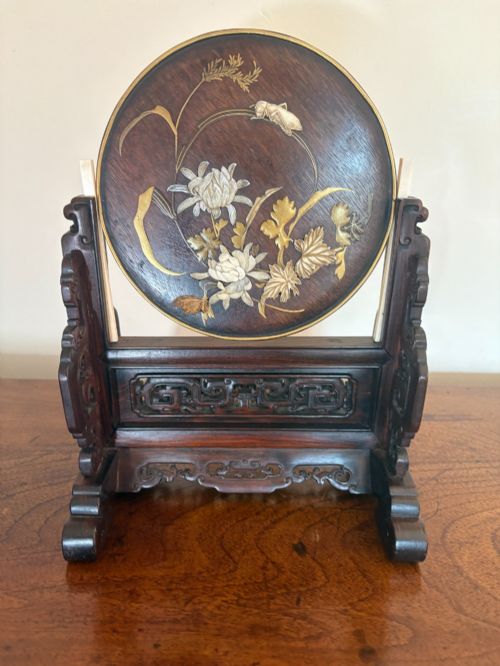
Makers shaped these dense woods into functional furniture and decorative sculptures, incorporating marble inserts, mother of pearl inlay and bone ornamentation. Pieces emerge from Chinese export workshops, Japanese Meiji studios and Anglo-Indian makers, reflecting diverse regional aesthetics.
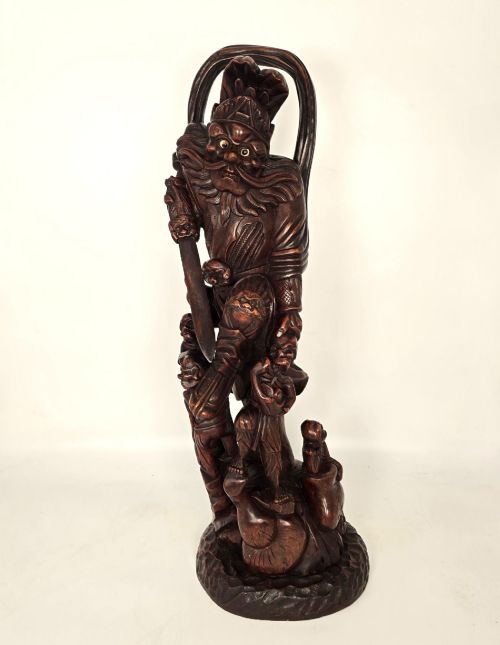
The category encompasses substantial architectural screens, low opium tables and intricate figures of guardians or immortals alongside practical domestic furnishings. Each object demonstrates the distinct regional carving traditions of China, Japan, Burma and India.
Materials and construction
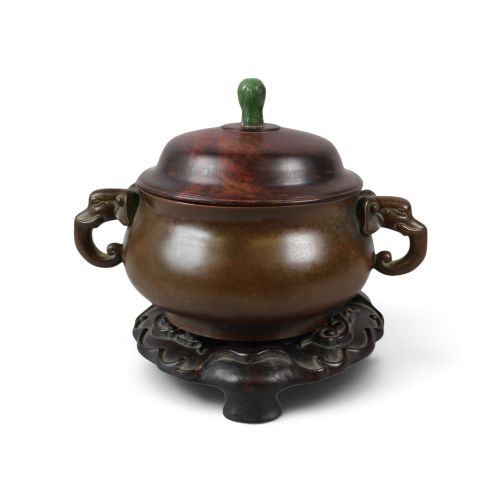
Carpenters utilised dense regional timbers including rosewood, padouk and huanghuali, chosen for their weight, grain and deep natural colour. Artisans carved these heavy woods directly, often augmenting the surfaces with inset marble panels, bone, brass and mother of pearl.
Joining techniques relied upon traditional mortise and tenon construction, allowing dense timbers to hold firm without extensive metal fastenings. Sculptural elements and intricate relief panels received hand chiselling, whilst lacquer finishes sealed and protected specific decorative objects.
Listings feature items from the eighteenth, nineteenth and early twentieth centuries, constructed in rosewood, padouk, lacquer, brass and bone.
Evaluating quality and execution
Superior execution shows in the crispness of the hand chiselling and the depth of relief work across the timber surface. Lesser examples display shallow, mechanical incision that lacks the layered dimension found in better workshops.
The selection and matching of timber grain significantly influence the standing of an item, particularly in rosewood and huanghuali pieces. Furthermore, the integration of secondary materials like marble or mother of pearl reveals the precision of the original maker.
Liberty & Co
The Oriental Hardwood Carving Glossary
- Hongmu
- A traditional Chinese classification for dense, dark hardwoods often translated as red wood. It includes species such as rosewood.
- Shibayama
- A Japanese decorative technique utilising inlaid mother of pearl, ivory, tortoiseshell and bone to create pictorial panels. These inlays appear on cabinets and table screens.
- Lokapala
- A guardian king or heavenly general depicted in Buddhist sculpture, often carved dynamically in wood. These figures stand as protective deities.
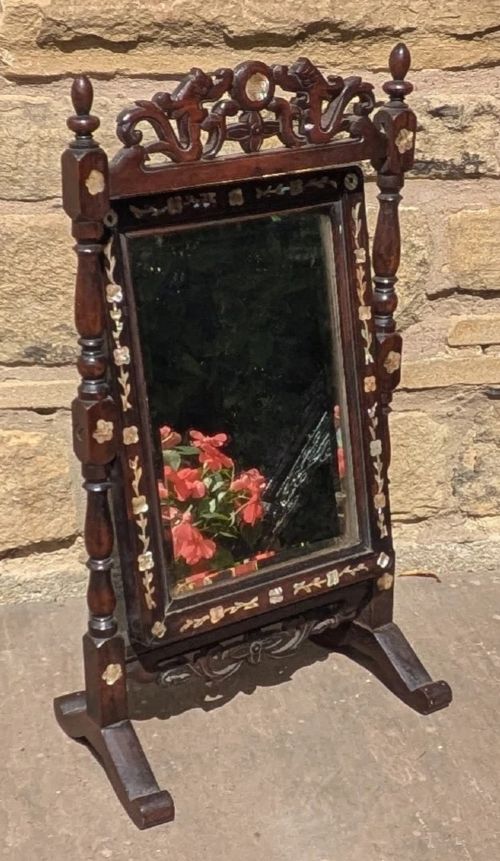
- Cheval mirror
- A full length mirror hung in a freestanding frame that tilts on vertical pivots. Versions in this category incorporate carved hardwood and inlaid mother of pearl.
Oriental Hardwood Carving: Frequently Asked Questions
How do I care for hardwood?
Keep these timbers away from direct heat sources and sudden humidity shifts to prevent splitting in the dense grain. Apply natural wax sparingly to maintain the surface sheen without building up heavy residues.
Dust regularly with a soft cloth, avoiding abrasive cleaners or silicon based polishes that damage traditional finishes.
Where were these pieces made?
The inventory originates primarily from Chinese workshops, alongside Japanese studios and Indian or Burmese regional centres. Each area utilised local timber supplies and traditional carving methods unique to its culture.
Export pieces often combined domestic forms with Western functional requirements, particularly during the nineteenth and early twentieth centuries.
How are different periods identified?
Stylistic markers, such as Qing dynasty motifs or Meiji period aesthetic details, help date individual items alongside construction methods. Wood patination and the wear patterns on contact points also offer clues to age.
Comparing joinery and inlay styles against documented regional examples clarifies the likely decade of manufacture.
Can low tables hold heavy items?
Dense timbers like rosewood and padouk provide exceptional structural strength despite delicate carved aprons and slender legs. Traditional joinery distributes weight effectively across the frame.
Marble inset tops and solid hardwood panels easily support lamps, plants and everyday objects without strain.