
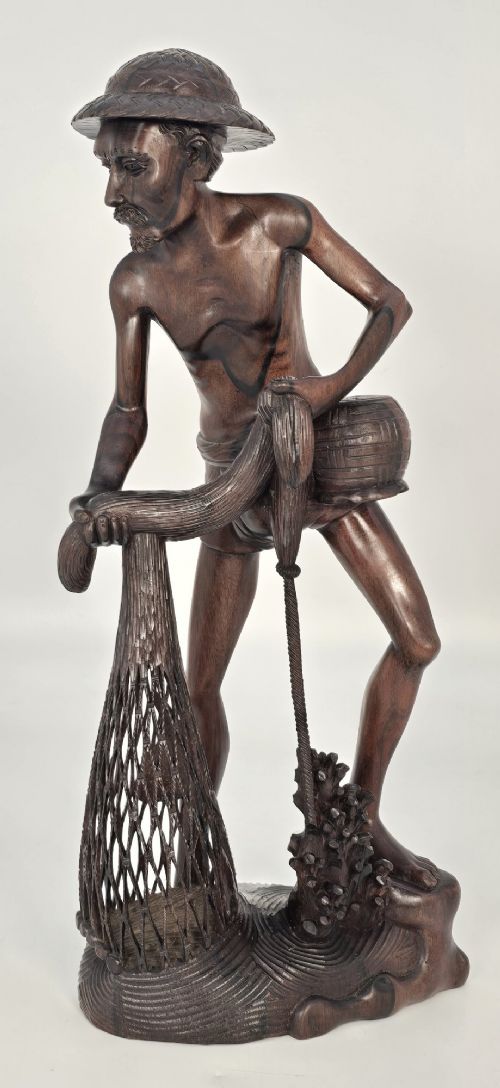


Fisherman Figure Statue
These fisherman figure statue examples range from small carved hardwood sculptures to patinated bronzes, offering a tangible connection to coastal trades and maritime folklore.
Fisherman Figure Statue
The selections available on this page most frequently present as hardwood carvings or bronze figures. You meet works spanning European realist traditions, Chinese folk art, and Japanese Meiji period artistry, demonstrating diverse cultural approaches to a shared maritime subject.
How they were made
Many of these pieces are carved from hardwood, utilising the natural grain and density of the timber to render facial expressions, clothing folds, and associated items such as fish traps. Artisans shaped these materials with hand tools, applying dark patinas to accentuate the texture of the wood.
Other examples utilise bronze casting techniques, often finished with a dark patina or gilt highlights. These metal works capture fine details in the clothing and equipment of the figures, fixed to bases of marble or remaining as independent statuary.
Materials documented across these listings include bronze, hardwood, marble, porcelain, and glaze.
What varies in quality
The calibre of a piece depends largely on the precision of the carving or the crispness of the bronze casting. Finer examples display careful attention to anatomical proportion, the natural drape of garments, and the textures of hair, skin, and nets.
Quality also rests in the expressive character of the face and posture. Superior sculptures convey movement and personality, whereas simpler works remain stiff and formulaic in their execution.
Carl Kauba·Lavergne·Tomochika·Royal Dux
The Fisherman Figure Statue Glossary
- Okimono
- A Japanese decorative carving intended for display, often depicting figures from daily life or mythology. These pieces were prominent during the Meiji period.
- Patina
- The surface coloration and sheen developed naturally over time or applied chemically by the artisan. A dark patina is common on both bronzes and hardwoods in this category.
- Netsuke
- A small carved toggle used to secure a pouch or container to a traditional Japanese garment sash. They share stylistic origins with larger Japanese okimono carvings.
- Realism
- An artistic movement focusing on everyday subjects and ordinary workers depicted without idealisation. Nineteenth-century French works frequently employ this approach.
- Vienna Bronze
- Small, cold-painted bronze figures produced in Austrian workshops during the late nineteenth and early twentieth centuries. They are known for their detailed casting.
Fisherman Figure Statue: Frequently Asked Questions
What materials are used?
These sculptures are primarily fashioned from hardwood or cast bronze, occasionally incorporating materials such as marble bases or painted porcelain finishes. The choice of medium often reflects the geographic origin and period of production.
Artisans selected woods like dense hardwoods for intricate hand-carved details, while bronze makers utilised metal casting and patination to achieve durable, textured surfaces.
How old are these pieces?
The items listed originate from the nineteenth century and the Edwardian period, encompassing dates around eighteen-seventy through to nineteen-eighteen. This span includes works from the Japanese Meiji period and European fin-de-siècle manufacturing.
Dating is typically deduced from stylistic markers, material treatment, and specific signatures or foundry marks found on the bronze or wood substrates.
Where did these figures originate?
The geographic origins vary widely, including French bronze workshops, Chinese folk art traditions, Japanese Meiji period studios, and Bohemian porcelain factories. Each region brought distinct cultural perspectives to the depiction of fishermen.
European examples often lean towards academic realism or Vienna bronze styles, whereas Asian pieces utilise traditional woodcarving and ivory or boxwood techniques for okimono.
How do I care for them?
Maintenance involves keeping wooden and bronze sculptures away from direct sunlight and extreme humidity fluctuations to prevent cracking or surface degradation. Dusting gently with a soft, dry cloth preserves the original patina.
Avoid using abrasive cleaners, polishes, or excessive moisture, as these can strip the historical patination from bronze or damage the polished finish of hardwood carvings.