
Anglo Indian Rosewood Table
An anglo indian rosewood table brings dense tropical hardwoods and intricate carved foliage into domestic spaces with dramatic colonial presence.
Anglo Indian Rosewood Table
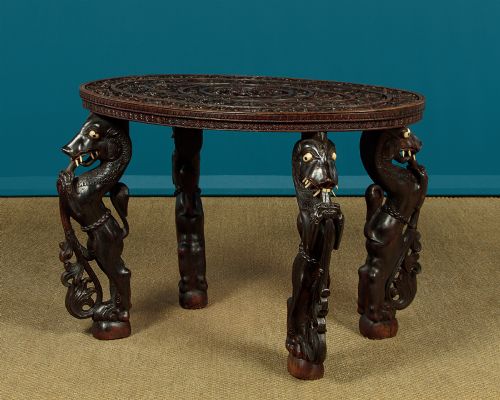
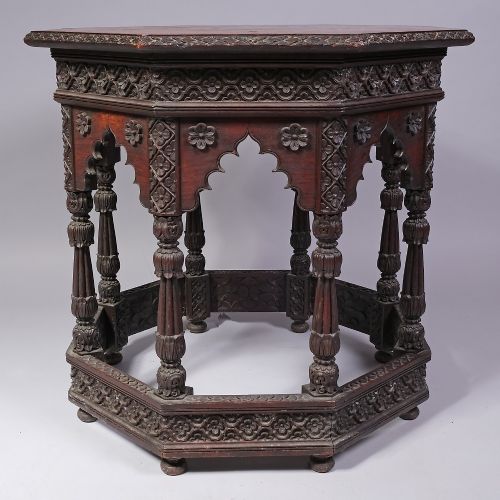
When searching for an anglo indian rosewood table, collectors encounter pieces spanning from the mid-nineteenth century through the early decades of the twentieth century. The selection encompasses occasional tables, octagonal side tables, pedestal centre tables, and larger dining formats.
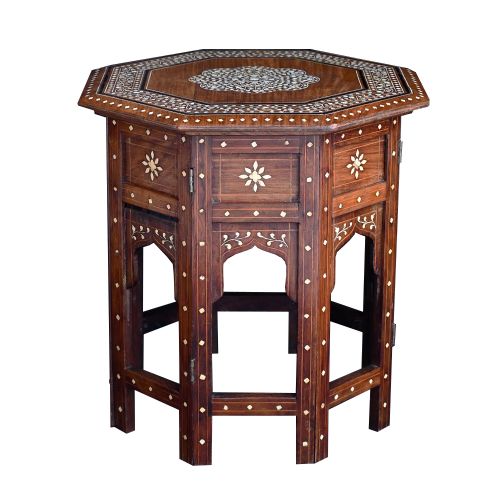
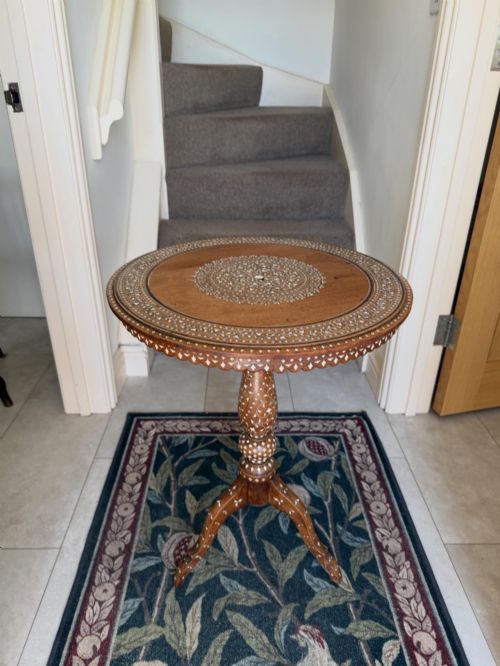
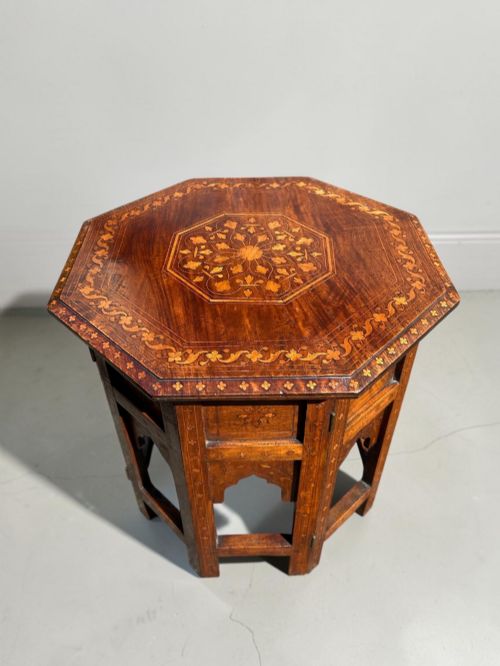
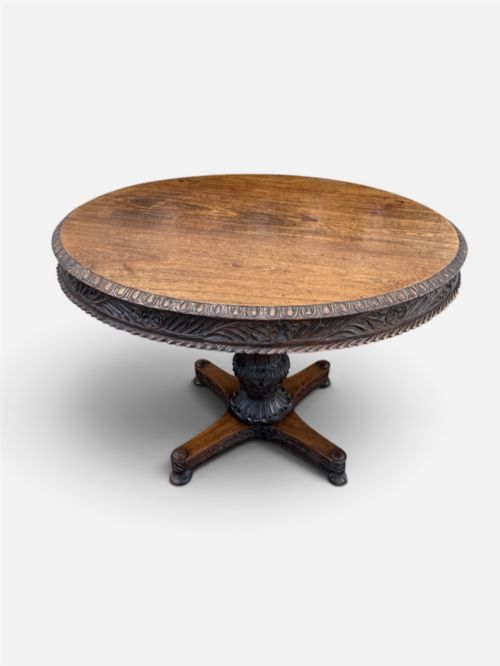
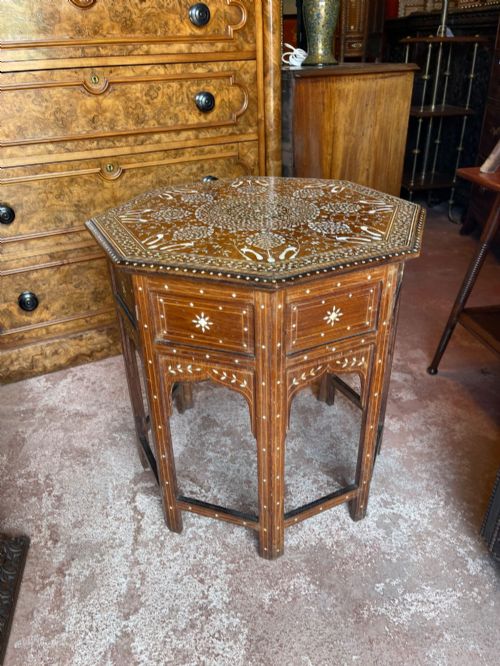
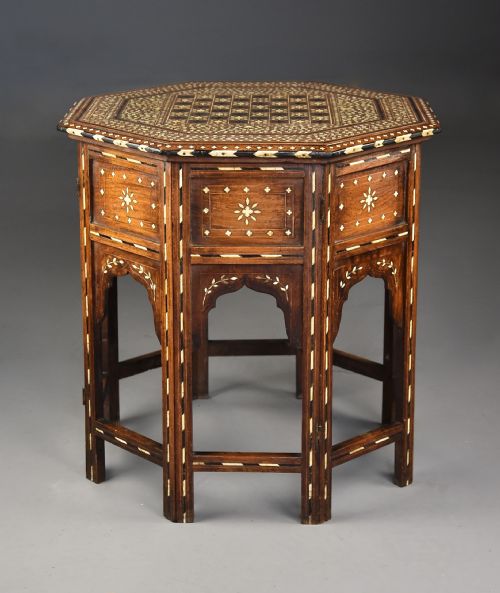
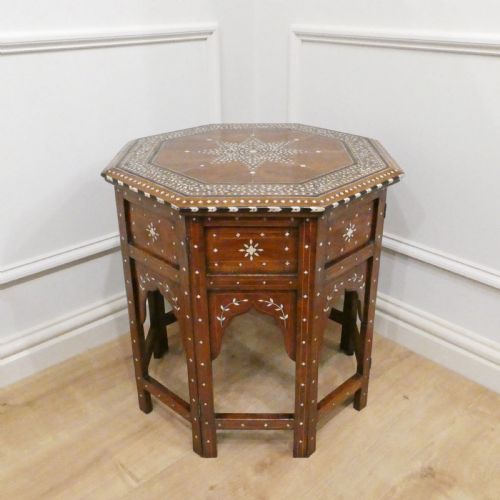
Octagonal forms associated with Hoshiarpur production appear frequently among the pieces, alongside circular tilt-top breakfast tables and console variants. The stylistic vocabulary merges British furniture forms with traditional Indian carving traditions.
The material record demonstrates a preference for solid rosewood, padouk, and teak, frequently enriched with contrasting inlay work. These surfaces display deep tones ranging from dark brown to reddish purple.
Materials and construction
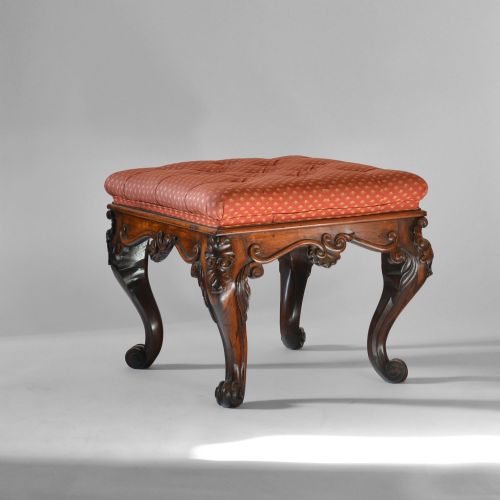
Makers utilised dense timbers such as rosewood, padouk, and teak to construct these surfaces, providing a stable medium for deep relief carving. These tropical hardwoods allow for crisp detailing on turned pedestals and moulded edges.
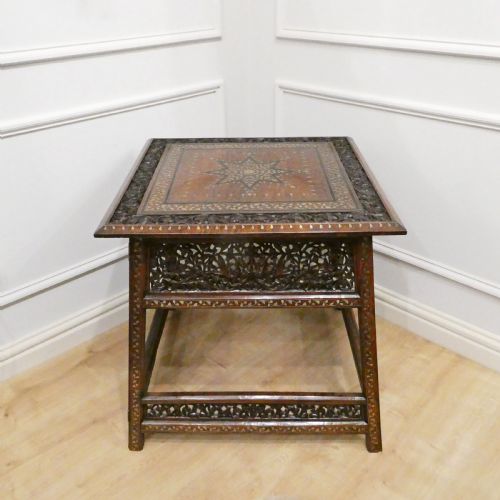
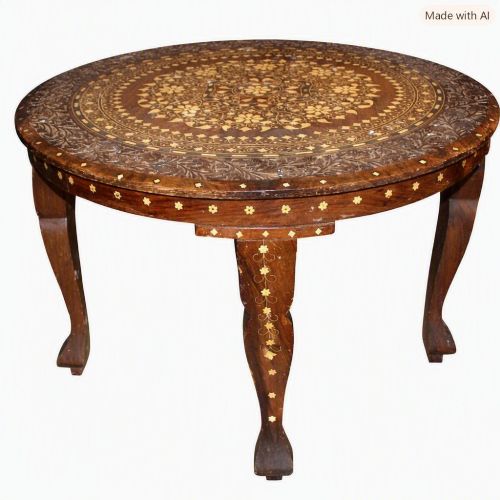
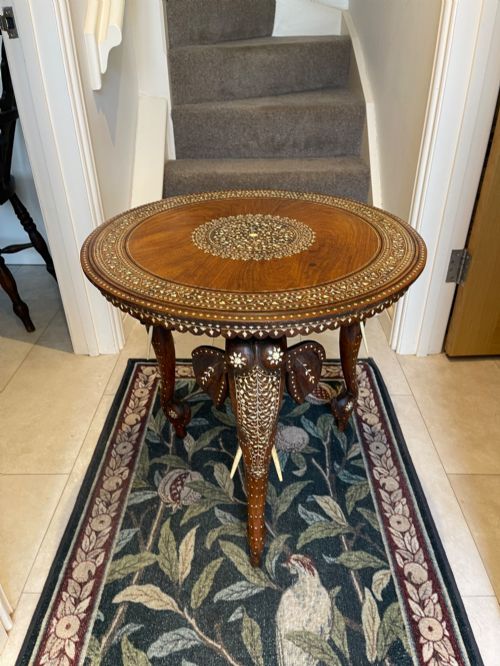
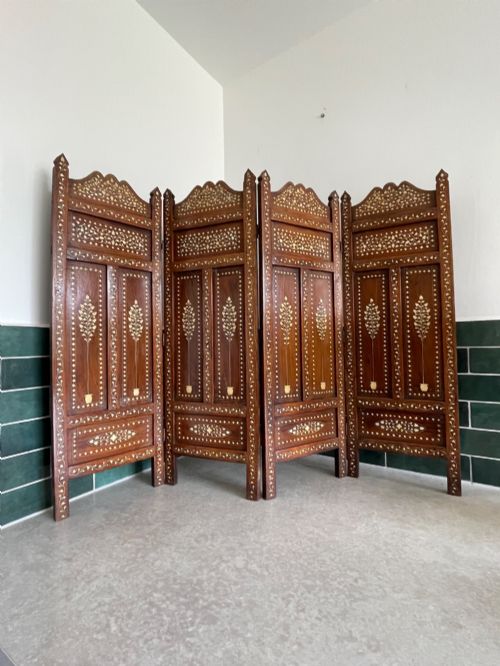
Decorative surface enrichment relies on contrasting materials including bone, ivory, and brass wire inset into geometric or floral patterns. Complex marquetry employs ebony and lighter woods to build intricate friezes across table tops and aprons.
Listings feature pieces spanning the nineteenth and early twentieth centuries, constructed from rosewood, teak, and padouk.
Assessing craftsmanship
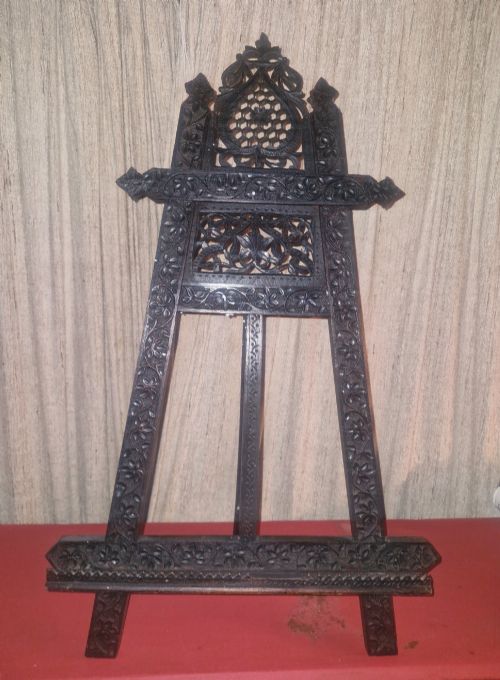
Distinction across the range rests on the depth and crispness of the hand carving, where sharper foliage undercut from the ground indicates superior artisan execution. Shallower, softer stamping lacks the dimensional impact found in finer workshops.
The precision of the bone and brass inlay work marks another tier of distinction, with tighter joints and complex geometric tessellation separating standard production from exceptional examples. Timber selection also plays a role, particularly where tops utilise single wide boards rather than multiple joined planks.
Liberty And Co
The Anglo Indian Rosewood Table Glossary
- Hoshiarpur
- A region in Punjab renowned for intricate woodwork and inlay. Pieces from this centre feature dense bone and brass geometric or floral marquetry.
- Padouk
- A heavy, durable tropical hardwood with reddish hues. It shares similar structural qualities with rosewood and appears frequently in colonial furniture.
- Teapoy
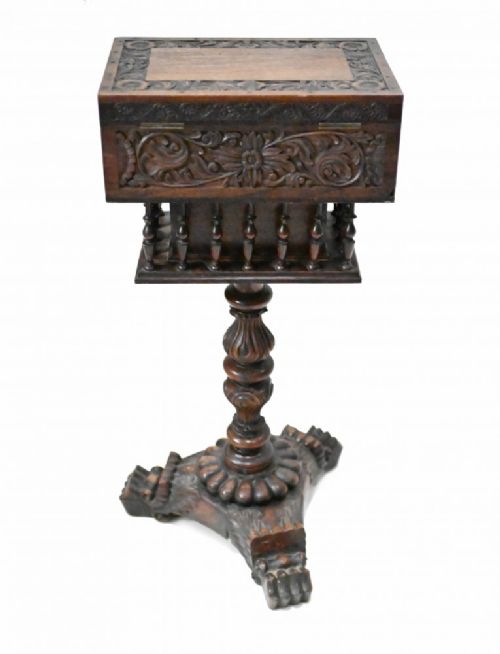
- A small occasional table or stand historically used for holding tea equipment. These compact surfaces often feature hinged tops or pedestal supports.
- Tilt top
- A table construction where the surface pivots on a catch mechanism to store vertically against a wall. This mechanism was popular in nineteenth-century drawing rooms.
- Octagonal
- Having eight sides. This geometric table format is characteristic of northern Indian occasional furniture.
Anglo Indian Rosewood Table: Frequently Asked Questions
What is an anglo indian rosewood table?
An anglo indian rosewood table is a piece of furniture produced during the nineteenth or early twentieth century that combines British furniture forms with traditional Indian carving and inlay techniques. These works were created either in workshops in the Indian subcontinent for export or by colonial craftsmen.
They utilise dense tropical timbers such as rosewood, teak, and padouk, ornamented with carved foliage, animal motifs, and geometric marquetry in bone or brass. The results range from small folding coffee tables to large pedestal centre tables.
These pieces served various domestic functions in colonial homes and British parlours, acting as display surfaces, tea tables, or centrepieces. Their heavy construction and decorative surfaces made them popular statement items in Victorian interiors.
Living with these tables involves appreciating their dark timber tones and complex surface textures within modern rooms. They pair well with diverse interior styles, functioning effectively as occasional surfaces or central display points.
How do you identify hoshiarpur work?
Hoshiarpur tables are identified by their characteristic all-over inlaid decoration utilising small pieces of bone and brass set into a dark wood ground. The patterns typically feature dense geometric tiles or scrolling floral motifs.
This regional style often incorporates octagonal formats, folding bases, and intricate fretwork panels. The precision of the micro-mosaic inlay distinguishes these items from simpler carved surfaces.
Examining the underside and joints reveals hand-tooling marks consistent with late nineteenth-century workshop production. The integration of brass wire alongside carved bone elements remains a hallmark of this tradition.
Preserving these pieces involves regular dusting with soft cloths and avoiding excessive moisture or direct sunlight that might affect the delicate bone inlays. Conditioning the rosewood periodically helps maintain the deep lustre of the timber.
Were these tables made for export?
Many anglo indian rosewood tables were manufactured specifically for the British and European export markets during the colonial period. Local craftsmen adapted traditional motifs to suit Victorian tastes for ornate and exotic furnishings.
Exhibition pieces and items retailed through prominent London stores introduced these forms to British homes. The demand for intricately carved occasional furniture drove significant production throughout the nineteenth century.
These export pieces often reflect a fusion of European furniture architecture, such as tripod bases or pier tables, with indigenous carving techniques. This hybrid design approach makes them distinct from domestic Indian furniture.
Displaying them in contemporary settings requires balancing their heavy ornamentation with simpler surrounding decor. Their robust construction ensures they remain functional everyday surfaces.
How are different periods told apart?
Differentiating periods relies on observing construction methods, timber choices, and stylistic shifts in the carving. Mid-nineteenth-century examples often feature heavier structural proportions and deep, naturalistic foliage.
Later pieces from the late nineteenth and early twentieth centuries frequently showcase the tighter, more symmetrical geometry associated with Hoshiarpur production. The introduction of ebonised finishes and brass inlay becomes more pronounced towards the end of the period.
Documented examples bearing retailer stamps provide firm chronological reference points for specific designs. Construction details like hand-cut screws and secondary timbers offer further clues to age.
Care and maintenance for these varying ages require gentle cleaning suited to polished tropical hardwoods and delicate inlay. Ensuring stable indoor humidity protects both the timber substrate and the inset materials.