



Amboyna Inlaid Cabinet
These amboyna inlaid cabinet pieces combine rich exotic timber with crisp detail, offering practical storage and striking presence for a period interior.
Amboyna Inlaid Cabinet
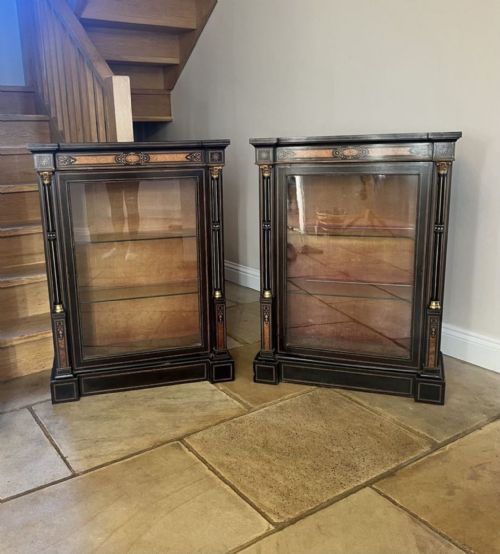
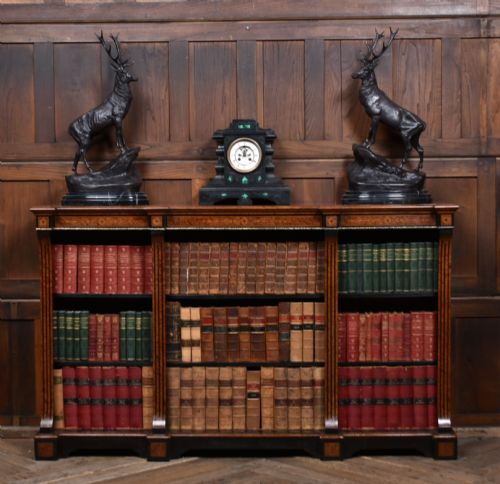
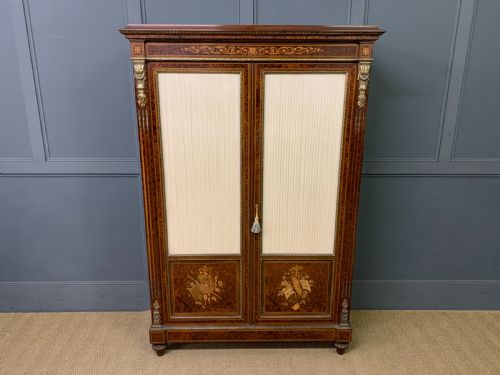
An amboyna inlaid cabinet spans several distinct forms designed for display and storage, ranging from compact bedside pieces to large breakfront credenzas and bookcases. You will frequently encounter Victorian side cabinets, display pieces, and writing desks shaped within this selection.
Origins stretch across nineteenth-century English and French workshops, utilising styles such as the Aesthetic Movement, Regency, and French Neoclassical. Pieces date primarily from the Victorian era and the broader nineteenth century, encompassing paired side cabinets and miniature examples alongside grander furniture.
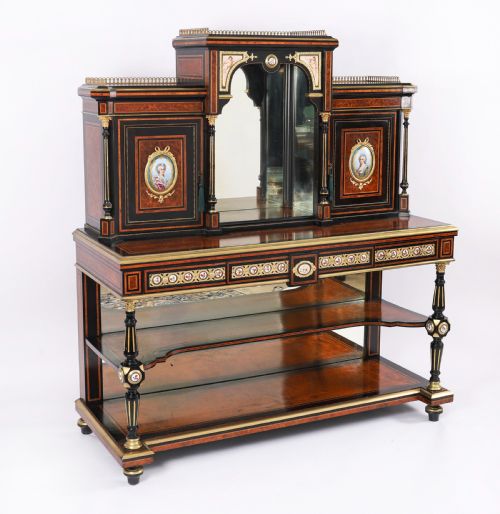
The variety encompasses open bookcases, pier display cabinets fitted with glass, and fitted desks like the bonheur du jour. Each object serves a specific domestic function while displaying the distinctive grain and contrast of the primary timber.
How they were made
Makers built these cabinets using foundational timbers like ebonised wood, mahogany, and walnut, upon which amboyna veneer and delicate marquetry inlay were applied. Surfaces often combine contrasting dark framing with the warm, mottled figure of amboyna.
Structural enrichment relies on metal mounts including brass, ormolu, and gilt metal, alongside glass panels for display doors and occasional marble tops. Joinery techniques secure complex breakfront shapes, shaped sides, and fitted interiors.
Formats range from miniature chests of drawers and bedside pot cupboards to large breakfront bookcases and credenzas.
What varies in quality
The standard of an amboyna inlaid cabinet depends on the selection and matching of the veneer across prominent surfaces, alongside the crispness of the inlay work. Finer examples display harmonious grain patterns that flow naturally across doors and panels.
Execution of the secondary materials, such as the precision of ebonised framing, the casting of brass and gilt metal mounts, and the fitting of glass doors, distinguishes standard production from exceptional workshop output.
Bath Cabinet Makers
The Amboyna Inlaid Cabinet Glossary
- Amboyna
- A highly valued exotic timber known for its distinctive speckled, swirled grain and warm brownish-red tone. It is typically applied as a veneer on cabinet fronts and panels.
- Ebonised
- Wood treated with a dark stain or finish to imitate ebony. This dark ground provides a stark, contrasting border for lighter inlaid woods and amboyna panels.
- Credenza
- A low cabinet, frequently featuring breakfront styling and glass-doored compartments. Originally used for serving food, it evolved into a prominent display piece in Victorian interiors.
- Ormolu
- Gilded bronze used for decorative mounts, feet, and key escutcheons on nineteenth-century furniture. It adds metallic relief and architectural accent to the cabinet corners and borders.
- Bonheur du jour
- A small, light ladies writing desk featuring a superstructure of drawers and pigeonholes above the main writing surface. These pieces often incorporate fine veneer work and delicate legs.
Amboyna Inlaid Cabinet: Frequently Asked Questions
What rooms suit an amboyna inlaid cabinet?
These cabinets work effectively in principal reception rooms, studies, and bedrooms where their refined surfaces and decorative inlays can be appreciated up close. Smaller bedside versions and pot cupboards function well beside period bed frames.
The reflective glass doors and gilt metal mounts catch natural light, helping to brighten darker corners while offering enclosed storage for books or display items.
How do I care for amboyna veneer?
Maintain the timber by keeping the cabinet away from direct sunlight and steady sources of artificial heat to prevent the veneer from drying or lifting. Dust gently with a dry, soft cloth rather than using silicone-based polishes.
Wax can be applied sparingly to nourish the wood and protect the polish, following the grain direction carefully around the inlaid sections.
Are these cabinets English or French?
The selection includes pieces originating from both English and Continental workshops, reflecting distinct regional design preferences of the nineteenth century. English examples often align with Victorian and Aesthetic Movement tastes.
French pieces frequently incorporate Neoclassical styling, marble tops, and pronounced ormolu mounts, showing a lighter decorative approach to the same exotic veneers.
What is the difference between a credenza and a side cabinet?
A credenza is typically a low, substantial piece of furniture designed with central cupboards flanked by curved or straight display sections, often featuring breakfront symmetry. They were built to anchor large dining rooms or reception spaces.
Side cabinets are generally more compact formats used for general storage and display, appearing as single units or matching pairs alongside walls and pier glass mirrors.