



Alabaster Female Figurine
These alabaster female figurine examples capture classical poise and romantic sculpture across diverse European workshops.
Alabaster Female Figurine
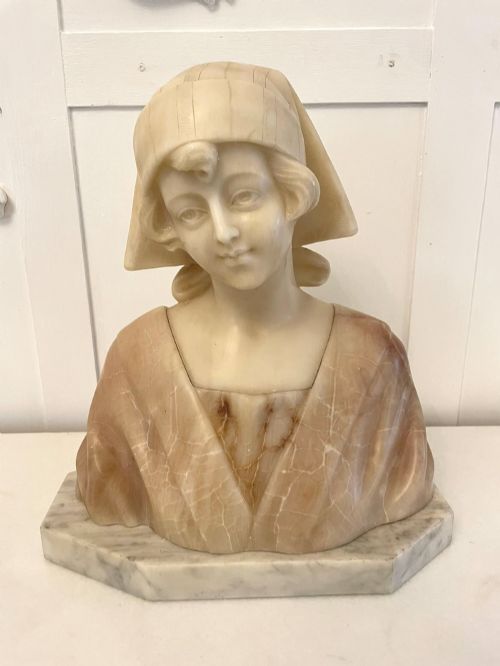
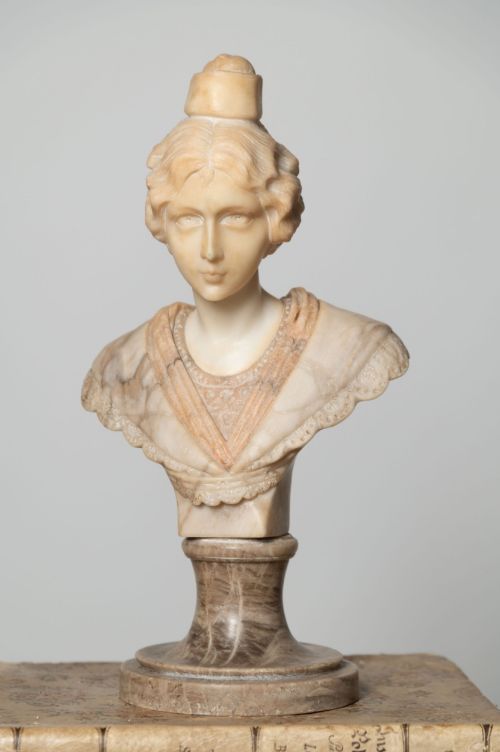
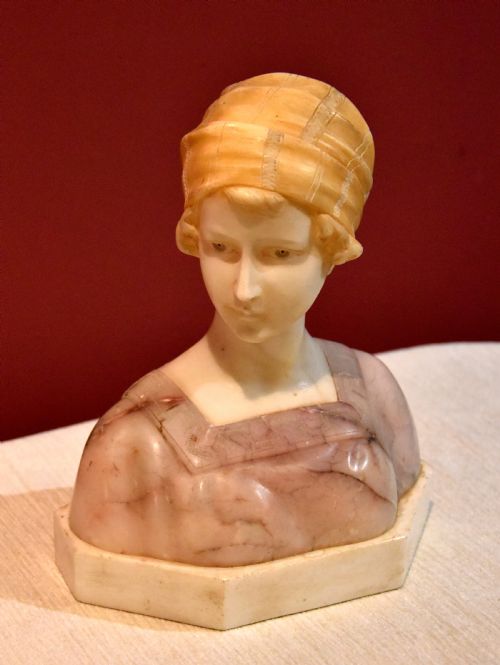
An alabaster female figurine represents classical figures, dancers, and mythological subjects carved or cast during the nineteenth and early twentieth centuries. These works draw heavily upon French and Italian ateliers working within recognisable revivalist traditions.
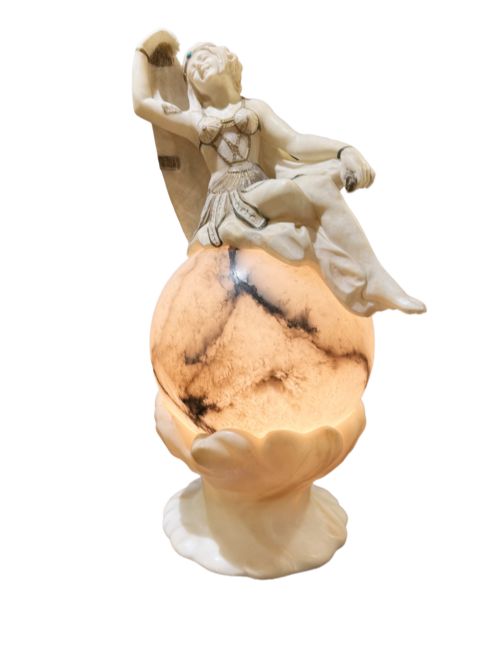
The selections encountered here range from Victorian portrait busts to graceful Art Nouveau bathers and stylised Art Deco dancers. Most pieces integrate carved stone with supportive bases or mixed media elements to anchor the sculptural form.
Originating predominantly from continental workshops, these female figures utilise the soft luminosity of stone and metal to portray drapery, hair, and expression with striking realism.
Materials and Construction
Makers shaped these subjects using hand-carved alabaster and marble, harnessing the natural translucency of the stone to render realistic skin tones and soft folds of fabric. Artisans frequently combined these carved elements with contrasting marble plinths or metal bases.
Alternative foundry techniques appear in pieces cast from spelter or bronze, sometimes finished with metallic patinas or paired directly with carved stone components. This combination of cast metal and carved mineral highlights the shifting tastes of the period.
Alabaster Female Figurine Retail Price Guide 2026
Typical asking prices for alabaster female figurine among the pieces listed under this phrase on Sellingantiques today, from the lower quarter to the upper quarter. They describe what is for sale here now, not the wider market.
Materials across the selection range from carved alabaster and marble to cast spelter and bronze finish.
Defining Quality
The distinction between standard commercial output and superior craftsmanship lies in the subtlety of the carving and the fidelity of the facial expression. Master carvers achieved depth in drapery and delicate contours that lesser hands rendered stiffly.
Signatures from recognised sculptors and distinct foundry marks elevate certain works beyond anonymous decorative pieces. The choice of stone, particularly pure white alabaster free from heavy veining where unintended, dictates the visual harmony of the finished subject.
Auguste Henri Carli·Fritz Kochendorfer·George Van Der Straeten·Pugi·R. Lusili·Greuze·A. Cipriani
The Alabaster Female Figurine Glossary
- Alabaster
- A fine-grained mineral commonly used for sculptural carving due to its softness and translucent quality. It allows light to penetrate the surface slightly, giving figures a lifelike glow.
- Spelter
- An alloy of zinc and other metals utilised as a cheaper alternative to bronze for casting figures. It was frequently painted or electroplated to imitate richer materials.
- Art Nouveau
- An international design style characterised by fluid, organic lines and floral motifs, prominent around the turn of the twentieth century. Sculptures from this movement often feature flowing hair and natural drapery.
- Art Deco
- A design movement prevalent in the 1920s and 1930s favouring geometric shapes, stylised forms, and streamlined elegance. Figurines from this era display sharper angles and modern decorative themes.
Alabaster Female Figurine: Frequently Asked Questions
How do I clean alabaster safely?
Alabaster is a soft and water-soluble mineral that requires gentle dusting with a dry microfibre cloth. Avoid all moisture, liquid cleaners, and abrasive pads.
Exposing the stone to damp conditions will permanently pit and dissolve the polished surface over time.
Are these figures solid stone?
Many examples are carved entirely from solid alabaster or marble, whilst others combine carved stone upper sections with marble or metal bases. Some listings pair cast spelter figures directly with stone plinths.
Examining the underside and seams will usually reveal how the different components are joined together.
What is the difference between Art Nouveau and Art Deco pieces?
Art Nouveau figures date from around the turn of the twentieth century and feature flowing, organic lines inspired by nature. They often depict draped women with long, cascading hair.
Art Deco works emerge from the 1920s and 1930s, showing sharper geometry, stylised postures, and modern theatrical themes.
How can I tell if a signature is genuine?
Signatures on these sculptures typically appear incised directly into the stone or cast into the metal base during production. They correspond to known sculptors working in European foundries and studios.
Compare the lettering style and placement against authenticated examples from the same maker and period.