



French Turn of Century Sculpture
French turn of century sculpture brings fluidity and dramatic presence into a room, capturing the spirit of Art Nouveau and the Belle Epoque.
French Turn of Century Sculpture
French turn of century sculpture spans the decades around nineteen hundred, embracing periods from the nineteenth century into the nineteen twenties. These works take the form of mantel clocks, figural vases, table lamps, candlesticks, and standalone figures and busts.
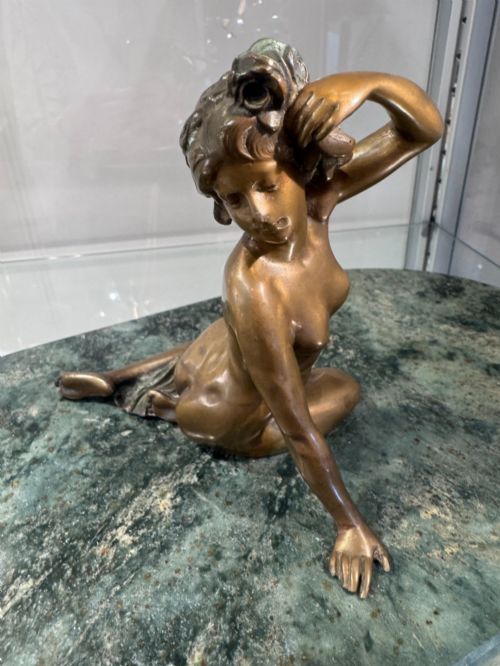
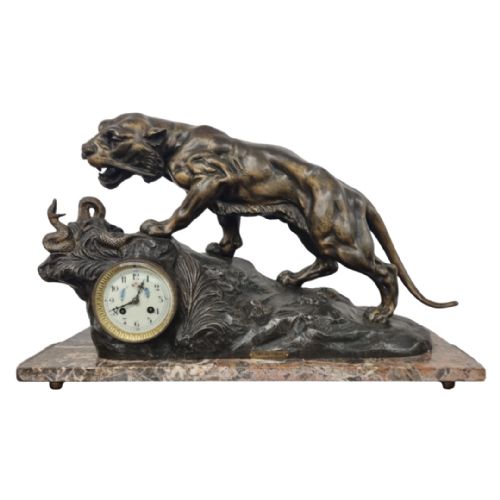
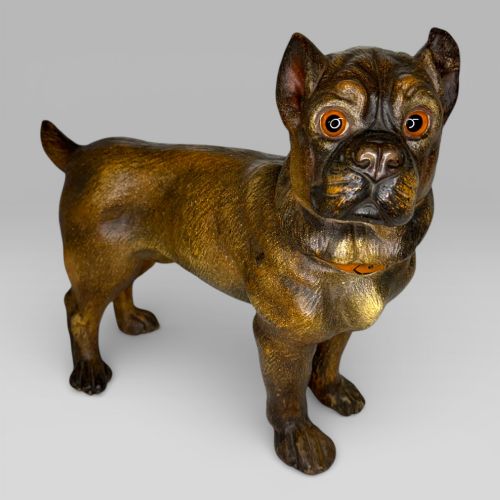
The aesthetic draws heavily on Art Nouveau and the Belle Epoque, with subjects ranging from reclining female nudes and harvest dancers to animals such as pugs, tigers, and serpents. Pieces frequently emerge in pairs or single display formats designed for domestic interiors.
Makers and artists working during this era include R Varnier, Charles Korschann, Alexandre Clerget, and A Gory, alongside anonymous foundry productions in spelter and bronze.
How they were made
Foundries and studios utilised bronze, spelter, terracotta, alabaster, marble, glass, pewter, brass, and wood to create these works. Bronze and spelter served as the primary metals for figural casts, often paired with marble bases or alabaster components.
Terracotta provided a medium for modelled figures, while glass and metal combined in functional decorative objects like lamps and vases. Gilt finishes and patination completed the surface treatment on many metallic sculptures.
French Turn of Century Sculpture Retail Price Guide 2026
Typical asking prices for french turn of century sculpture among the pieces listed under this phrase on Sellingantiques today, from the lower quarter to the upper quarter. They describe what is for sale here now, not the wider market.
Pugs and tigers share the turn of the century domestic landscape, proving that nineteenth century collectors loved their pets just as fiercely as their allegories.
What varies in quality
Quality rests in the crispness of the casting and the sensitivity of the modelling, particularly in facial expressions and drapery folds. Finer examples display meticulous hand-chasing on metal surfaces and superior integration with marble or alabaster plinths.
Attribution to a named artist or a known foundry elevates a piece above anonymous commercial output. The choice of material, such as genuine bronze over plated spelter, dictates the longevity and weight of the object.
R Varnier·Charles Korschann·Alexandre Clerget·A Gory
The French Turn of Century Sculpture Glossary
- Spelter
- A zinc alloy commonly utilised as a less expensive alternative to bronze for sculptural figures during the period. It accepts patination and metallic paint finishes well, though it is softer than bronze.
- Art Nouveau
- An international style of art and architecture that peaked in popularity around nineteen hundred. It is characterised by intricate asymmetrical lines inspired by natural forms such as plants and flowers.
- Terracotta
- Baked clay used for sculptural modelling and fired to a hard finish. It allows for expressive surface textures directly from the artist's hand.
- Belle Epoque
- A period of French history spanning from the late nineteenth century to the First World War. The era fostered optimism, peace, and notable developments in decorative arts and sculpture.
French Turn of Century Sculpture: Frequently Asked Questions
How do I distinguish bronze from spelter?
Bronze is heavier, harder, and possesses a resonant tone when lightly tapped, whereas spelter is softer and more brittle. Spelter pieces often reveal a greyish metal beneath worn areas of surface patination.
Foundry marks and cold-painted or gilt finishes also help identify the underlying material used for the sculpture.
Where should I place these sculptures at home?
These works suit mantelpieces, side tables, and desks where their vertical lines and detailed forms can be appreciated up close. Figures combined with lamps or clocks serve both decorative and functional roles in a room.
Keep them away from direct heat sources and strong sunlight to protect delicate patinas, alabaster elements, and marble bases.
What subjects are most common?
Human figures, particularly female forms styled in the flowing aesthetic of Art Nouveau, appear frequently alongside allegorical figures representing harvest or industry. Animals also feature prominently, ranging from domestic dogs to exotic wildlife.
Many of these designs were produced as single decorative items or matched pairs for balanced interior display.
How do I care for antique terracotta?
Terracotta requires gentle dusting with a soft dry brush to prevent dirt from settling into the porous clay body. Avoid using water or liquid cleaners, which can penetrate the material and cause staining or structural damage.
Handle pieces with care by supporting the main body rather than protruding limbs or decorative elements.