


Afghan Gul Rug
An afghan gul rug brings deep red tones and repeated tribal motifs into a room, offering durability and history.
Afghan Gul Rug
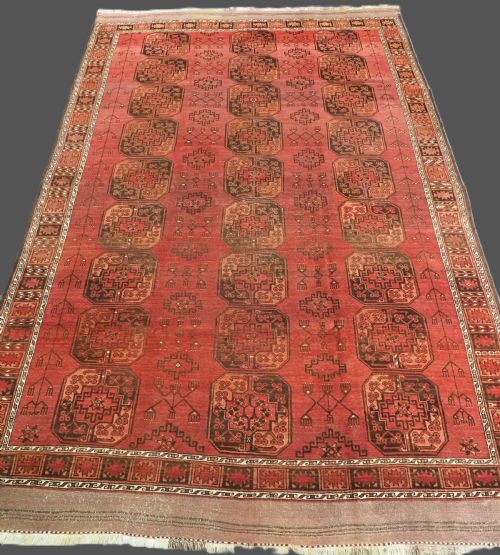
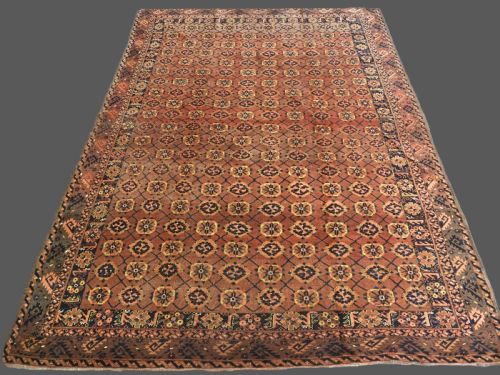
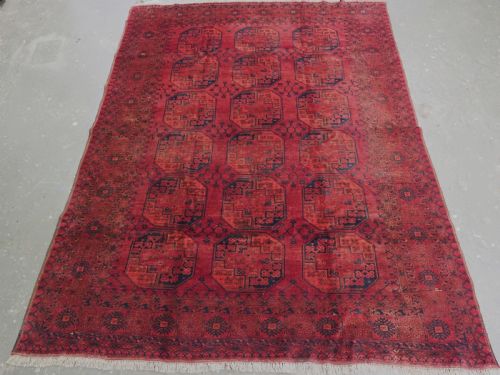
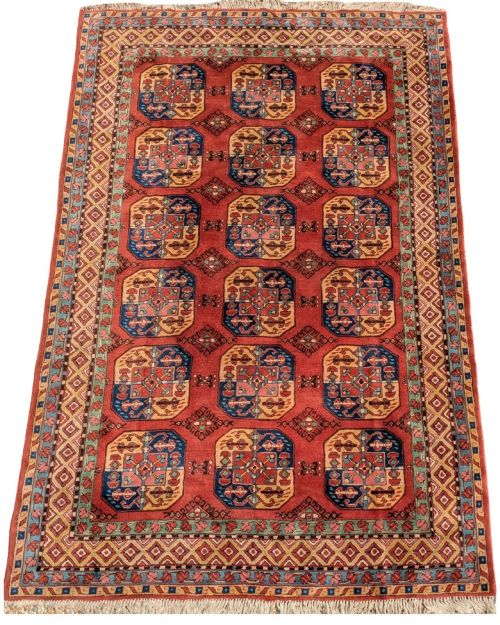
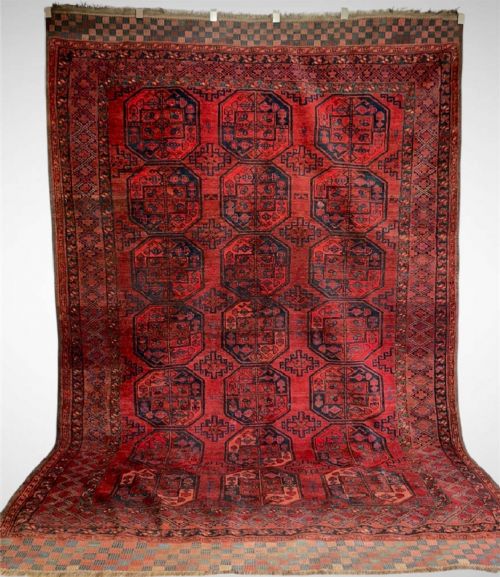
An afghan gul rug is a traditional handwoven textile characterised by repetitive octagonal or medallion motifs known as guls. These floor coverings emerge from nomadic and village weaving traditions across Central Asia and northern Afghanistan, dating largely from the late nineteenth and early twentieth centuries.
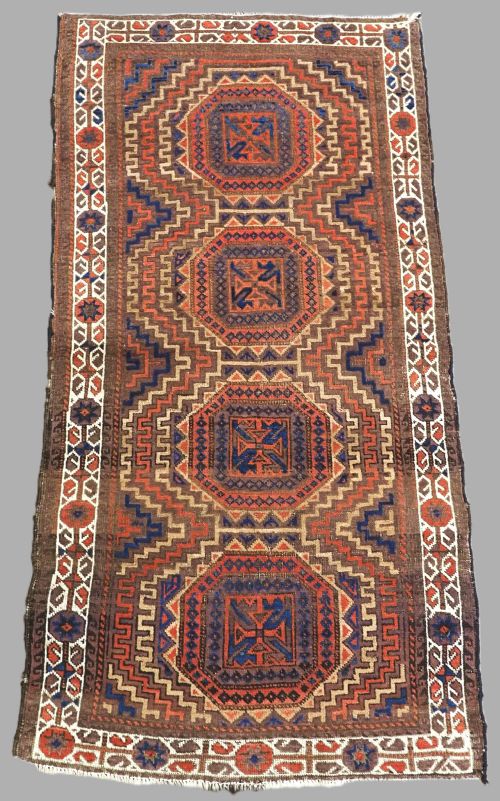
The pieces seen most frequently on this page belong to tribal groups such as the Ersari, Kizil Ayak, and Baluch. Buyers encounter formats ranging from smaller village rugs to expansive room-size main carpets and smaller storage bags.
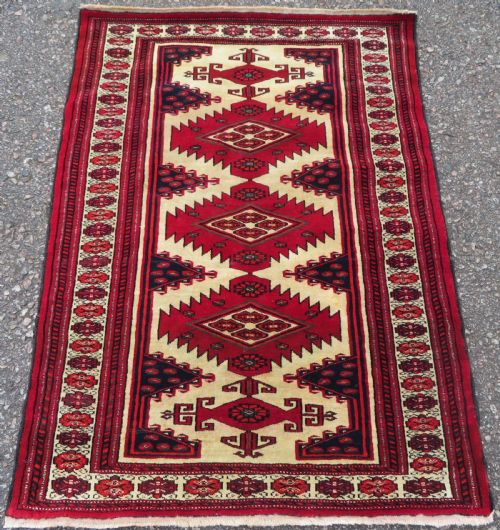
Makers utilised classic layouts featuring large turreted guls, star designs, and traditional borders rendered in warm red, plum, and deep gold hues.
Materials and construction
Weavers constructed these textiles using hand-spun wool for the pile, often yielding a soft and glossy finish. Foundations incorporate sturdy materials including wool, goat hair, and horsehair to ensure long-term resilience.
Natural dyes produced the characteristic deep red, warm red, and old gold shades found across the pieces. These traditional colourants interact with the wool over decades to create a soft, faded patina.
Listings feature pieces spanning the late nineteenth century through the 1930s, constructed from wool, natural dyes, and goat hair.
Factors determining quality
Quality rests upon the fineness of the knotting and the integrity of the foundation materials. Carpets woven with robust goat hair or horsehair foundations and densely packed hand-spun wool demonstrate superior durability.
Artistic execution distinguishes the examples, with crisply defined gul motifs and harmonious natural dye variations representing the higher tier of tribal weaving.
The Afghan Gul Rug Glossary
- Gul
- A repeating octagonal medallion motif central to Turkmen and Afghan tribal weaving. This emblem serves as the primary decorative element across the field of the rug.
- Ersari
- A major Turkmen tribe residing in northern Afghanistan known for weaving large main carpets with distinctive guls. Their work frequently incorporates warm red colour palettes and classic tribal layouts.
- Chuval
- A traditional large face-bag used historically by nomads for tent storage. These pieces display specific gul designs distinct from floor carpets.
- Main carpet
- A large-format floor covering produced for domestic use within the tribal household. These substantial textiles often measure room size and feature elaborate border systems.
- Patina
- The surface sheen and softened coloration acquired by wool and natural dyes over many decades of age and use.
Afghan Gul Rug: Frequently Asked Questions
What is a gul motif?
A gul is a repeating octagonal medallion pattern that identifies the tribal origin of the weaver. These motifs form the structural backbone of the design across the field of the carpet.
Different tribes adapted the gul shape in distinct ways, allowing collectors to trace pieces back to specific groups like the Ersari or Salor.
How were these rugs used originally?
Nomadic and village families utilised these textiles on the floors of their homes and tents for daily living. Larger formats served as main floor coverings for reception rooms.
Smaller pieces and bags functioned as storage containers or hearth rugs within the traditional domestic setting.
How do I care for an antique rug?
Vacuum the rug gently without using a rotating brush roll to protect the hand-spun wool pile. Keep the textile out of direct sunlight to preserve the natural dyes.
Rotate the piece periodically to ensure even wear across high-traffic areas in the room.
How do I date an antique rug?
Dating relies on assessing the materials, dye types, and structural wear visible in the piece. Natural dyes and hand-spun wool point toward production before the mid-twentieth century.
Stylistic conventions and specific tribal structures also provide reliable clues for placing a rug within the late nineteenth or early twentieth century.