
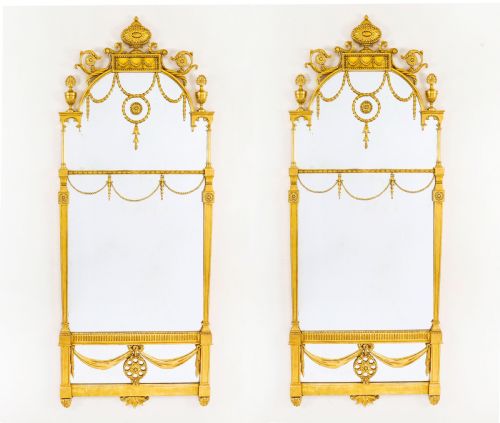


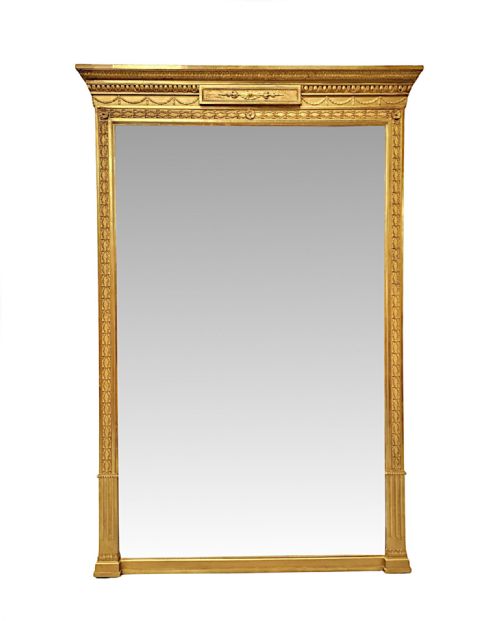
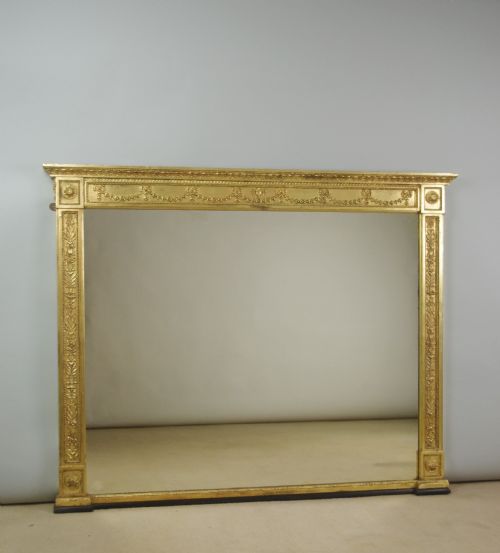


Adam Style Overmantel Mirror
An adam style overmantel mirror brings classical neoclassical order and gilt elegance to a chimney breast.
Adam Style Overmantel Mirror
An adam style overmantel mirror is a grand decorative glass designed to hang above a fireplace, drawing inspiration from eighteenth-century neoclassical design principles. These pieces frequently appear in revival forms dating from the Victorian and Edwardian eras, spanning from the late nineteenth century into the early twentieth century.
The versions most commonly met on this page combine rectangular or oval mirror plates with architectural framing, classical motifs, and gilt finishes. They serve primarily as focal points within reception rooms, reflecting light and amplifying the proportions of period interiors.
How they were made
Maker construction relies heavily upon timber frames built of wood, finished with layers of gesso and composition ornaments to achieve sharp neoclassical detail. These moulded elements create delicate swags, urns, and bead runs before the application of gold leaf or paint.
Reflecting surfaces consist of traditional mirror glass or plate, often showing the gentle age associated with nineteenth-century manufacture. Frames combine carved wooden structural supports with applied decorative relief work.
A stately spot for practicing your Victorian greeting before stepping out to the ball.
What varies in quality
Quality reveals itself in the crispness of the moulded composition ornament and the depth of the gilding applied to the wooden frame. Finer examples retain sharp architectural detailing without the softening of motifs often found in simpler production.
The condition and integrity of the original mirror plate and the underlying wooden joinery further distinguish pieces across the range. Superior workmanship ensures the frame remains structurally sound while supporting heavy glass panels.
The Adam Style Overmantel Mirror Glossary
- Overmantel mirror
- A large wall glass specifically proportioned to hang on the wall above a fireplace mantelpiece. These pieces often feature horizontal or tall rectangular formats suited to chimney breasts.
- Giltwood
- Timber that has been coated with thin sheets of gold leaf or gold paint. This finish provides a luminous surface that catches and reflects room light.
- Gesso
- A plaster-like mixture applied to wood frames to create a smooth surface for gilding or to receive moulded decorations. It allows craftsmen to carve intricate low-relief patterns.
- Composition
- A moulded mixture of whiting, resin, glue, and oil pressed into detailed ornament for frames. It hardens to replicate carved wooden details efficiently.
- Neoclassical
- A design style drawing on classical antiquity, featuring symmetrical geometry, urns, swags, and classical columns. It forms the foundation of the adam aesthetic.
Adam Style Overmantel Mirror: Frequently Asked Questions
Where should an overmantel mirror hang?
These mirrors traditionally hang centrally on the wall directly above a fireplace mantelpiece. Their proportions are specifically scaled to match the width of the fireplace surround below.
They can also function on large expanse walls as principal hall or pier mirrors depending on the room layout. Hanging height should balance the mantel shelf and the ceiling height.
How do I date an adam style mirror?
Dating relies upon examining the construction methods of the wooden frame, the composition ornaments, and the characteristics of the mirror plate. Pieces seen here predominantly date from the Victorian and Edwardian revival periods.
Backboards, fixings, and the chemical ageing of the glass provide additional clues to age. Revival pieces interpret eighteenth-century designs using late nineteenth-century techniques.
Are these mirrors heavy to hang?
Giltwood and gesso overmantel mirrors carry substantial weight due to the combination of timber framing, heavy plaster composition, and thick glass plates. Proper wall fixings into structural brickwork or studs are essential for safe installation.
Professional hanging is recommended to support the weight securely against the chimney breast. Fixings should engage directly with wall anchors capable of holding heavy loads.
How do I clean a giltwood frame?
Giltwood surfaces require gentle dusting with a soft, dry brush to remove particles without disturbing the gold leaf or composition ornaments. Moisture and chemical cleaners should be avoided entirely on antique gilt surfaces.
Mirror glass can be cleaned with standard glass cleaner applied sparingly to a cloth rather than sprayed directly onto the glass. This prevents liquid from seeping behind the plate into the gesso frame.