

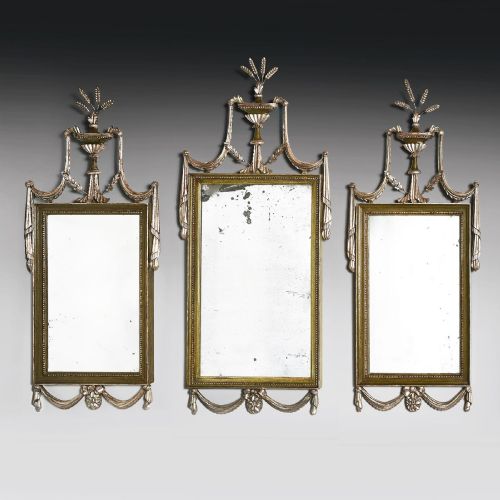
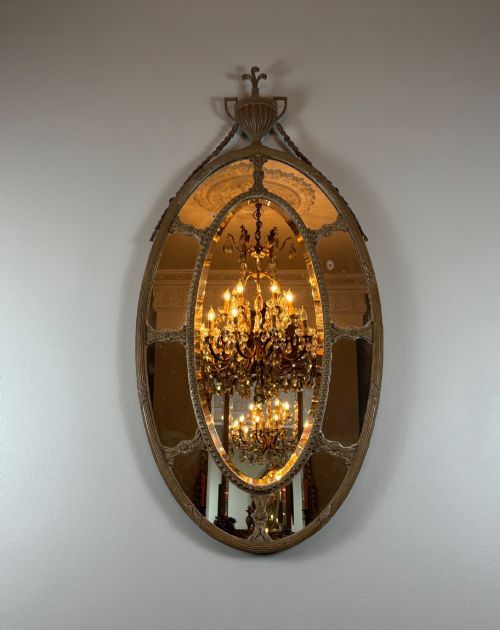
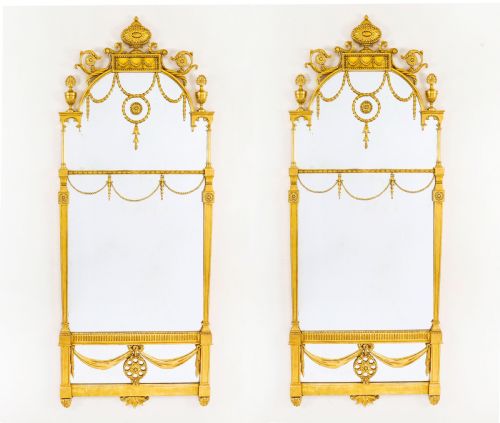


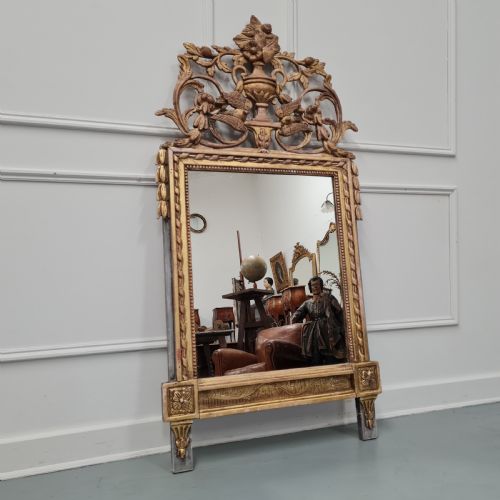
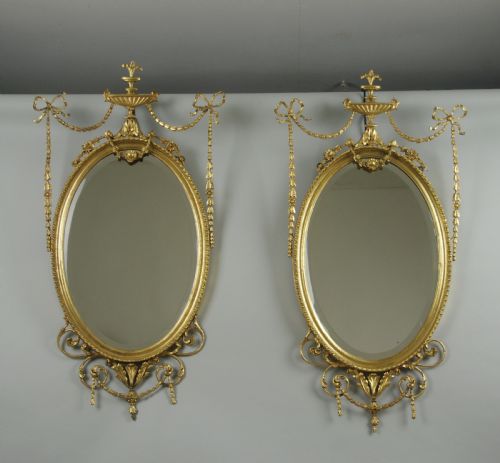


Urn Cresting Wall Mirror
An urn cresting wall mirror brings classical proportion to a room, centred on the carved or moulded motif that crowns the frame.
Urn Cresting Wall Mirror
An urn cresting wall mirror combines architectural presence with reflective depth, taking forms from wall and overmantel mirrors.
The pieces appearing here span the nineteenth century, with strong representation from Victorian and Edwardian periods alongside earlier Georgian influences.
Neoclassical and Adam revival styles dominate the selection, bringing classical motifs and balanced proportions to domestic interiors.
Materials and Construction
Frames rely on wood, gesso and composition moulded over carved wooden carcases to create intricate classical ornament.
Giltwood, gold leaf and parcel-gilt finishes provide the reflective warmth characteristic of these decorative wall pieces.
Mirror glass sits within ebonised wood or painted surrounds, occasionally accompanied by border glass elements.
Urn Cresting Wall Mirror Retail Price Guide 2026
Typical asking prices for urn cresting wall mirror among the pieces listed under this phrase on Sellingantiques today, from the lower quarter to the upper quarter. They describe what is for sale here now, not the wider market.
Listings feature periods from the eighteenth to the twentieth century, with nineteenth-century Victorian and Edwardian examples forming the core of the selection.
Distinctions in Quality
The definition and depth of the carved or moulded swags and urn crests set finer examples apart from simpler production.
The application of gold leaf or two-colour gilding indicates the level of craftsmanship invested in the original finish.
Proportions between the central mirror plate and the decorative cresting determine the visual harmony of the piece.
Gillows Of Lancaster
The Urn Cresting Wall Mirror Glossary
- Gesso
- A plaster-based material applied to wood frames to provide a smooth surface for gilding. It takes fine detail during moulding and carving.
- Giltwood
- Timber covered with a thin layer of gold leaf. This material defines the luxurious finish on many classical wall mirrors.
- Overmantel mirror
- A large horizontal mirror designed specifically to hang above a fireplace mantel. These pieces often feature elaborate cresting.
- Parcel-gilt
- Woodwork that is partially gilded while other areas show painted, ebonised or natural timber surfaces. It creates contrast on classical frames.
- Adam revival
- A neoclassical design style drawing on eighteenth-century Robert Adam patterns. This aesthetic heavily influences nineteenth-century mirror crests.
Urn Cresting Wall Mirror: Frequently Asked Questions
How do I hang an urn cresting mirror safely?
These heavy wall pieces require secure fixing directly into wall studs or masonry using appropriate brackets suited to the weight of wood and gesso.
The height should position the centre of the glass at eye level, allowing the urn crest to draw the eye upward without feeling disconnected from the room.
Where should I place an overmantel mirror?
Positioning an overmantel mirror above a fireplace anchors the focal point of a formal room and reflects light back into the space.
Ensure the width matches or sits slightly within the mantel shelf below to maintain correct architectural balance.
How do I clean giltwood and gesso frames?
Dust gently with a soft, dry brush to remove particles without disturbing delicate composition ornament or flaking the gold leaf.
Avoid liquid cleaners entirely, as moisture penetrates old gesso and causes the historic finish to lift from the wood base.
What defines Adam revival style?
Adam revival pieces draw on neoclassical symmetry, featuring urns, bellflowers, swags and delicate husks derived from ancient Roman decoration.
This aesthetic offers lighter, more restrained proportions than heavier Victorian designs while keeping a grand architectural presence.