

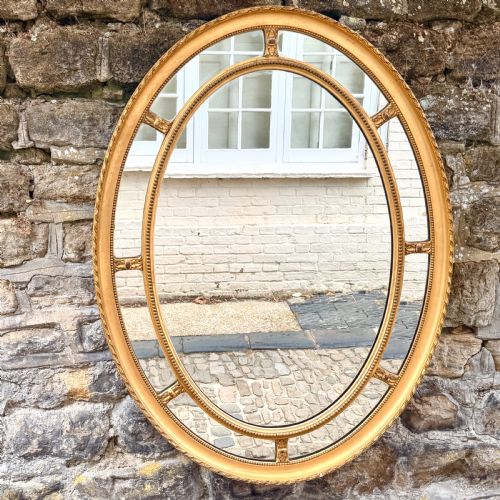

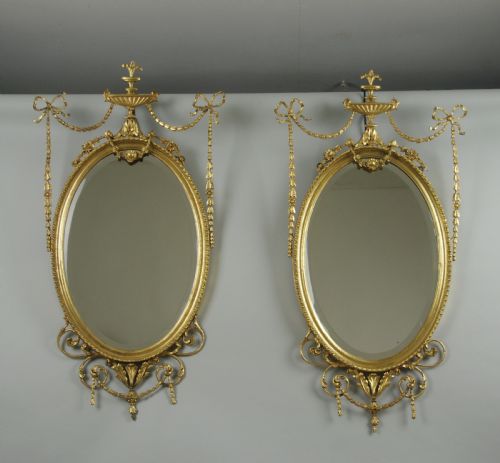


Adam Style Oval Mirror
These classic adam style oval mirror designs bring classical symmetry and refined Neoclassical ornament to any room.
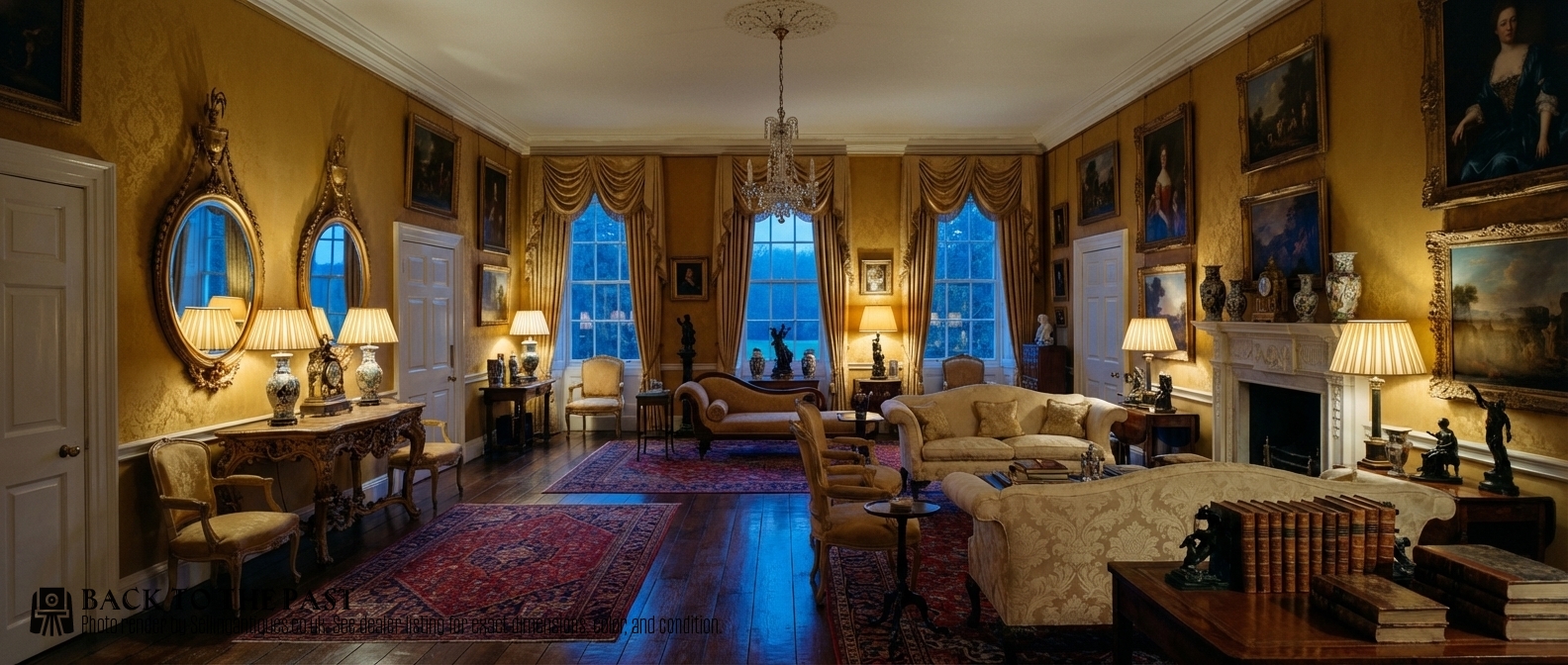
Adam Style Oval Mirror
When you search for an adam style oval mirror, you encounter wall mirrors and overmantel pieces shaped in the distinct Neoclassical taste.
Most examples found here date from the Victorian and Edwardian eras, alongside late nineteenth century revivals and occasional Georgian originals.
These pieces typically feature vertical oval glass plates set within decorative frames adorned with characteristic motifs such as urns, swags, and ribbons.
How they were made
Frames are constructed from hardwood or plaster, employing carved giltwood, composition, and gesso to build up low relief ornament.
Gilding techniques utilise gold leaf or gilt finishes applied over gesso grounds to achieve a bright metallic surface.
Mirrored glass plates are fitted within the frames, sometimes preserved as original mirror glass with natural ageing.
Adam Style Oval Mirror Retail Price Guide 2026
Typical asking prices for adam style oval mirror among the pieces listed under this phrase on Sellingantiques today, from the lower quarter to the upper quarter. They describe what is for sale here now, not the wider market.
Listings feature periods spanning from the eighteenth century Georgian era through Victorian revivals and Edwardian pieces.
What varies in quality
The crispness of the carved or moulded ornament separates standard pieces from finer examples, particularly in the definition of swags, ribbons, and urns.
The depth and brilliance of the gilding technique influence the overall presence of the frame.
Proportion and scale dictate the visual weight, with larger overmantel formats and paired mirrors demanding precise balance in their oval composition.
The Adam Style Oval Mirror Glossary
- Giltwood
- Wood that has been coated with gold leaf. This finish provides a luminous and reflective surface typical of formal period frames.
- Gesso
- A plaster-like mixture applied to wooden frames as a base for gilding. It allows craftsmen to mould intricate low relief classical details.
- Swag
- A decorative drape of foliage, fruit, or fabric suspended from both ends. It forms a central motif in Neoclassical and Adam design.
- Overmantel
- A large mirror designed to hang above a fireplace mantelpiece. These pieces often feature extended horizontal or vertical oval proportions.
Adam Style Oval Mirror: Frequently Asked Questions
How do I hang a heavy giltwood mirror?
These heavy frames require secure fixing directly into wall studs or solid masonry using appropriate brackets. Professional installation is recommended to support the substantial weight safely.
Ensure the hanging wire or integrated mirror rings are inspected before mounting to guarantee the hardware remains robust and stable.
Where should I place an oval wall mirror?
Oval wall mirrors function effectively above mantelpieces, console tables, or within entrance halls to reflect light and enhance spatial depth. Their vertical format suits narrow wall spaces.
Position the glass at eye level to maximise both functional use and the decorative impact of the surrounding frame details.
How do I clean antique gilt surfaces?
Dust the frame gently with a dry, soft artist brush to remove particles without disturbing delicate gesso or gold leaf layers. Avoid liquid cleaners entirely on antique gilt.
Use a standard glass cleaner applied to a cloth rather than the mirror directly to prevent moisture seeping behind the silvered glass plate.
How do I distinguish revival periods from original pieces?
Examine the construction methods, backing boards, and glass characteristics to determine the age of the piece. Eighteenth century examples show distinct joinery and hand-wrought materials compared to Victorian or Edwardian revivals.
Revival pieces from the nineteenth and early twentieth centuries adopt the same Neoclassical vocabulary but utilise machine-sawn timber and standardised composition ornaments.