
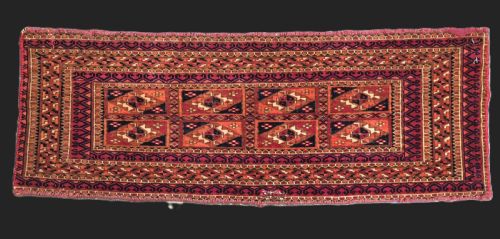
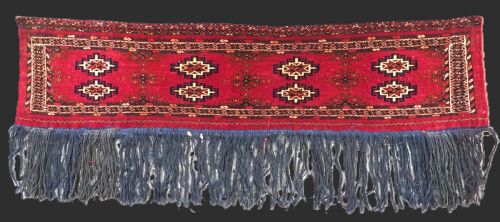
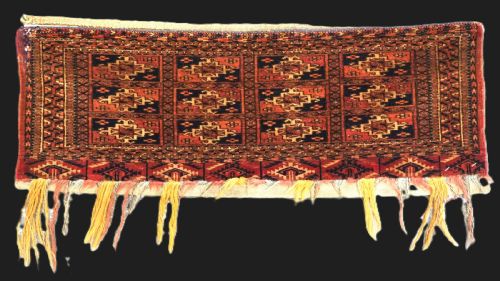


19th Century Torba
A 19th century torba is a tribal textile bag woven by Turkmen nomads, prized by collectors for its rich motifs and historical depth.
19th Century Torba
When you search for a 19th century torba, you are looking at small tribal bags and bag faces created by Central Asian nomads such as the Tekke, Saryk, Yomut, Ersari, and Chodor tribes. These pieces functioned traditionally as utility items within nomadic households and dowry furnishings, often woven to hold bedding or possessions. Most examples met on this page are either complete bags with original backs or individual bag faces intended for display.
How they were made
These textiles rely on hand-spun wool foundations paired with natural dyes to create durable, dense pile fabrics. Weavers utilised cotton alongside wool for structural elements and contrasts within the detailed tribal motifs.
The technical execution often involves a very fine weave, particularly in dowry pieces associated with Tekke and Saryk weaving traditions. Natural dye palettes provide the foundational reds, ivories, and secondary tones that define the character of each tribal group.
19th Century Torba Retail Price Guide 2026
Typical asking prices for 19th century torba among the pieces listed under this phrase on Sellingantiques today, from the lower quarter to the upper quarter. They describe what is for sale here now, not the wider market.
Listings feature pieces dated across the nineteenth century, spanning from the 1850s through the 1890s using wool, cotton, and natural dyes.
What varies in quality
Quality rests in the precision of the drawing and the fineness of the weave, where tight knotting allows intricate guls to appear sharp and well-defined. Superior pieces display exceptional colour saturation and balanced proportions within the primary and secondary design fields.
The presence of complete structural elements, such as original backs, and the overall condition elevate an example within its type. Scarce design variations and distinct tribal formats also distinguish standard utility weaving from masterwork dowry pieces.
Tekke Turkmen·Saryk Turkmen·Yomut Turkmen·Ersari Turkmen·Chodor Turkmen
The 19th Century Torba Glossary
- Torba
- A small Turkmen tribal bag traditionally used for storage inside a nomad tent. These pieces are frequently collected today as wall hangings or flat textiles.
- Gul
- A primary medallion or repeating motif used in Turkmen carpet and textile design. Each tribe utilised distinct forms to signify identity and heritage.
- Mafrash
- A larger rectangular storage bag or transport container often associated with tribal weaving. Their construction shares techniques with smaller torbas.
- Dyes
- Natural colourants extracted from plants and minerals to pigment the wool. These materials yield the characteristic deep reds and secondary tones seen across 19th century examples.
19th Century Torba: Frequently Asked Questions
What is a 19th century torba used for?
These pieces functioned originally as storage bags for household goods, bedding, and personal belongings inside nomadic dwellings.
Today, collectors typically display them as wall hangings or decorative textile panels to appreciate their tribal artistry.
Are most torbas complete bags?
Many surviving examples circulate as individual bag faces rather than complete containers with their original backs intact.
Both formats appear on the market, though pieces retaining their original backs carry additional structural interest for textile historians.
How should I care for a tribal torba?
Protect the textile from direct sunlight to prevent natural dye fading, and mount it securely if displayed on a wall.
Gentle vacuuming with a mesh screen protects the wool pile while removing surface dust without damaging the hand-spun foundation.