






19th Century Suzani Embroidery
These 19th century suzani embroidery pieces bring vibrant Central Asian folk art and traditional wall hangings into a room.
19th Century Suzani Embroidery
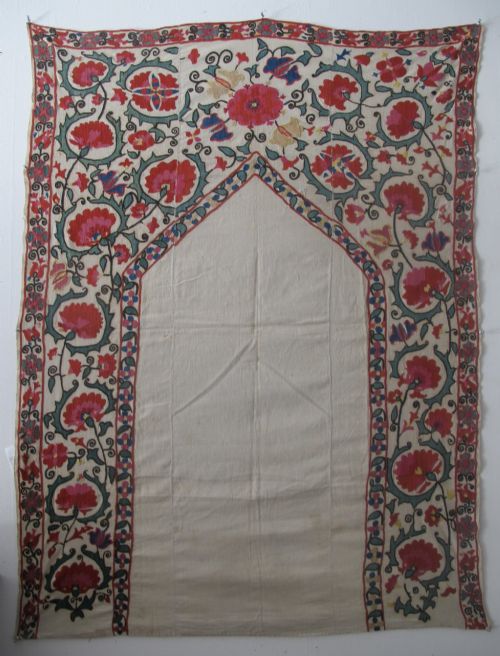
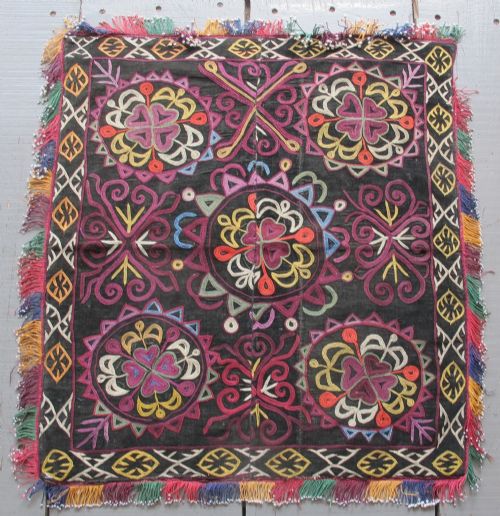
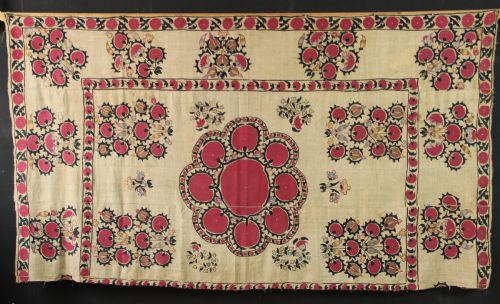
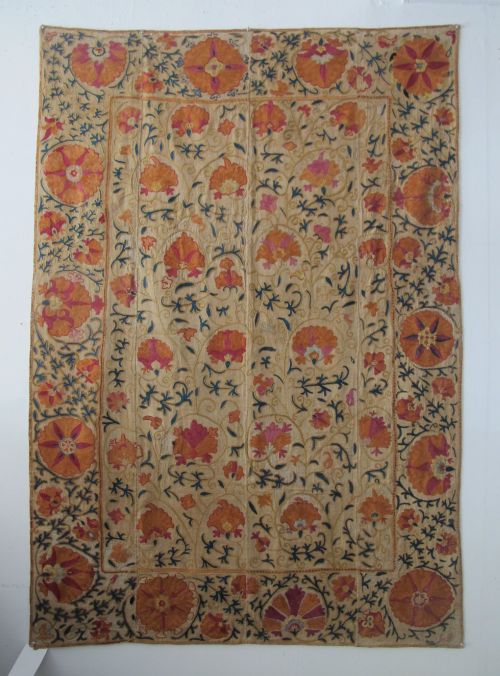
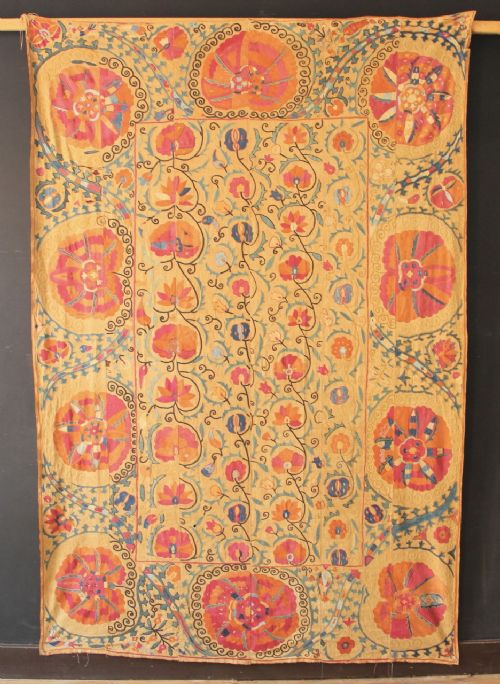
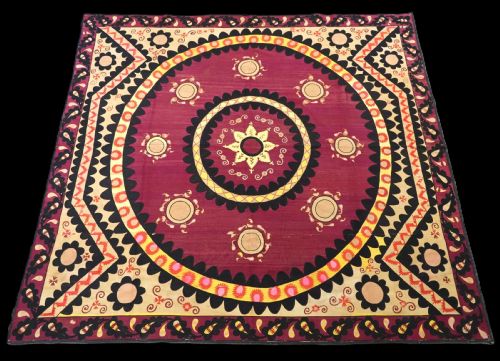
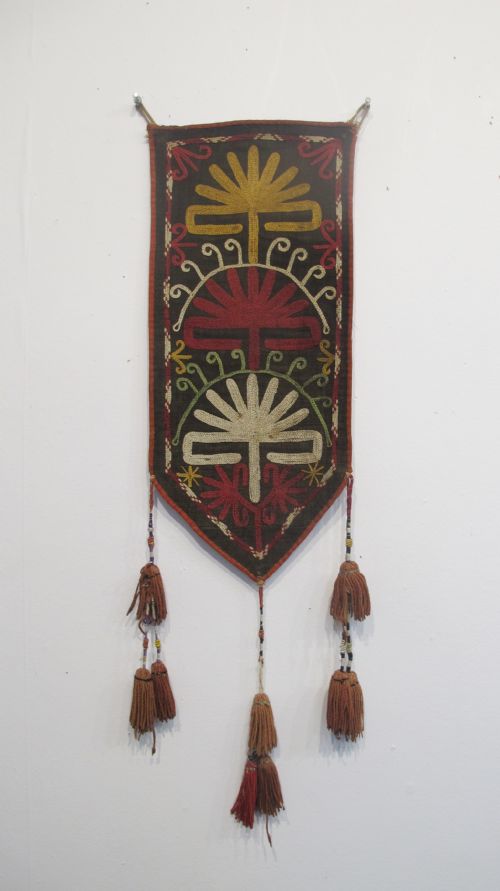
When you search for 19th century suzani embroidery, you encounter decorative textiles and wall hangings originating from Central Asia, particularly Uzbekistan. These pieces take forms such as large medallion variants, mirror covers, amulet bags, and dowry embroideries.
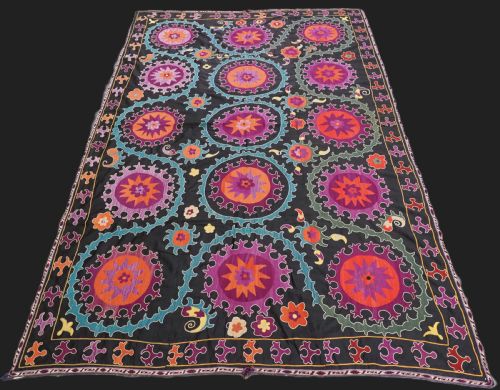
The selections available span towns and regions like Bokhara, Tashkent, Samarkand, and Ura Tube. You meet works with architectural designs, floral motifs on red, yellow, or black grounds, and fully embroidered Palak patterns.
Makers produced these textiles as functional and ceremonial household items. They serve today primarily as wall hangings and decorative covers that anchor a room with traditional motifs.
How they were made
Artisans worked silk thread onto foundation fabrics of cotton or wool. Certain pieces incorporate glass beads or feature dense embroidery covering the entire ground.
Needlework techniques include specialised stitches executed by hand across regional workshops. The background cotton varies in colour, providing distinct contrasts for the silk needlework.
Someone spent countless evening hours stitching tiny silk threads onto a black cotton ground so we can stare at it today.
What varies in quality
Quality rests in the density of the needlework and the complexity of the composition. Fully embroidered examples require greater labour than open floral layouts on plain grounds.
The refinement of the drawing and the saturation of the silk thread distinguish regional outputs. Bokhara and Tashkent pieces demonstrate notable execution in their medallion and architectural layouts.
The 19th Century Suzani Embroidery Glossary
- Suzani
- An embroidered tribal textile from Central Asia. The word derives from the Persian term for needle.
- Palak
- A fully embroidered suzani design type. These pieces typically feature a central star motif surrounded by dense foliate patterns.
- Nim Suzani
- A smaller scale embroidered cover. These measure roughly half the dimensions of full-size wall hangings.
- Ilgich
- A dowry embroidery created by the Lakai tribe. These function as traditional wall hangings.
- Ground
- The foundation fabric supporting the embroidery. Examples utilise cotton or wool in various solid colours.
19th Century Suzani Embroidery: Frequently Asked Questions
How were suzani embroideries used?
Families utilised these textiles as wall hangings, dowry items, mirror covers, and ceremonial covers within traditional Central Asian homes. They marked significant life events and decorated domestic interiors.
Today, collectors deploy them primarily as decorative wall art or textile hangings to introduce rich colour and texture into modern interiors.
Where did these embroideries originate?
These pieces originate from Central Asian centres including Bokhara, Tashkent, Samarkand, and Ura Tube in Uzbekistan. Different tribes and towns developed distinct design repertoires.
Urban workshops produced large medallion and architectural layouts, while tribal groups like the Lakai created smaller dowry pieces and amulets.
What materials make up these textiles?
Artisans embroidered silk thread onto foundation grounds made from cotton or wool. Certain specific pieces incorporate glass beads into the composition.
The ground fabrics appear in red, yellow, black, or natural cotton tones, providing a contrasting backdrop for the hand-worked silk.
What does palak mean on a listing?
Palak refers to a specific design type where the cotton ground is fully covered in silk embroidery. These pieces frequently incorporate a prominent central star motif.
They represent a more intensive level of needlework compared to open floral designs that leave portions of the ground fabric visible.
How do nim suzani pieces differ?
A nim suzani is a smaller variant of the standard wall hanging or cover. The term denotes half-size dimensions suited for compact domestic spaces.
Despite their reduced scale, they exhibit the same silk embroidery techniques and regional design characteristics as larger examples.